
24/7 Customer Support

Free returns

Same-day & Next-day Delivery

Quality Guaranteed

Unlock Your Welcome Offers: FREE Delivery | Up to 80% OFF | Free 30-day JoyPlus trial
Download the APP
A low-fibre diet can be difficult to correct through meals alone, particularly if your working day revolves around quick lunches, ready meals or irregular eating times. Digestive fibre supplements can offer a convenient way to increase intake, support bowel regularity and add prebiotic or probiotic ingredients to your routine.
However, a larger number on the front of a pack does not automatically mean a more suitable product. Fibre type, serving size, fluid requirements and dietary compatibility all matter. This guide explains the main buying pitfalls and compares practical options available to UK shoppers.
A product may display a high milligram figure that refers to an extract equivalent rather than the amount of unprocessed fibre in the capsule. For example, a psyllium husk product using a concentrated extract may list an equivalent amount based on its extraction ratio.
Always check:
Psyllium husk fibre absorbs water and forms a bulkier gel, while inulin is a fermentable prebiotic fibre supplement that feeds bacteria in the large intestine. Apple pectin is another soluble fibre with a gel-forming quality. A formula designed for increasing daily fibre may not suit someone specifically seeking microbiome support or a powder to mix into food.
Fibre supplements need sufficient fluid. Taking capsules with only a small sip of water may increase discomfort and make the product harder to swallow. Powdered inulin and other fermentable fibres can also cause temporary gas or bloating when introduced too quickly.
People taking prescribed medicines should ask a pharmacist or GP how to separate fibre from their medicines. Anyone with persistent bowel changes, severe abdominal pain, vomiting or blood in the stool should seek medical advice rather than relying on a supplement for constipation relief.
Capsules are tidy and convenient for commuting, travel or low-carbohydrate diets, but several capsules may be needed to provide a meaningful amount of fibre. Powders are usually easier to scale gradually and can deliver fibre without swallowing multiple capsules. Gummies may be more appealing, but compare their fibre content with the serving’s sugar and sweetener information.
Vegan shoppers should check both the active ingredient and capsule shell. Those avoiding gluten, dairy, wheat, soya or added sugar should read the current packaging rather than relying on a product title. Formulations can change, so the label supplied with the product remains the relevant reference.
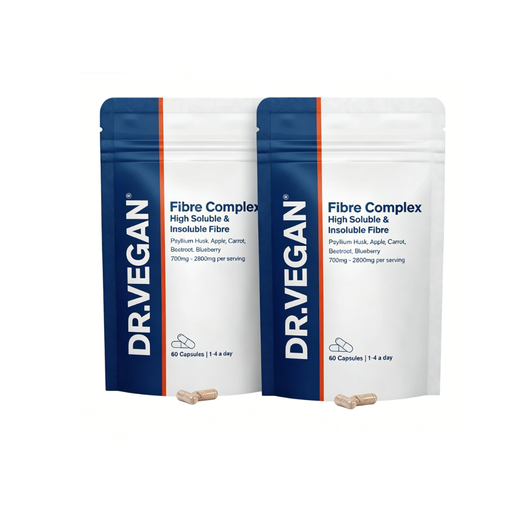
Why This Fits Their Persona: A practical starting point for adults who want a broad fibre blend and the ability to begin with one or two capsules before increasing the serving.
The label identifies five fibre sources and gives a serving range of one to four capsules, avoiding a one-size-fits-all approach.
Contains psyllium, apple, carrot, beetroot and blueberry fibre. Capsules can also be opened and added to food or drinks.
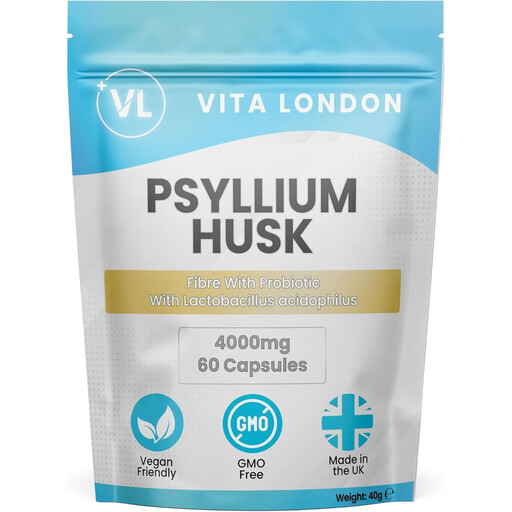
Why This Fits Their Persona: Suits adults who prefer a measured capsule routine, want psyllium alongside a probiotic and avoid loose powders.
The product states a two-capsule serving and identifies the psyllium as a 10:1 extract, making the basis of the 4000mg equivalent clearer.
Provides 200 million CFU of Lactobacillus Acidophilus per serving and is listed as vegan, gluten-free, dairy-free and free from added sugars.
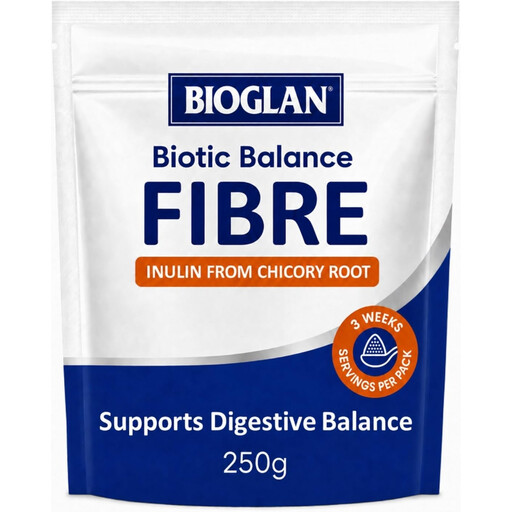
Why This Fits Their Persona: A powder format works for shoppers who want to adjust their serving, mix fibre into meals and maintain a regular daily routine.
It is a single-ingredient inulin powder with a stated 5g starting serving, making gradual adjustment easier than a fixed-dose format.
Each 5g serving supplies 4.5g soluble dietary fibre equivalent according to the product information. It is vegan, gluten-free and soy-free.
We have compiled a complete, real-time list of products that fully satisfy these strict selection criteria and UK safety regulations.
Adults are generally advised to work towards around 30g of fibre per day from food and drink. Supplements should complement beans, pulses, wholegrains, fruit, vegetables, nuts and seeds rather than replace a varied diet.
Timing varies according to the fibre type, serving size, diet and individual digestive pattern. Some people notice changes within a few days, while others need a gradual routine over a longer period. Follow the product instructions and do not increase the dose simply because results are not immediate.
It is sensible to avoid combining them at full servings when starting. Both can affect digestion, and taking several fibre products may increase gas, bloating or loose stools. Ask a pharmacist or GP before combining products, particularly if you take regular medicines or have a medical condition.
Yes. Check the best-before date, batch information and storage instructions. Powder should be resealed away from heat and moisture, while capsules should remain in their original container or pouch. Discard a product if its seal is broken on arrival or if its appearance, smell or texture has changed.