
24/7 Customer Support

Free returns

Same-day & Next-day Delivery

Quality Guaranteed

Unlock Your Welcome Offers: FREE Delivery | Up to 80% OFF | Free 30-day JoyPlus trial
Download the APP
Occasional bloating, gas or post-meal discomfort can make choosing digestive supplements feel unnecessarily complicated. Online listings often use broad phrases such as “full spectrum”, “detox” or “advanced gut support”, but these descriptions do not always explain what is inside the product or how it fits your diet.
Before buying, check the formula, serving instructions and suitability information rather than relying on the front of the packaging. The right choice depends on whether you want digestive enzymes, support for fibre-rich foods, a probiotic format or a vegan-friendly option.
A product containing many enzymes is not automatically suitable for every digestive concern. Amylase is associated with carbohydrate digestion, protease with proteins and lipase with fats. Lactase is relevant to lactose, while alpha-galactosidase is included in some formulas aimed at foods such as beans and other vegetables.
If you regularly eat high-fibre meals, look for ingredients that match that pattern. If you simply want general meal support, a wider enzyme blend may be more practical.
Some digestive enzyme supplements are intended to be taken immediately before or with meals. Others, such as certain fibre products, require plenty of fluid and gradual introduction. Taking a capsule at an unsuitable time may make it harder to judge whether it fits your routine.
Always follow the product label. Do not assume that taking a larger amount will provide additional benefit.
“Plant-based” and “vegan” are not interchangeable with every digestive product. Some formulas contain gelatine, milk, lactose, ox bile, pancreatin or ingredients derived from pineapple and papaya. A capsule may also be manufactured in a facility handling common allergens.
Read the complete ingredient and allergen statement, especially if you follow a gluten-free, dairy-free, keto, vegetarian or vegan diet.
Look beyond the number of ingredients. Enzyme activity may be listed in units such as DU, HUT, FIP, ALU or GalU. These indicate activity for particular enzymes and should not be compared as though they were all the same measurement.
A broad formula may include amylase, protease, lipase, cellulase and lactase. A targeted product may use fewer ingredients but focus on a specific dietary pattern, such as meals containing legumes or dairy.
Capsules suit adults who prefer a simple routine, while chewable lozenges and gummies may be easier for people who dislike swallowing tablets. Check the number of servings per container, not just the capsule count. Two tablets per serving will provide fewer daily servings than one capsule per serving.
For family use, check the stated age range carefully. A product suitable for adults should not automatically be given to children.
A clear label should identify active ingredients, amounts per serving, directions, warnings and storage requirements. For vegan digestive supplements, look for a vegetable capsule or pectin-based format, while also checking that the active ingredients are suitable.
People taking prescription medicines, who are pregnant or breastfeeding or who have a diagnosed gastrointestinal condition should seek medical advice before using supplements. Persistent pain, unexplained weight loss, blood in stools, ongoing diarrhoea or severe symptoms require professional medical attention rather than self-selection.
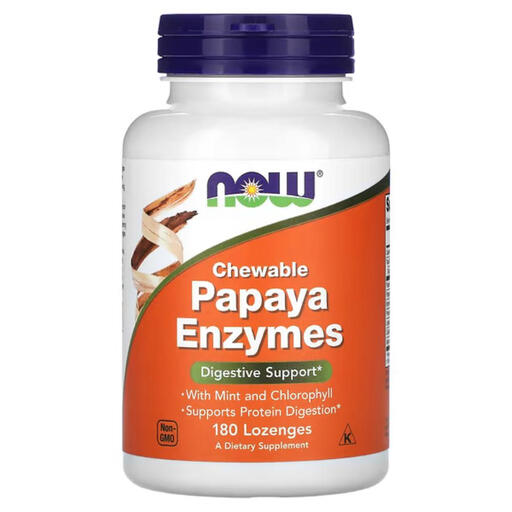
Why This Fits Their Persona: A chewable format can be a straightforward starting point for adults who do not want to swallow capsules and want a portable option after meals.
The label identifies papain, papaya fruit powder, bromelain and protease instead of relying only on a general wellness description.
180 lozenges; minty chewable format; adults and children over four are listed as suitable users. Check the label before use if pregnant or taking medication.

Why This Fits Their Persona: Suitable for adults seeking a wide-spectrum enzyme formula that covers proteins, carbohydrates, fats, dairy, grains and plant fibres.
The product lists enzyme activity units and named enzymes, helping shoppers compare the formula rather than judging it by capsule count alone.
120 vegan capsules; broad enzyme blend; listed as free from wheat, gluten, soya, milk, egg, fish and shellfish ingredients.

Why This Fits Their Persona: A targeted option for adults whose meals regularly include beans, lentils, vegetables and other complex carbohydrate foods.
It specifies alpha-galactosidase, invertase, cellulase and hemicellulase rather than presenting an untargeted “anti-bloat” claim.
Vegan capsules; one capsule one to three times daily as directed; contains lactase as part of its multi-enzyme blend. Contains coconut-derived MCTs.
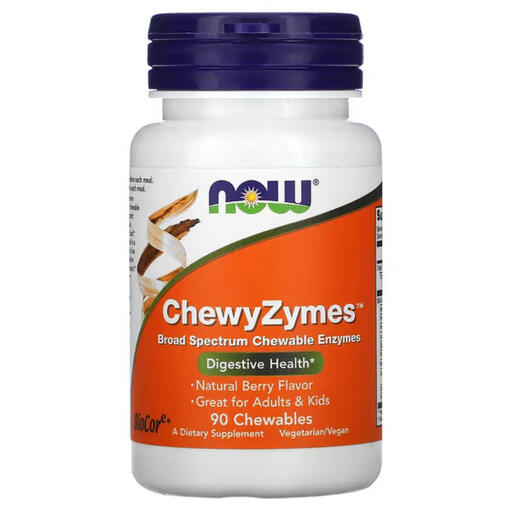
Why This Fits Their Persona: A berry-flavoured chewable option for households seeking a vegan format that is listed for adults and children aged four and over.
The serving instructions separate adult and child use, making the product’s intended audience clearer than a generic family claim.
Vegan enzyme blend; includes amylase, protease, lactase, lipase and invertase; chewable format. Follow the label and seek advice for children or medical conditions.
We have compiled a complete, real-time list of products that fully satisfy these strict selection criteria and UK safety regulations.
Many enzyme products are labelled for use immediately before or at the beginning of a meal, because their ingredients are intended to accompany food. Follow the specific directions for your chosen product rather than applying one rule to every formula.
Shelf life varies by product. Keep capsules, tablets, gummies and softgels in the original container, tightly closed and away from heat, moisture and direct sunlight. Check the best-before date and label instructions after opening.
Some are labelled for daily use, while others are intended around particular meals or dietary occasions. Do not exceed the recommended amount and avoid combining several products with overlapping ingredients without professional advice. If digestive symptoms continue or worsen, speak with a GP or pharmacist.