
24/7 Customer Support

Free returns

Same-day & Next-day Delivery

Quality Guaranteed

Unlock Your Welcome Offers: FREE Delivery | Up to 80% OFF | Free 30-day JoyPlus trial
Download the APP
Digestive support supplements can look very similar online, yet their ingredients and intended uses vary considerably. A probiotic capsule, prebiotic fibre powder and herbal formula are not interchangeable, so choosing by the biggest number on the label can lead to wasted money or unwanted discomfort.
For UK shoppers, three common buying traps deserve particular attention:
The right choice starts with matching the formula to your specific goal, dietary requirements and preferred format.
Different types of digestive health supplements work in different ways:
A product containing several categories is not necessarily more suitable. A simple, clearly labelled formula can make it easier to monitor how your body responds.
The serving size can change how a headline dosage should be interpreted. For example, one product may list 500mg per capsule, while another lists 4,000mg psyllium husk extract per two-capsule serving. Compare the complete daily serving and the number of servings in the pack.
For probiotic products, check whether the CFU figure is stated per capsule, per daily serving or at the time of manufacture. The Vita London Intimate Flora formula lists 10 billion CFU across seven strains per capsule, while Nordic Naturals provides 12 billion CFU across four strains per capsule. These are objective label differences, not a guarantee of different results.
For prebiotic fibre, the actual fibre quantity is equally important. Nutrigums Happy Fibre provides 3.8g of inulin per two-gummy serving, whereas powder formats allow more flexible portion adjustment.
Many vegan digestive supplements use cellulose or HPMC capsules, but shoppers should still read the full ingredient panel. Look for clearly stated information on vegan suitability, gluten, wheat, dairy, soy and other allergens. A product may be manufactured in a facility that handles allergens even when the recipe excludes them.
The format should fit your routine:

Why This Fits Their Persona: A capsule format for adults who want a straightforward water-soluble fibre option without measuring powder.
The label states the amount per two-capsule serving and advises starting with smaller doses and increasing gradually.
1.4g apple pectin per serving; vegan and free from several common allergens according to the supplied product details.

Why This Fits Their Persona: Suits adults comparing multi-strain probiotic supplements and looking for a capsule with added prebiotic fibre.
The product information identifies six cultures and states the 10 billion CFU amount per capsule, rather than presenting only a vague blend.
Vegan capsule; supplied product details state a prebiotic fibre blend and storage below 25°C.
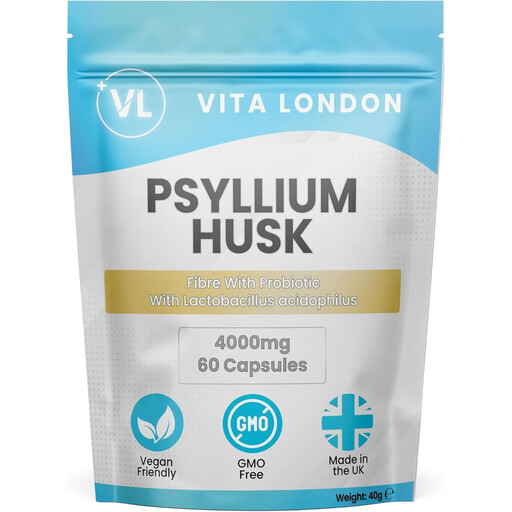
Why This Fits Their Persona: A practical choice for adults prioritising fibre intake and regularity in a capsule format, including those following vegan or low-carbohydrate diets.
The listed serving is two capsules and includes a clear warning not to combine it with other high-dose fibre products without advice.
4,000mg psyllium husk extract per serving; includes 200 million CFU Lactobacillus Acidophilus.
We have compiled a complete, real-time list of products that fully satisfy these strict selection criteria and UK safety regulations.
Before ordering, read the label supplied with the product rather than relying only on marketplace descriptions. Check the recommended daily dose, age restrictions, storage requirements and best-before information. Fibre products should be taken with the stated amount of liquid. Probiotic supplements may have specific temperature requirements.
Avoid stacking several products with the same active ingredient. For example, combining inulin powder, fibre gummies and psyllium husk capsules may increase total fibre considerably. Activated charcoal and mucilage-rich herbs may interfere with the absorption of medicines, so ask a pharmacist about suitable spacing.
Cascara sagrada and senna-based products require particular caution. The supplied directions describe short-term use, not continuous supplementation. Do not use them if you have diarrhoea, loose stools or abdominal pain, and seek medical advice for persistent or severe symptoms. Food supplements should complement a varied diet and healthy lifestyle, not replace medical assessment.
Shelf life depends on the product and storage conditions. Capsules and tablets are generally convenient to store in a cool, dry cupboard, while some probiotic products may require refrigeration. Check the best-before date and close pouches or bottles promptly after use.
Some products combine both, creating a synbiotic-style formula. Taking them together is not essential for everyone, and prebiotic fibres can initially cause wind or bloating. Introduce one new product at a time so you can assess tolerance.
Not always. Fibre, activated charcoal and certain herbal ingredients can affect absorption or interact with medicines. Speak with a pharmacist or GP before use if you take regular medication, are pregnant or breastfeeding, have a medical condition, or have ongoing digestive symptoms.