What matters when choosing?
Decide whether this is a biscuit break, a chocolate treat or a gift, then compare the exact packs on the measures that matter for that use.
| Priority |
What to check |
Your needs |
| Nutrition basis |
Compare energy, sugars and saturates per biscuit for similar-sized portions. Use per 100 g figures when biscuit sizes differ; read traffic-light labels where supplied. |
I want to know what one biscuit contributes, rather than assuming a plain and a chocolate-coated version are interchangeable. |
| Ingredients and allergens |
Read the current ingredients, declared allergens and precautionary statements. Check vegan, gluten-free or milk-free wording on the exact variant, not elsewhere in the brand’s range. |
If I am serving someone with a dietary requirement or allergy, the particular pack needs to meet it. A free-from label does not answer every allergen question. |
| Pack format |
For a chocolate box, check net weight, piece count and storage instructions. For biscuits, check pack size and any guidance for keeping them after opening. |
A box may suit a present or group, while a biscuit pack suits a tea break; I need the format to match the occasion. |
| Chocolate or plain |
Compare the exact flavour variants. McVitie’s lists 2.2 g sugars and 1.5 g saturates per Original biscuit, against 4.8 g sugars and 2.1 g saturates per Milk Chocolate biscuit. |
If I specifically want chocolate, I can choose it on that basis rather than treating the coating as a minor change to the plain biscuit. |
| School setting |
Establish who provides the food and where. The Department for Education’s school-food standards for England exclude confectionery, chocolate and chocolate-coated products across the school day. |
For food provided by an English school, I cannot treat a chocolate digestive or chocolate box as an ordinary biscuit option. |
Brand and retailer references
These examples show why the exact product variant matters; a characteristic of one biscuit should not be carried across a whole range.
McVitie’s
The reviewed range includes Original Digestives and Milk Chocolate Digestives.
- Sainsbury’s lists Original Digestives as suitable for vegans, with 71 kcal and 2.2 g sugars per biscuit.
- McVitie’s lists 83 kcal and 4.8 g sugars per Milk Chocolate biscuit; its ingredients include wheat, milk and soya.
Tesco
The reviewed own-label products include plain and chocolate-chip digestives.
- Tesco labels its plain Digestives suitable for vegans and lists 68 kcal and 2.0 g sugars per biscuit.
- Tesco’s chocolate-chip listing gives different per-biscuit values, including 3.7 g sugars, so the plain product’s figures cannot stand in for it.
Sainsbury’s
Its reviewed Free From Digestives are oat biscuits described as milk- and gluten-free.
- Sainsbury’s labels the Free From product suitable for vegans and coeliacs.
- The same listing warns that it is not suitable for customers with a nut allergy because of manufacturing methods. Check the current pack before serving.
M&S
The reviewed M&S Milk Chocolate Digestives are a chocolate-topped option.
- Marks & Spencer provides per 100 g nutrition values for comparing packs of different sizes.
- The reviewed listing gives 31.7 g sugars and 12.0 g saturates per 100 g; these are not per-biscuit figures.
Crawford’s
The reviewed products include a 400 g pack and a three-biscuit mini-pack format.
- The mini-pack format offers a stated number of biscuits per pack for portion planning.
- A distributor’s mini-pack specification identifies wheat, gluten and milk; check the current packaging for the pack you intend to serve.
Joybuy product options
These options cover plain and chocolate digestive biscuits, a gluten-free biscuit variant and boxed chocolates for a gift or shared occasion. Match the individual product to the intended break and check its current pack for dietary details.
 No image available
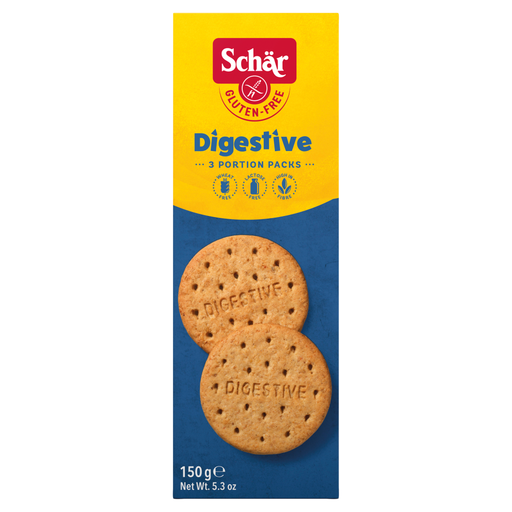
Schar Gluten Free Digestive Biscuits 150g
A digestive biscuit variant to consider when you need to check a gluten-free option for a mid-morning break. The product information identifies soya and possible lupin, and includes a warning about suitability for young children; read the current pack before serving.
View on Joybuy
 No image available
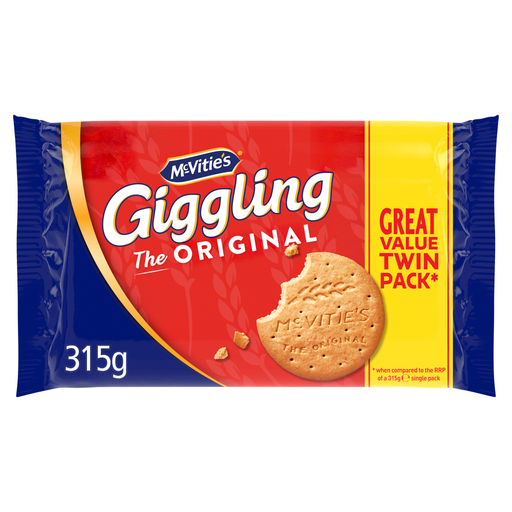
McVitie’s Digestives the Original 2x315g
A plain digestive option for a tea break, supplied as two 315 g packs. Joybuy lists 71 kcal, 2.2 g sugars and 1.5 g saturates per biscuit. It contains wheat; check the current pack for its milk precaution and dietary label.
View on Joybuy
 No image available
Gullon Zero Sugar Free Original Digestives 400g
A plain-style digestive variant for shoppers comparing sugar labelling. Check the pack’s per 100 g and per-biscuit figures rather than treating its name as a comparison with another product. The product information lists the sweeteners isomalt and maltitol and warns that excessive consumption may produce a laxative effect; it also identifies wheat and possible milk and soya.
View on Joybuy
 No image available
McVitie’s Digestives Milk Chocolate 400g
A chocolate-coated digestive to consider when you want the chocolate topping rather than a plain biscuit. Check the current pack’s nutrition and its wheat, milk and soya information. The Department for Education’s standards exclude chocolate-coated products from food provided in English schools.
View on Joybuy
 No image available
Ferrero Rocher T24 300g
A boxed chocolate option for gifting or sharing rather than a plain biscuit break. Check the current pack’s piece count and storage instructions; the product information identifies hazelnuts, milk, soya and wheat. Chocolate is excluded from food provided in English schools under the Department for Education’s school-food standards.
View on Joybuy
Questions about biscuits and chocolates
Can an English school provide milk-chocolate digestives at a mid-morning break?
No. The Department for Education’s school-food standards exclude confectionery, chocolate and chocolate-coated products from food provided in English schools across the school day, including morning breaks. This does not establish the rules for other UK nations or every privately supplied snack.
Does “digestive” make a biscuit a suitable everyday snack?
The name identifies a biscuit type, not an everyday-snack recommendation. University College London Hospitals NHS Foundation Trust advises having biscuits and chocolate less often and in small amounts; use the product’s nutrition label and the occasion to decide what to buy.
How do plain and milk-chocolate digestives compare?
Compare the exact variants using the same serving basis. McVitie’s lists 71 kcal, 2.2 g sugars and 1.5 g saturates per Original biscuit, versus 83 kcal, 4.8 g sugars and 2.1 g saturates per Milk Chocolate biscuit. Check ingredients and allergens separately.
What should I check before giving a box of chocolates?
Check the current pack’s net weight, piece count, ingredients, allergens and storage instructions. The box’s presentation alone does not establish how many pieces it contains or whether it suits the recipient’s dietary requirements.
Are school-food restrictions the same as HFSS retail-promotion rules?
No. The Department for Education’s school-food standards govern food provided in English schools, while the Food (Promotion and Placement) (England) Regulations 2021 address promotion and placement of specified products in relation to England. Neither rule means every digestive biscuit has the same product classification.


