
24/7 Customer Support

Free returns

Same-day & Next-day Delivery

Quality Guaranteed

Unlock Your Welcome Offers: FREE Delivery | Up to 80% OFF | Free 30-day JoyPlus trial
Download the APP
Buying a camera can become confusing when product listings focus on eye-catching megapixel counts, “4K” labels and large digital zoom figures. The right choice depends less on the biggest number and more on how the camera handles light, movement, sound, storage and everyday use.
As the Joybuy Product Recommendation Officer, I focus on practical specifications rather than marketing language. This guide explains the main buying traps and matches different types of UK shoppers with suitable digital cameras for photography.
A high pixel number does not automatically mean sharper or more attractive photos. Sensor size, lens quality, autofocus and lighting also affect the result. A compact camera with a small sensor may advertise 64MP or 80MP, but this does not make it equivalent to an APS-C or full-frame camera in difficult lighting.
For everyday snapshots, social media and family use, a modest-resolution camera may be sufficient. For cropping, large prints or low-light photography, prioritise sensor size and lens performance.
Optical zoom uses the lens to magnify the subject before the image reaches the sensor. Digital zoom enlarges the captured image, which can reduce detail and make camera shake more noticeable.
When comparing a camera with zoom lens, check whether the listing states optical zoom, digital zoom or a combination of both. A claimed “18x zoom” may not provide the same detail at long range as a genuine optical zoom system.
A 4K digital camera may record at a suitable resolution, but content creators should also check autofocus, stabilisation, microphone support, screen movement, battery life and file transfer. A camera for YouTube needs more than a 4K badge if you plan to record yourself while walking, speak to camera or upload regularly.
Sensor formats provide a useful basis for comparison:
Resolution should be considered alongside sensor size. For many users, around 20–26MP is already enough for detailed everyday photography and prints.
A fixed-lens compact camera is convenient because it is ready to use without carrying extra equipment. A travel camera with a wide-angle zoom can cover landscapes, interiors, street scenes and portraits from one position.
An interchangeable-lens camera gives you room to expand. You can start with a standard 16–50mm or 28–70mm lens, then add a wide-angle, telephoto or portrait lens later. This flexibility is valuable if photography develops from a casual hobby into a more focused pursuit.
For moving subjects, look for eye autofocus, subject tracking and a suitable continuous shooting rate. These features can help with pets, children, sports and handheld video.
For vlogging, a flip or vari-angle screen makes self-framing easier. A microphone input or capable built-in microphone can also make a noticeable difference to spoken content. Check whether the camera includes optical, sensor-shift or electronic stabilisation, as these systems work differently and may affect image quality or cropping.

Why This Fits Their Persona: A straightforward option for teenagers, families and first-time users who want a compact camera for photography, basic vlogging and everyday trips around the UK.
The listing specifies 12x optical zoom and 4K recording, helping buyers distinguish these features from digital-only zoom claims.
Wi-Fi connectivity, 12x optical zoom and a compact design support simple photo and video sharing.
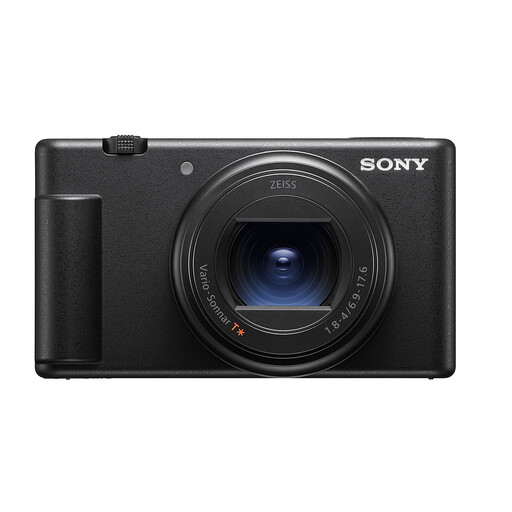
Why This Fits Their Persona: Suitable for travellers and creators who want a small, fixed-lens camera for photographs, 4K footage and quick smartphone sharing without carrying extra lenses.
Its stated 18–50mm wide-angle zoom, 1-inch sensor, RAW capture and built-in ND filter provide more useful detail than a headline megapixel figure alone.
The 20.1MP sensor, 4K video, 24fps burst shooting and Real-time Eye AF support both stills and moving subjects.

Why This Fits Their Persona: A strong match for vloggers and content creators who need interchangeable lenses, detailed stills, high-quality video and a system that can expand over time.
It combines an APS-C sensor with stated 4K60p recording, 10-bit 4:2:2 options and Real-time Eye AF, rather than relying on resolution alone.
The 26MP sensor, 16–50mm power zoom lens, USB-C connection and compatibility with over 70 Sony E-mount lenses offer a flexible creator setup.
We have compiled a complete, real-time list of products that fully satisfy these strict selection criteria and UK safety regulations.
Yes. A dedicated camera can provide a larger sensor, physical controls, optical zoom or interchangeable lenses that are not always available on a smartphone. The benefit is clearest for portraits, action, travel scenes and photography in changing light.
It can be, provided it also offers dependable autofocus, adequate sound, a suitable screen and practical file-transfer options. A vlogging camera with a flip screen and microphone support may be more convenient than a camera that only records 4K.
Lifespan depends on use, storage and battery care. Keep the camera dry, protect the lens, avoid extreme heat and use compatible batteries and chargers. Mirrorless systems may remain useful for longer because lenses and accessories can be upgraded without replacing the camera body.