For a useful room-to-room comparison, choose matching hygrometers with stated humidity accuracy, place them in comparable positions and check their readings together before treating a small difference as meaningful. A local display suits occasional checks; logging helps you compare patterns over time, while remote alerts are worth considering only if you need notifications and can accommodate their connection or hub requirements.
Who is comparing rooms?
Room-to-room comparison shoppers
If you want to know whether your home office differs from another room, matching sensors, comparable placement and stated accuracy matter more than extra display features. Check the units together before interpreting a small difference.
People investigating recurring condensation
If moisture appears on an office window or you notice a persistent musty smell, readings taken over time can help you see when conditions change. Dorset Council’s guidance also makes clear that moisture problems can have different causes; a hygrometer reading alone cannot identify one.
Home workers who want alerts
If you cannot regularly check every room, consider how you would receive notifications and review past readings. Confirm the connection range, app requirements and whether your chosen alert feature needs a separate hub.
What matters when choosing?
Start with whether readings from the home office and another room will be comparable. Then decide whether a current reading is enough, or whether you need a history or alerts.
| Concern |
What to check |
Who this matters to |
| Comparable readings |
Look for stated humidity accuracy in %RH and matching units that you can position similarly. A temperature reading adds context when one room is colder. |
If my office reading differs only slightly from another room’s, I want to know whether the difference might come from the sensors or their positions; around 40% of consumers put comparable readings first. |
| Humidity history |
Check whether readings are stored without a nearby phone and how you can review or export them. |
When moisture seems to return after particular activities or overnight, I need a record rather than a single reading; roughly 30% of consumers make trend tracking their primary concern. |
| Alerts and access |
Confirm how notifications work, whether a hub is required and how walls or floors affect the stated wireless range. |
If I cannot keep checking the office display, I want a notification when a chosen humidity threshold is crossed; about 30% of consumers prioritise that alert workflow. |
Mistakes that can distort a comparison
-
Taking one reading as proof of a building defect
A hygrometer measures conditions in the air; it cannot tell you whether moisture comes from condensation, a leak or another building problem.
Look for a pattern in the readings and inspect visible signs. If damp or mould persists, or you suspect a leak, seek advice from your landlord, managing agent or a qualified building professional rather than relying on the device alone.
-
Assuming different models will read alike
Manufacturer-stated humidity tolerances vary and can apply under particular conditions. A small room-to-room difference may be difficult to interpret when the two devices disagree even in the same place.
Use matching units where possible, check their stated %RH accuracy and place them together initially to look for a persistent difference before moving them into separate rooms.
-
Assuming every alert works remotely
Bluetooth distance, phone access and hub requirements affect how alerts reach you. SwitchBot says real-time push notifications for its Indoor/Outdoor Thermo-Hygrometer require a SwitchBot Hub.
Confirm the exact model’s connection method and required accessories, and check whether it retains readings when your phone is out of range.
Battery-powered sensors also need replacement batteries during use.
Brands to consider for room comparisons
Govee
The H5075 is a Bluetooth option for shoppers who want a readable display alongside app-based room records.
- Govee states ±3%RH humidity accuracy, app alerts and 20 days of records with CSV export for the H5075.
- Its stated Bluetooth range depends on the surroundings. Check matching units together before relying on small differences between rooms.
SwitchBot
The Indoor/Outdoor Thermo-Hygrometer suits shoppers considering stored readings, export and an optional hub-based alert setup.
- SwitchBot states humidity accuracy of up to ±1.8%RH, 68 days of on-board storage, two years of in-app storage and CSV export.
- According to SwitchBot, real-time push notifications require a SwitchBot Hub, so check the full setup before choosing it for remote alerts.
INKBIRD
The IBS-TH2 is a Bluetooth data-logging option for comparing recorded room conditions.
- INKBIRD states up to 30,000 offline records, export and calibration support. Its typical humidity accuracy is stated as ±3%RH at 25°C and 20%–80%RH.
- Check the seller’s terms and whether the model’s recording and app workflow suit the way you plan to compare rooms.
TFA Dostmann
The 30.5046 is a display-led option for following conditions in an individual room without relying on an app for each check.
- TFA Dostmann lists maximum and minimum readings, a 12-hour humidity curve, dew-point calculation and an adjustable humidity alarm.
- A trend shown on one unit does not make readings from different models directly comparable; check accuracy and placement if you intend to compare rooms.
Joybuy option for room checks
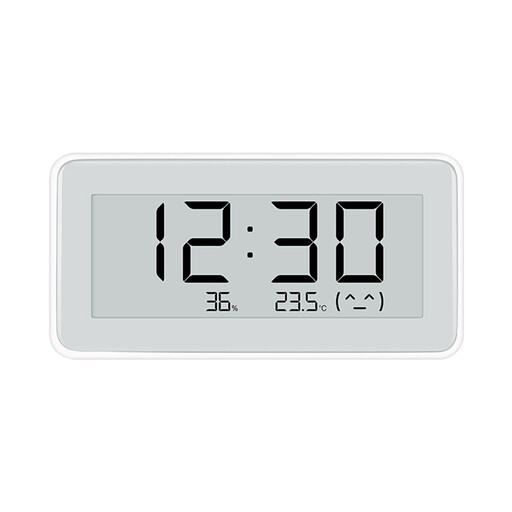
This clock-style temperature and humidity monitor is a display-led choice for checking rooms. If you want readings taken at the same time in different rooms, check whether matching units are available.
 No image available
Xiaomi Temperature and Humidity Monitor Clock
For checking the home office against another room, this clock-style monitor displays temperature and humidity. Check whether you can obtain matching units for simultaneous readings, and confirm app history and export options if you need to compare trends.
View on Joybuy
Questions about comparing humidity
How should I compare humidity in two rooms?
Use matching thermo-hygrometers in comparable positions and compare readings taken over the same period. Put the units together first to see whether they show a consistent difference; if you use one device in turn, let its reading settle in each room and bear in mind that conditions may change between checks.
Does a higher office reading prove there is a damp problem?
No. A higher humidity reading describes conditions in the air, not the cause of visible moisture or damp. Dorset Council’s guidance distinguishes condensation from other forms of damp, so investigate persistent signs or a suspected leak rather than using a hygrometer as a diagnosis.
Do I need Wi-Fi to compare rooms over time?
No; a hygrometer that stores readings can provide a history without Wi-Fi. Choose a connection and alert setup according to how you will retrieve the record, and check whether remote notifications require a separate hub.
What should I check about UKCA or CE marking in Great Britain?
Check the listing, supplied documentation and seller details for the exact hygrometer rather than judging compliance from a product image. Department for Business and Trade guidance says the applicable Great Britain product rules depend on the product category; confirm which requirements apply to the particular device and any supplied electrical accessories.


