
24/7 Customer Support

Free returns

Same-day & Next-day Delivery

Quality Guaranteed

Unlock Your Welcome Offers: FREE Delivery | Up to 80% OFF | Free 30-day JoyPlus trial
Download the APP
From perfecting a delicate sponge cake to managing a healthy diet, a reliable digital kitchen scale is an indispensable tool in the modern UK kitchen. Yet, the market is flooded with options that look good on the shelf but fail to deliver when it matters. Many of us have been there: a scale that gives a different reading every time, a plastic surface that stains after one encounter with turmeric or a bulky design that hogs precious counter space.
As a Product Recommendation Officer at Joybuy, my role is to help you see past the marketing jargon. Before you make a purchase, let’s look at the three most common pitfalls that lead to buyer's remorse and how to sidestep them.
By understanding what to look for, you can find an electronic cooking scale that becomes a trusted partner for all your culinary projects.
To ensure you get a durable and accurate tool, focus on these three non-negotiable features. They are the difference between a short-term gadget and a long-term kitchen staple.
For most home kitchens, a 5kg kitchen scale offers the perfect balance. It’s robust enough to handle a heavy mixing bowl filled with dough, yet sensitive enough for small quantities. The most crucial specification to check is the graduation, which should be 1g. This level of precision is essential for serious baking scales, ensuring you get the right amount of yeast, salt or raising agents every time. A scale with 5g or 10g increments simply won't provide the accuracy needed for consistent results.
The material of the weighing platform directly impacts hygiene and longevity. While plastic is common, it can scratch and stain. A tempered glass surface is a far better option. It is non-porous, meaning it won’t absorb odours or colours, and can be wiped clean effortlessly. It also provides a stable, durable platform that maintains its sleek appearance over time.
A good digital food scale must have two key functions:
Based on these practical criteria, here are a few options suited to different types of users in the UK.
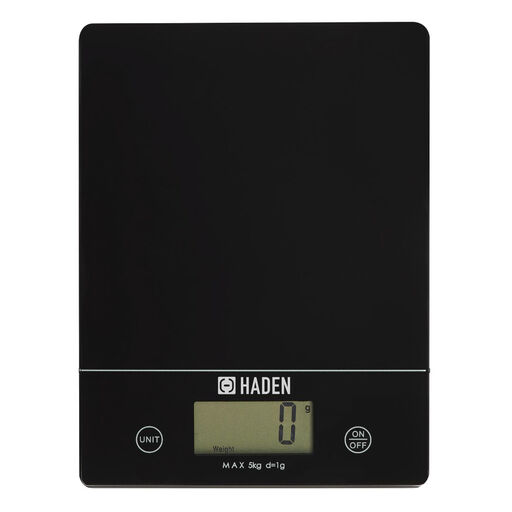
Why This Fits Their Persona: This is a straightforward, reliable workhorse for daily meal prep, portion control and general cooking. Its slim profile means it won't clutter the countertop in a typical UK kitchen, and its simple touch controls are intuitive for quick, no-fuss measurements.
The tempered glass surface completely avoids the staining and odour-absorption issues of cheap plastic scales. Its 1g graduation provides consistent accuracy, steering clear of the "accuracy illusion" pitfall.
Features a 5kg capacity and essential unit conversions (g, oz, lb). The sleek, easy-to-clean design makes it a practical and stylish addition to any kitchen.
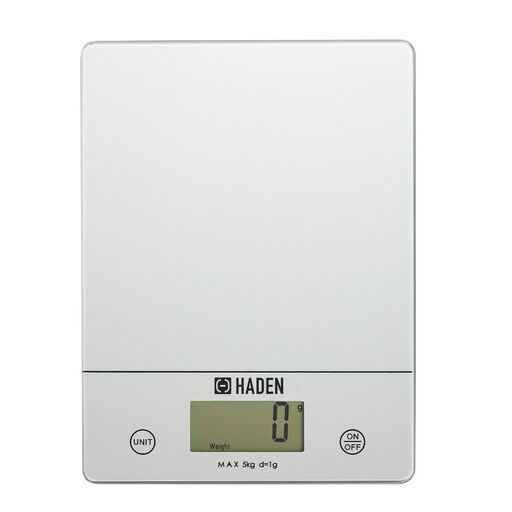
Why This Fits Their Persona: For the baker who follows recipes meticulously, precision is everything. This scale not only provides 1g accuracy but also includes a function to measure water and milk volume (ml), offering an extra layer of consistency for both wet and dry ingredients.
It sidesteps impractical design by offering more than just basic weighing. The dedicated liquid volume function provides more reliable measurements than using a separate jug, reducing washing up and potential for error.
Its ability to measure both weight and liquid volume makes it a highly versatile tool for complex baking. The auto-shutoff feature also helps conserve battery life during long baking sessions.

Why This Fits Their Persona: Ideal for those who track calories or macronutrients, or who do large-batch meal prep. The Bluetooth connectivity syncs with a companion app for detailed dietary logging, while the generous 10kg capacity handles heavy-duty tasks with ease.
This scale moves beyond the limitations of basic models. The app integration provides genuine utility for health tracking, and the high 10kg capacity prevents the overload errors common when weighing large pots or bulk ingredients.
Offers Bluetooth connectivity for scientific dietary management and a high 10kg capacity. The tempered glass surface ensures it remains hygienic and easy to clean.
We have compiled a complete, real-time list of products that fully satisfy these strict selection criteria and UK safety regulations.
A simple way to check is by using a known weight. For example, a UK ?1 coin weighs 8.75g and a ?2 coin weighs 12g. Place one or more on the scale to see if the reading is correct. If you get inconsistent results, first try replacing the batteries and ensure the scale is on a completely flat, hard surface, as soft or uneven counters can affect the sensors.
The 'tare' function is one of the most useful features. It allows you to reset the scale's display to zero. This is perfect for measuring ingredients without including the weight of the bowl or plate. Simply place your empty container on the scale, press the 'tare' or 'zero' button, and then add your ingredient to get its precise weight.
Battery life depends on the model and how often you use it. However, most modern kitchen weighing scales that include an auto-shutoff feature are very efficient. With typical home use, a set of batteries (often AAA) can last from several months up to a year. The auto-off function is key, as it prevents the battery from draining if you forget to turn the scale off.