
24/7 Customer Support

Free returns

Same-day & Next-day Delivery

Quality Guaranteed

Unlock Your Welcome Offers: FREE Delivery | Up to 80% OFF | Free 30-day JoyPlus trial
Download the APP
A reliable set of digital kitchen scales can make recipes more consistent, simplify meal preparation and reduce food waste. However, not every electronic kitchen scale offers the same practical value. A low price may hide a small platform, unclear readings or a design that becomes inconvenient after regular use.
Before choosing, watch for three common buying pitfalls:
For general cooking, 1g increments and a capacity of around 5kg cover most household tasks, including weighing flour, sugar, meat, fruit and mixing bowls. These are useful features in baking scales and portion control scales.
For smaller quantities, look for 0.1g increments. The CASO Design FinoCompact, for example, has a 500g maximum capacity and measures in 0.1g steps, making it more suitable for coffee, tea, herbs and spices than large-batch cooking.
Remember that a higher maximum capacity does not automatically mean greater precision. Select the measurement range according to your regular recipes.
A tare function resets the display to zero after placing a bowl on the platform. You can then add ingredients one by one without using separate containers. This is particularly helpful for baking and reduces washing-up.
Useful units may include grams, ounces, pounds, millilitres and cup measurements. However, volume readings for liquids are estimates based on density, so weighing ingredients in grams remains preferable where a recipe specifies weight.
A wipe-clean glass or stainless steel kitchen scale is practical for everyday food preparation. Check the platform dimensions if you use large mixing bowls, as a compact scale may be difficult to read around a wide container.
A backlit LCD display is helpful in kitchens with limited lighting. Auto-off can preserve battery life, while overload and low-battery indicators provide useful warnings.
Most models use AAA batteries, but battery-free kitchen scales powered by kinetic energy can reduce battery replacement. These may be convenient for occasional cooks, although they need winding before use.
Some households only need a straightforward food scale for recipes. Others may benefit from smart nutritional scales that connect to an app, or from a food processor with integrated weighing scales that combines weighing and preparation in one appliance.
The following recommendations are organised by shopping profile rather than broad rankings.
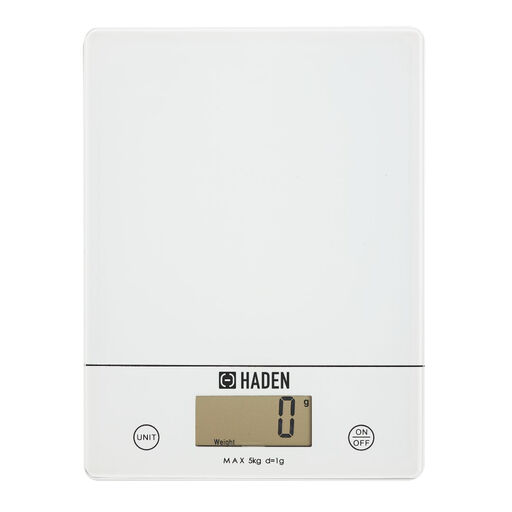
Why This Fits Their Persona: A practical choice for UK households starting with baking, cooking or portion measuring, with a slim profile suited to smaller worktops and kitchen drawers.
Its 5kg capacity and 1g increments are clearly specified, avoiding vague claims about accuracy. The LCD display and touch controls keep operation straightforward.
Tempered safety glass surface, 5kg maximum capacity and measurements in kg, grams, ounces, pounds and millilitres.

Why This Fits Their Persona: Suitable for fitness enthusiasts, meal-preppers and families who want weighing combined with digital food logging.
The product specification lists 1g increments, a 5kg capacity and named app connections, making the smart functions easier to assess before purchase.
Stainless steel platform, Bluetooth connectivity, backlit LCD and support for calories, macros and additional nutrients through the app.
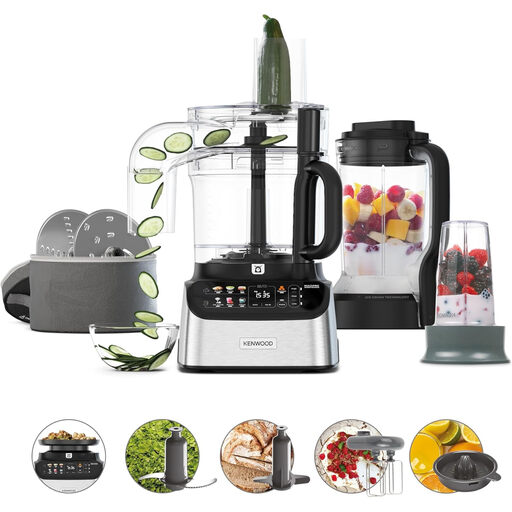
Why This Fits Their Persona: Designed for households that batch-cook, prepare varied recipes or want to reduce separate appliances on a busy kitchen worktop.
The integrated scale weighs directly into the bowl, so there is less need for a separate scale. Its 3L processor bowl and 1000W motor are stated specifications rather than vague performance promises.
3-in-1 processor and blender design, 13 accessories, variable speed, pulse function and dishwasher-safe components.
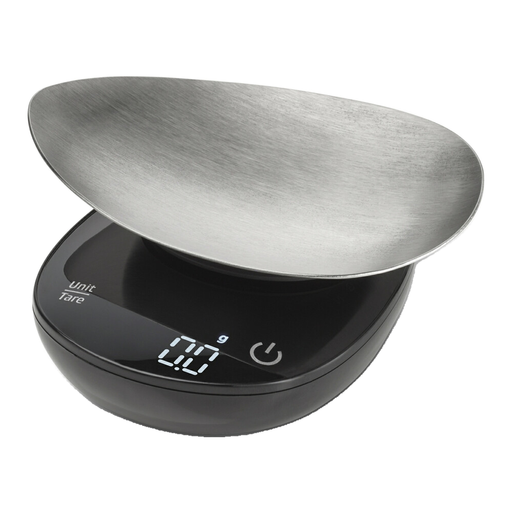
Why This Fits Their Persona: A compact option for coffee enthusiasts, tea drinkers and cooks who regularly measure spices or other small quantities.
Its 500g capacity is clearly positioned for small-quantity work, while 0.1g increments avoid the mismatch of using a large-capacity scale for delicate measurements.
0.1g increments, stainless steel weighing bowl, tare function, white LED display and sensor-touch controls.
We have compiled a complete, real-time list of products that fully satisfy these strict selection criteria and UK safety regulations.
Place your scale on a flat, stable surface and wait for the display to return to zero before weighing. Use the tare function when adding ingredients to a bowl, and avoid exceeding the stated maximum capacity. Wipe the platform with a damp cloth rather than immersing the unit. For battery models, replace batteries when readings become faint or inconsistent.
If you prepare espresso or filter coffee, consider a dedicated coffee scale with a timer and flow-rate functions. For everyday baking, a 5kg model with 1g increments is generally more useful. Choose smart nutritional scales only if app-based tracking fits your routine.
Yes. Measuring flour, sugar and butter by weight can make recipes more repeatable than relying on cups, particularly when ingredient density varies. A model with 1g increments and a tare function is suitable for most home baking.
Lifespan depends on battery care, storage and protection from moisture. Keeping the scale dry, avoiding overload and cleaning it as instructed can help maintain reliable operation. Check the warranty and availability of replacement batteries before buying.
Battery-operated models generally use very little power because they switch off automatically after a period of inactivity. Battery-free kitchen scales use kinetic energy instead, while rechargeable smart models need periodic USB charging.