Small-batch cottage jam makers
If you weigh fruit and sugar in grams, a scale with tare lets you reset the reading between ingredients without emptying the bowl.


For a cottage jam batch, look for a digital scale rated to 5 kg with 1 g graduations and tare, provided the bowl and ingredients together stay within its limit. A slim or folding design takes less storage space; a supplied bowl means less reliance on cottage cookware but adds bulk.
If you weigh fruit and sugar in grams, a scale with tare lets you reset the reading between ingredients without emptying the bowl.
A slim or folding scale is easier to put away between cottage cooking sessions. Check that its platform still holds the bowl you intend to use securely.
If your recipes alternate between metric and imperial measures, check the exact model’s unit options rather than converting each quantity yourself.
Start with the weight of your bowl and intended batch, then decide how much storage space and one-bowl convenience matter in the cottage kitchen.
| Concern | What to check | Who this matters to |
|---|---|---|
| Usable capacity | Check the maximum load, including the bowl, and whether the model specifies 1 g graduations. | If I am weighing a substantial fruit batch, I need the loaded bowl to stay within the scale’s limit. Around 42% of consumers put capacity and gram-by-gram weighing first. |
| Storage and setup | Check folded or stored dimensions and whether your bowl sits securely without obscuring the display. | With little room to pack or put things away, I need a scale that stores compactly but still supports my bowl. Compact storage is the main concern for roughly 33% of consumers. |
| One-bowl recipe use | Confirm tare, the units your recipe uses and the volume of any supplied bowl. | When adding fruit and sugar in sequence, I would rather reset the reading than change containers; I also need the right recipe units. About 25% of consumers prioritise that convenience. |
The container counts towards the maximum load. A large bowl can leave less capacity for fruit and sugar than the rating suggests.
Allow for the empty container before weighing. If the loaded bowl could exceed the limit, record the ingredients in separate portions or choose a scale with a suitable stated capacity.
A folding or slim scale may fit the drawer but still be awkward with a wide bowl or a display hidden beneath it.
Check the open platform dimensions and place your intended bowl on a stable, level surface before loading it with fruit.
Battery requirements differ between models: Salter lists a CR2032 for its Aquatronic scale, while Lakeland’s stainless-steel bowl model uses AAA batteries.
Check the exact model’s battery type before travelling and take a compatible spare if needed.
Salter’s Aquatronic is a flat-scale option; its researched bowl model offers a different setup for weighing ingredients.
Lakeland offers a folding scale for compact storage and a separate stainless-steel bowl scale.
The Beurer KS 25 is a bowl-scale option when the intended loaded batch fits a 3 kg maximum.
These kitchen scales offer different starting points for weighing jam ingredients: assess each model’s loaded capacity, bowl setup and tare function against the batch you plan to make.
 No image available
If you plan to weigh fruit and sugar successively in one bowl, confirm this model’s tare function and maximum loaded weight before choosing it.
Check whether a bowl is supplied or whether you will need to use one at the cottage.
 No image available
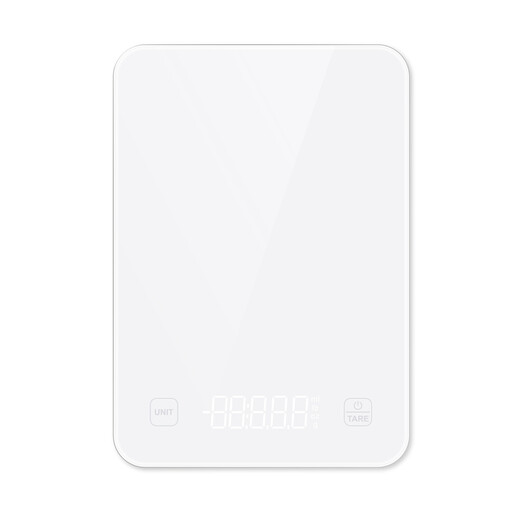
If your bowl and fruit could exceed a 5 kg scale’s limit, compare this model’s stated 10 kg capacity with your intended loaded weight.
The product name also claims 1 g precision and identifies a tempered-glass variant with app integration. Confirm tare, power requirements and dimensions if they matter to your cottage setup.
 No image available
For fruit weighing, establish this model’s maximum loaded weight before deciding whether it fits your batch.
Its capacity figures conflict at 1 kg and 3 kg. Resolve that difference before relying on it for a bowl of fruit, and confirm the bowl and tare setup you need.
It can be enough if the container and ingredients together remain within the stated 5 kg maximum. For a heavier batch, weigh separately recorded portions or choose a scale with a suitable higher capacity.
Tare is useful if you want to reset the reading as you add ingredients to the same bowl. Confirm that the exact model provides it rather than assuming every digital scale does.
Take the type specified for your exact scale. Salter lists a CR2032 for its Aquatronic model, while Lakeland specifies AAA batteries for its stainless-steel bowl scale.
Follow the cleaning instructions for the exact scale and bowl. Salter describes its Aquatronic scale as wipe-clean; do not assume that a digital scale or a removable bowl can be immersed or put in a dishwasher without instructions for that component.