One-person quick-meal cooks
If you mainly need one pasta countdown, look for controls you can set and stop promptly, a display you can read at a glance and a suitable place to put the timer.


For one-person pasta cooking, start with a digital timer that is quick to set, easy to read and easy to hear from where you will be. Adjustable volume or a longer range becomes more useful if you step away from the kitchen or time longer recipes; consider splash-tolerant construction if your cooking space calls for it.
If you mainly need one pasta countdown, look for controls you can set and stop promptly, a display you can read at a glance and a suitable place to put the timer.
If you leave the immediate cooking area or contend with household noise, the alert and where you position the timer deserve particular attention. Adjustable volume may help you choose a suitable alert level.
If the timer will be near splashes or may be knocked over, check the exact model’s stated tolerances. A longer timing range also matters if you plan to use it for other recipes.
For a single pasta countdown, settle the controls, display and alert first. A longer range or tougher construction is a separate choice for the other ways you expect to use the timer.
| Concern | What to check | Who this matters to |
|---|---|---|
| Quick setup | Look for countdown operation, clear controls and a range that covers your cooking tasks. Salter lists a 99 minute 59 second limit for its Big Button model. | If I am timing one portion of pasta, I want to enter the countdown without working through extra modes. Around 36% of consumers put quick, single-timer setup first. |
| Alert and placement | Check the stated alert options and whether the timer can stand securely or attach to a suitable magnetic surface. | When I step away from the hob, I need to notice that the countdown has finished. For around 29% of consumers, hearing the alert is the primary concern. |
| Readability | Check the display and button size on the exact model; if you need a backlight, confirm that it is specified. | I prefer to see the remaining time while I am preparing food rather than picking up the timer. Around 21% of consumers prioritise an easy-to-read display and controls. |
| Resilience and wider use | Check model-specific splash and heat claims, the timing range and the required batteries. | If I will also time longer recipes in a busy, splash-prone kitchen, I want the timer’s stated limits to suit that use. Resilience and wider use come first for around 14% of consumers. |
A multi-hour range does not tell you whether you will notice the end of a pasta countdown.
If you leave the kitchen, check the documented alert options and where you can position the timer before prioritising extra timing capacity.
Magnetic backing needs a compatible surface, and a timer’s tolerance of splashes or heat depends on the model.
Check your intended mounting spot against the exact manufacturer’s placement and environmental guidance. Do not apply Taylor’s claims for its Splash 'N' Drop model to other timers.
A timer cannot provide its reminder when its batteries are unavailable or depleted.
Check the required battery type and quantity, and whether batteries are supplied.
Taylor states that its Splash 'N' Drop model requires two AAA batteries, which are not included; you will also need replacements when they run down.
UK guidance from the Office for Product Safety and Standards says unwanted electrical products and batteries should not go in household rubbish.
Use an appropriate electrical recycling route for the timer and a battery collection route for removable batteries.
Salter lists basic digital, loud-alert and magnetic or freestanding kitchen timers, including models suited to a straightforward countdown.
Taylor’s Splash 'N' Drop model is relevant if you want stated protection for a busier kitchen as well as a longer timing range.
The TM01 is a model to check if a backlit display, adjustable alert and extended timing range matter to you.
This visual countdown timer is a related option if a coloured indication of elapsed time suits you; it is not a substitute for a numeric digital display if reading the remaining minutes is essential.
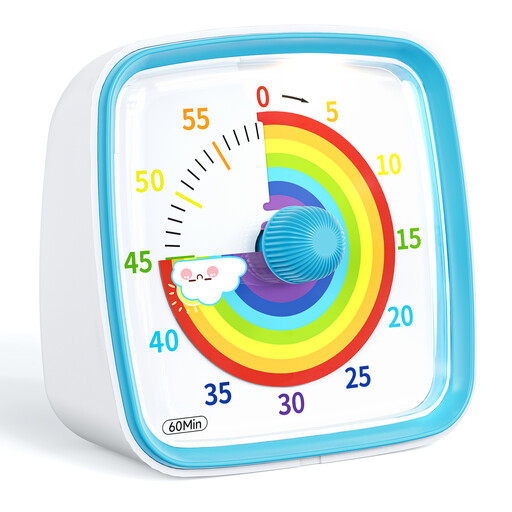 Image unavailable
Consider this for a single cooking countdown if a visual display meets your needs. It has a stated 60-minute range rather than a numeric digital readout; check that the range covers your other tasks and confirm how the mute alert works if the end signal matters to you.
Yes, if that range covers the cooking tasks you intend to time. Salter lists countdown operation, a display and an audible alert on its Big Button model; check that the exact timer’s controls and alert suit where you cook.
It is worth considering if you step away from the kitchen, have background noise or want to avoid an unnecessarily loud alert. Salter specifies three volume settings on its Loud Digital Kitchen Timer; a fixed alert may suffice when you remain close to the hob.
No: use a suitable magnetic surface and follow the exact timer’s placement and temperature guidance. Taylor’s stated tolerance of temperatures up to 75°C applies to its Splash 'N' Drop model, not to magnetic timers generally.
Use appropriate electrical and battery recycling routes rather than household rubbish. The Office for Product Safety and Standards gives that guidance for unwanted electrical products and batteries; check the collection options available locally.