
24/7 全天候客户支持

免费退货

当日/次日达

品质保障

开启新人专享福利: 全场免邮 | 低至 2 折 | 免费试用 30 天 JoyPlus 会员
下载 Joybuy
Digital scales can support everyday weighing, portion control, baking, fitness tracking and household planning. However, the right choice depends on what you need to measure. A compact kitchen scale will not replace a bathroom scale, while a smart body scale may offer more data than a user who only wants a quick weight reading needs.
Marketing language can also make comparison difficult. Before buying, look beyond promises about “advanced” sensors or “smart” tracking and check the practical specifications that affect daily use.
Bluetooth scales and body composition scales can connect to apps, save trends and display additional measurements. These functions may suit users who enjoy structured fitness or nutrition tracking, but they also require a compatible phone, app setup and regular charging or battery replacement.
If you only want a clear weight reading, a straightforward bathroom scale may be more convenient. Decide whether app connectivity genuinely fits your routine before paying for it.
A display showing small increments does not automatically guarantee consistently reliable readings. Stability, surface type, maximum capacity and correct placement all affect results.
For example, bathroom scales should be used on a flat, hard floor, not carpet or uneven flooring. Kitchen scales should sit on a stable worktop and should not be overloaded. Always compare the stated graduation, minimum weighing amount and capacity rather than focusing on one impressive-looking number.
Some digital scales use AAA batteries, while others have rechargeable batteries. Check whether batteries are included and consider how easy they are to replace. A glass platform may be easy to wipe clean, but it should not be submerged or exposed to excessive moisture.
For food weighing scales, look for a surface that can be cleaned after contact with ingredients. For body composition models using Bio-electrical Impedance Analysis (BIA), read the safety guidance carefully. People with certain medical implants and pregnant users are generally advised to avoid the BIA function and use weight-only mode where the instructions permit.
Match capacity to the job:
The increment is also important. A 1g graduation is useful for baking, portion control and calorie tracking scales. A bathroom scale displaying 0.05kg, or 50g, provides a more detailed weight reading than models using larger increments, although readings can still vary if the floor or stance changes.
A bright LCD or LED display should be readable from a natural standing or working position. For UK households, check whether the scale supports kilograms, as well as any additional units you use, such as grams, ounces, pounds or millilitres.
Bluetooth scales require more than a Bluetooth symbol on the packaging. Confirm which app stores data, whether multiple users can create profiles and whether it synchronises with platforms such as Apple Health, Google Fit or Samsung Health. App features can change, so treat them as a convenience rather than a replacement for the scale’s core weighing function.
Tempered glass platforms are common in bathroom and kitchen designs because they offer a smooth surface that can be wiped clean. Stainless steel is another practical option for food weighing scales, particularly for users who regularly handle flour, spices or wet ingredients.
Always keep a digital scale on a solid, level surface. Do not use cracked glass, place a scale in standing water or clean it with abrasive products. Following the supplied instructions helps protect the sensors and maintain consistent readings.
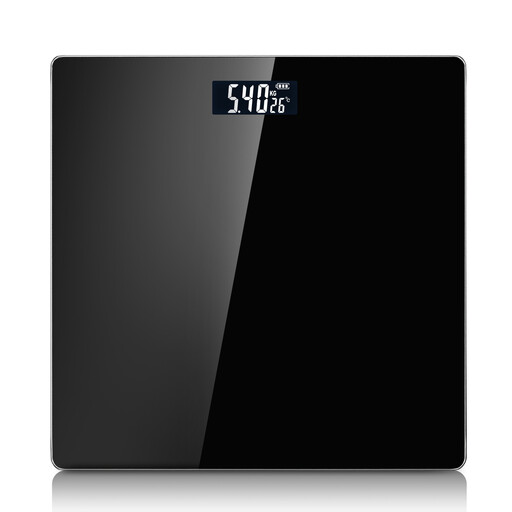
Why This Fits Their Persona: A simple option for UK households wanting a direct weight reading without app registration or ongoing connectivity. It can be placed in a bathroom, bedroom or guest room.
Its specifications clearly state the 180kg capacity, 0.05kg precision and requirement for two AAA batteries, which are not included.
Large LCD display, kg/lb readings and a compact 4mm tempered glass body.
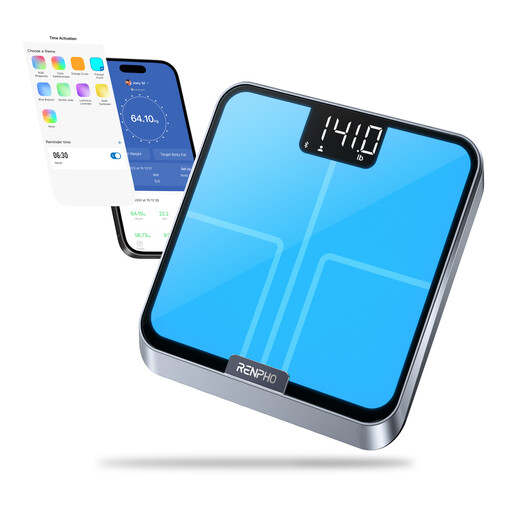
Why This Fits Their Persona: Suitable for fitness-focused households that want weight trends and additional body metrics stored in an app.
The product information identifies the BIA method, Bluetooth requirement, app pairing steps and weight-only option, making the setup expectations clear.
Tracks 13 listed metrics, supports multiple users and has a maximum capacity of 180kg.

Why This Fits Their Persona: Designed for home cooks, bakers and users weighing larger bowls, meal-prep portions or several ingredients.
The 10kg limit and 1g graduation are stated alongside the minimum 3g weighing amount, so buyers can assess suitability for larger and smaller tasks.
Bluetooth app integration, multiple units and a wipe-clean 3mm tempered glass surface.

Why This Fits Their Persona: A practical match for dieters, meal-prep users and households that want food weights combined with nutritional logging.
Its stated 5kg capacity, 1g increment, tare function and supported app connections clarify what it does beyond basic weighing.
Includes a stainless steel platform, backlit LCD, AAA batteries and nutritional data tracking through Bluetooth.
We have compiled a complete, real-time list of products that fully satisfy these strict selection criteria and UK safety regulations.
To get more consistent results from digital scales:
Remember that body composition readings are estimates generated by the selected measurement method. Use trends under similar conditions rather than treating an individual reading as medical information.
Usually, a hard, level surface provides a more stable base than carpet or soft flooring. This applies particularly to bathroom scales and body composition scales. Follow the manufacturer’s placement instructions and avoid wet or slippery surfaces.
Lifespan depends on construction, frequency of use, battery care and handling. Keeping a scale dry, avoiding overloads and storing it safely can help reduce unnecessary wear. Tempered glass models should not be dropped or exposed to impact.
Many Bluetooth scales still show a basic weight reading on their built-in display, but app-based history, nutritional logging or body metrics may require a compatible smartphone and the relevant application. Check the individual product instructions before purchase.