
24/7 Customer Support

Free returns

Same-day & Next-day Delivery

Quality Guaranteed

Unlock Your Welcome Offers: FREE Delivery | Up to 80% OFF | Free 30-day JoyPlus trial
Download the APP
A digital thermometer can be a useful addition to a UK household medicine cabinet, travel bag or nursery drawer. However, product pages often focus on headline features such as “one-second readings” while leaving important details unclear. A quick display does not automatically mean the device suits every person or measurement method.
Before buying, consider how the thermometer will be used, whether the instructions are clear and whether the design is practical for babies, children, adults and older people.
A forehead thermometer or infrared thermometer may display a result in around one second, but the measurement can be affected by positioning, distance, sweat, draughts and recent activity. A device that gives a reading quickly is convenient, but users still need to follow the manufacturer’s instructions carefully.
Look for practical guidance on forehead distance, room conditions and cleaning. A fast temperature reading is useful only when the measurement method is consistent.
A 3-in-1 thermometer may offer forehead, ear and object modes. This sounds convenient, but the modes may have different instructions and may not be equally suitable for every age group. Object mode is designed for surfaces such as milk, food or bath water; it does not replace a body temperature reading.
Likewise, a non-contact thermometer can be helpful when checking a sleeping child, but a flexible-tip thermometer may be more suitable when you want a traditional contact measurement under the arm, orally or rectally.
A thermometer for children and adults may be used several times during an illness. Check whether the probe or casing can be wiped clean, whether the device is water-resistant rather than fully waterproof and whether it includes a protective case.
For models using AAA batteries, check the polarity markings and keep spare batteries away from children. Coin-cell batteries used in pen-style thermometers require particular care because swallowed batteries can cause serious injury.
A forehead thermometer usually uses infrared sensing and may provide contact-free measurement. An ear thermometer also uses infrared sensing, but correct positioning is especially important. Some models include optional ear tips or separate forehead and ear modes.
A traditional medical thermometer with a probe can be used under the arm, orally or rectally if the instructions allow it. A flexible tip may improve comfort for infants and children, but users should not switch between measurement methods without thorough cleaning.
Do not use a meat thermometer for body temperature monitoring unless the product is specifically designed and labelled for that purpose. The INKBIRD Digital Meat Thermometer RHT-11K, for example, is presented for grilling and roasting, with a K-sensor and LCD display. Its reference to baby diet does not make it a fever thermometer for measuring a person’s body temperature.
A large LCD or LED display can be easier to read for older people and carers checking a child at night. A fever alert may use beeps, colour indicators or a visual warning. These alerts are prompts to review the reading and follow appropriate health guidance, not a diagnosis.
A silent mode thermometer or vibration reminder can reduce disturbance when measuring a sleeping baby. Check whether mute mode disables all sounds or only the completion beep.
A memory function can store the last reading or several readings, helping you compare measurements over time. It is still sensible to record the date, time and measurement site, particularly when speaking to a healthcare professional.
Check the stated operating temperature, battery type, automatic shut-off and cleaning instructions. Never immerse an infrared thermometer unless the instructions specifically permit it. Do not boil a digital probe thermometer or place it in a dishwasher unless the manufacturer expressly says this is safe.
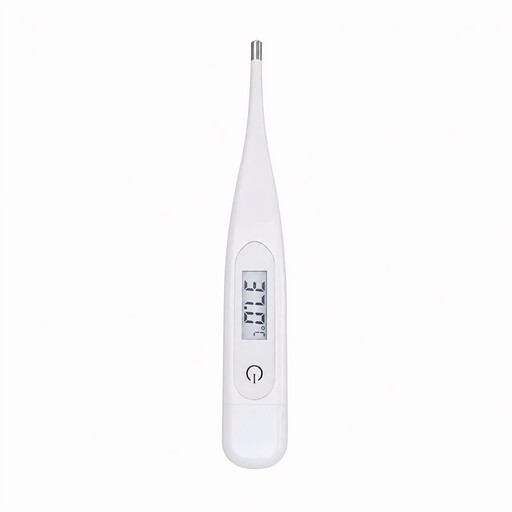
Why This Fits Their Persona: Its pen-style format is straightforward for households wanting a basic body temperature monitor for occasional checks, including when travelling.
It is clearly described as a body thermometer rather than an object-measuring device, with stated measurement ranges and usage instructions.
Mercury-free design; 0.1°C display resolution; switchable Celsius and Fahrenheit readings.
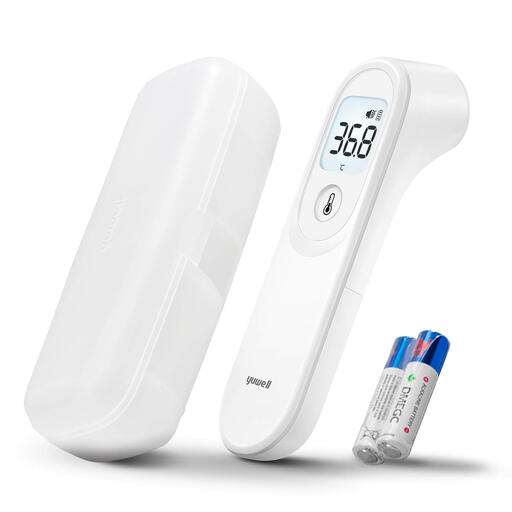
Why This Fits Their Persona: This suits buyers prioritising contact-free forehead checks, a large display and quieter night-time use for a family household.
A distance detection sensor is listed to guide positioning, helping address one common source of inconsistent forehead readings.
One-button operation; vibration reminder; mute mode and backlit display.
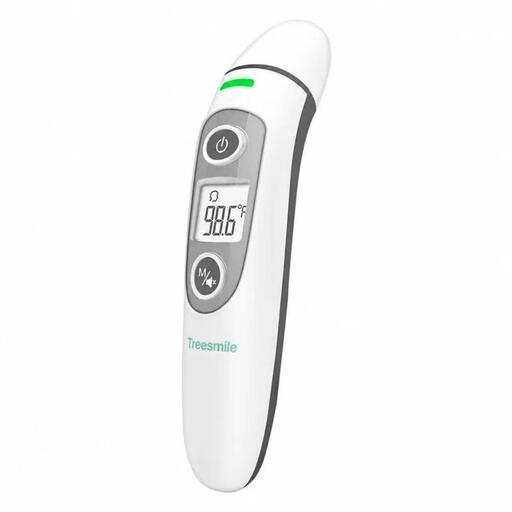
Why This Fits Their Persona: It is suited to frequent family use where one device is needed for body temperature, milk, food, room and bath-water checks.
Separate ear, forehead and object modes make the intended measurement type clearer than using a single undifferentiated setting.
35 memory groups; three measurement modes; silent mode and automatic shut-off.
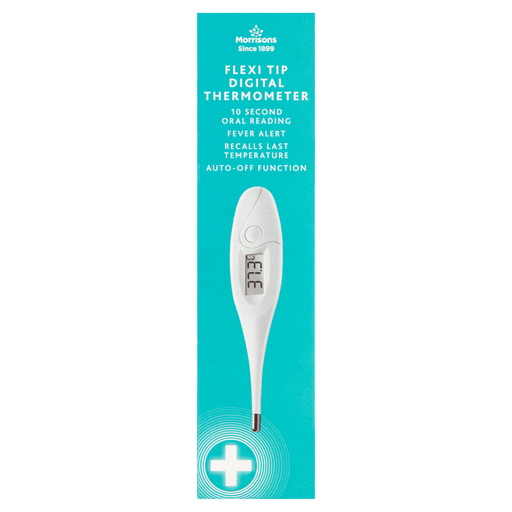
Why This Fits Their Persona: The flexible probe is intended for households seeking a contact thermometer that can be used by newborns, children and adults.
It specifies oral, underarm and rectal use, together with cleaning guidance, rather than relying on vague all-family wording.
Flexible tip; last-reading memory; stated 10–30-second reading time and protective case.
We have compiled a complete, real-time list of products that fully satisfy these strict selection criteria and UK safety regulations.
There is no single lifespan for every model. Service life depends on battery condition, storage, cleaning and whether the casing or probe is damaged. Replace batteries when the display becomes faint or readings behave inconsistently. Discontinue use if a device is cracked, dropped or no longer operates as described.
A forehead or non-contact thermometer can be convenient for a baby, especially during sleep, but it must be used at the correct distance and on a clean, dry forehead. If the reading appears unusual, repeat it according to the instructions and consider confirming it with another suitable method. Follow NHS guidance or contact a healthcare professional when concerned.
Most household models use small batteries and have automatic shut-off to reduce unnecessary power use. Pen-style devices may use a coin cell, while infrared models commonly use two AAA batteries. Check whether batteries are included and keep replacements stored safely away from children.