
24/7 Customer Support

Free returns

Same-day & Next-day Delivery

Quality Guaranteed

Unlock Your Welcome Offers: FREE Delivery | Up to 80% OFF | Free 30-day JoyPlus trial
Download the APP
For any professional mechanic or dedicated DIYer, precision is not just a goal; it's a necessity. When working on modern vehicles, motorcycles or high-performance bicycles, the difference between a perfectly tightened fastener and a costly mistake can be just a few Newton-metres. The familiar 'click' of a traditional wrench has served well for years, but the risk of over-tightening in a noisy workshop or missing the click entirely remains.
This is where the digital torque wrench comes in, offering a significant step up in accuracy and user feedback. An electronic torque wrench provides real-time data, clear alerts and the confidence that every bolt is tightened exactly to the manufacturer's specification. This guide will walk you through the key considerations when choosing a model and highlight a few standout options available today.
Selecting the correct tool for the job is half the battle. Before you buy, consider these crucial factors to ensure your investment meets the demands of your workshop.
A torque wrench is not a one-size-fits-all tool. The drive size and torque range are the most important specifications to match to your typical projects.
Always check the tool's specified torque range (e.g., 17-340 N.m) against the requirements of your most frequent tasks.
The primary reason to upgrade to a digital model is precision. Look for a high accuracy torque wrench with a stated accuracy of ±2% to ±3%, which is a common standard for professional-grade tools.
Beyond pure numbers, consider how the tool communicates with you. While a click-type wrench offers a single, tactile signal, digital models provide a multi-sensory experience. Features like audible beeps, flashing LED lights and handle vibration become invaluable in a loud or poorly lit environment, ensuring you never miss the target torque.
Modern electronic torque wrenches come with features designed to streamline your workflow. A clear, backlit digital display is standard, but also look for:
Based on features, accuracy and user-focused design, here are our recommendations for your consideration.
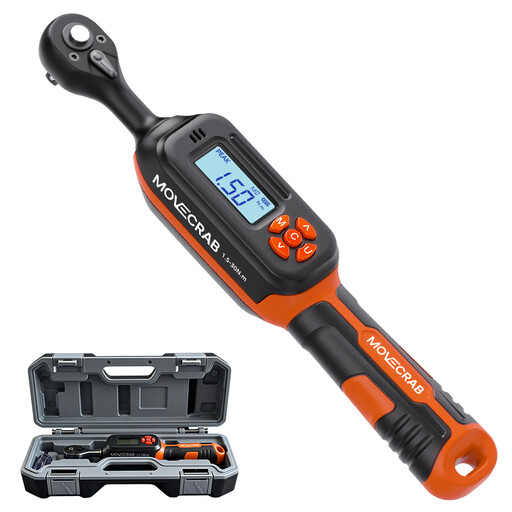
Why It Stands Out: This model hits the sweet spot for versatility. Its 3/8" drive and 4.2-85N.m range make it a highly capable tool for a vast number of automotive and motorcycle maintenance tasks, from engine work to brake servicing.
Pros:
Who is it for: The serious home mechanic or professional technician who needs a single, reliable and accurate tool to cover the majority of their daily tasks.
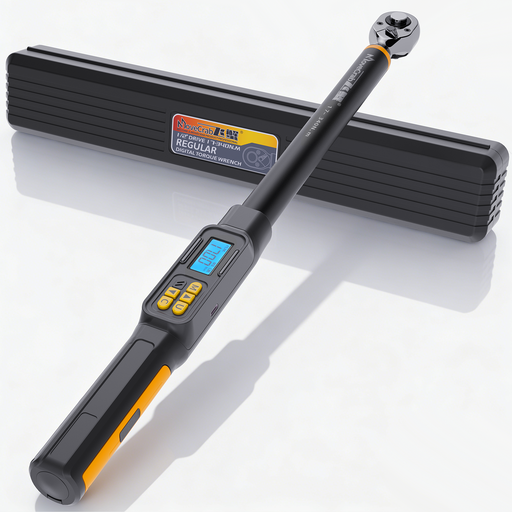
Why It Stands Out: When the job calls for serious force, this 1/2" drive wrench delivers. Its expansive torque range of 17-340N.m is built for the heavy-duty work on chassis, suspension and large engine fasteners, without sacrificing the precision of a digital interface.
Pros:
Who is it for: Automotive technicians and DIYers who regularly tackle jobs like changing wheels, replacing suspension components or performing major engine work.
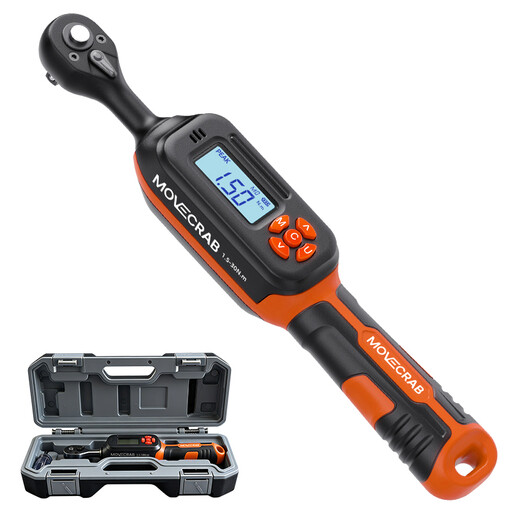
Why It Stands Out: This wrench is all about finesse. The low 1.5-30N.m torque range is specifically designed for the delicate, high-stakes fasteners found on modern bicycles, small engines and sensitive electronic components. It provides digital accuracy where it matters most.
Pros:
Who is it for: Bicycle mechanics (both professional and enthusiast), motorcycle technicians working on smaller parts and anyone who needs to apply low, highly accurate torque values.
While these models cover a wide range of applications, every toolkit has unique needs. If you're searching for different torque ranges, specialised adapters or other precision instruments, there are many more options to consider.
Explore our full collection of torque tools to find the perfect fit for your workshop.
1. How is a digital torque wrench different from a click-type wrench? A click-type wrench uses a calibrated mechanical spring that produces a 'click' sound when the preset torque is reached. A digital torque wrench uses an electronic strain gauge to measure force in real-time. This value is shown on a screen, and the wrench provides progressive alerts (light, sound and/or vibration) as you approach the target, offering greater precision and reducing the chance of over-tightening.
2. Do electronic torque wrenches need to be calibrated? Yes. Like all precision measuring instruments, digital torque wrenches require periodic calibration to ensure their accuracy is maintained. While they arrive calibrated from the factory, factors like heavy use or accidental drops can affect performance. It is good practice to have them checked and recalibrated according to the manufacturer's guidelines, typically on an annual basis for professional use.
3. Can I use a digital torque wrench to loosen bolts? It is strongly advised not to. A digital torque wrench is a precision measuring device designed for tightening. Using it to break loose stubborn fasteners can exert sudden, uncontrolled force on the internal strain gauge, potentially damaging it and compromising the tool's accuracy. Always use a standard ratchet or a breaker bar for loosening bolts.