
24/7 Customer Support

Free returns

Same-day & Next-day Delivery

Quality Guaranteed

Unlock Your Welcome Offers: FREE Delivery | Up to 80% OFF | Free 30-day JoyPlus trial
Download the APP
A digital torque wrench can make controlled fastening easier, but choosing the wrong model may leave you with an expensive tool that is unsuitable for the job. Home mechanics, cyclists and workshop users commonly focus on display features while overlooking torque range, drive size and storage requirements.
Before buying an electronic torque wrench, check these practical details to avoid three common purchasing traps.
A wrench may advertise a wide range, but that does not mean it is suitable for every fastener. A low-torque bicycle component and a car wheel fastener require very different settings.
Using a tool near the bottom or top of its range can also make adjustment less convenient. Check the torque specifications supplied by the vehicle, bicycle or component manufacturer, then choose a wrench that covers those values without exceeding its stated capacity.
A 1/4-inch torque wrench is commonly associated with smaller fasteners, while a 1/2-inch torque wrench is more suitable for larger sockets and higher-torque automotive work. However, drive size alone does not determine accuracy or usable range.
Confirm whether the product includes adapters. A digital torque adapter may provide flexibility by fitting between an existing wrench or breaker bar and the socket, but it still needs a compatible drive connection and sufficient clearance.
A torque wrench with an LED display, vibration and audible alarm can be easier to use in a noisy garage or dim workspace. These alerts indicate that a target has been reached; they do not replace checking the stated accuracy, torque range or calibration guidance.
Look for clear specifications such as ±2% clockwise accuracy or a separately stated counter-clockwise figure. Also check how the tool should be stored and whether periodic calibration is recommended for critical applications.
For bicycle maintenance, typical tasks include stem bolts, seat-post clamps, brake components and crank hardware. These generally call for a lower range, making a bicycle torque wrench with a 1/4-inch drive practical.
Motorcycle and automotive work covers a broader spread. Brake, suspension and engine fasteners may require different settings, so a mid-range or higher-capacity motorcycle torque wrench or automotive torque wrench may be more suitable.
For example, the available MoveCrab digital models cover ranges including:
Do not select a range solely because it is larger. A compact, low-range precision torque tool may be more appropriate for delicate bicycle components.
The listed accuracy should be easy to find in the product specifications. Several digital options in this range state ±2% clockwise accuracy, while the digital torque adapters specify ±2% clockwise and ±2.5% counter-clockwise accuracy.
If you need to tighten in both directions, confirm that the product supports bidirectional measurement. For workshop documentation, peak mode and stored readings can be useful, but they should not be treated as a substitute for correct technique or calibration.
A clear digital display can show torque in N·m, lbf·ft, lbf·in and kgf·cm, helping users work with manufacturer instructions from different markets. A torque wrench with vibration and audible alarm may be helpful where visibility or background noise is an issue.
Preset modes can also save time when repeating common tasks. The MoveCrab digital wrenches offer up to 10 preset values, while the digital adapters provide real-time, peak and preset modes. Check battery arrangements and automatic shut-off information before purchase, as these affect everyday running convenience.
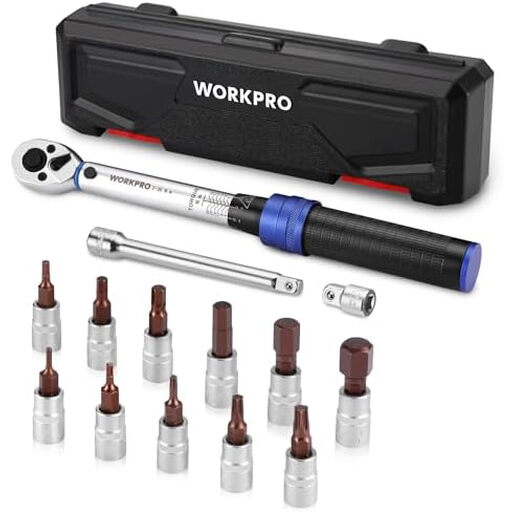
Why This Fits Their Persona: A practical starting point for UK cyclists and home users who need common bits in one compact kit rather than a standalone professional torque wrench.
The 2–26 N·m range is clearly defined, and the set includes hex, Torx, an extension bar and an adapter, reducing the risk of buying incompatible accessories separately.
2–26 N·m range, 72-tooth reversible head and 14 included pieces. Stated accuracy is ±3%.
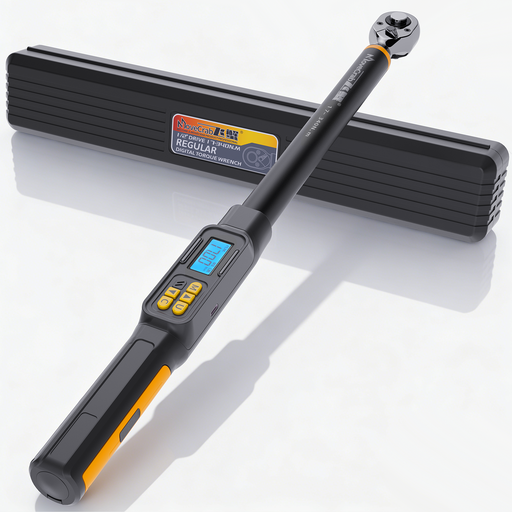
Why This Fits Their Persona: Suitable for users seeking a broad-range electronic torque wrench for regular car, motorcycle and general workshop fastening.
The range and stated ±2% clockwise accuracy are listed clearly, while vibration, sound and LED alerts provide more than one way to recognise the target setting.
Four torque units, 10 presets, track and peak modes, and storage for up to 500 readings.
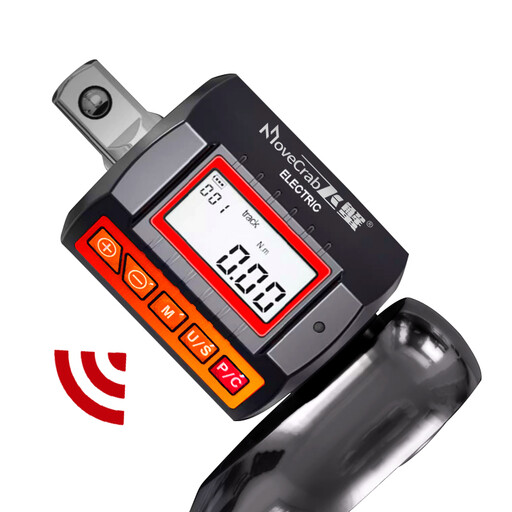
Why This Fits Their Persona: Useful for workshop users who already own sockets, ratchets or breaker bars and want digital torque monitoring without replacing every existing tool.
The 1/2-inch main drive includes 3/8-inch and 1/4-inch adapters, and both clockwise and counter-clockwise accuracy figures are stated.
6–200 N·m range, sound and light alarm, automatic shut-off after 10 minutes and storage for up to 1,000 readings.
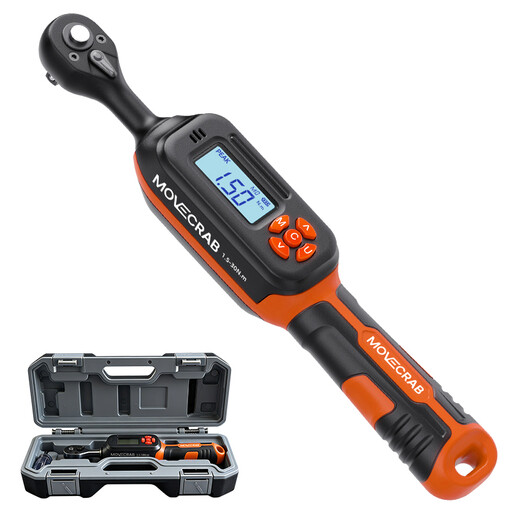
Why This Fits Their Persona: Designed around low torque values, making it a focused choice for delicate bicycle components and small fasteners.
Its lower 0.6–12 N·m range avoids forcing a high-capacity wrench into small, low-torque applications where fine adjustment matters.
Stated ±2% clockwise accuracy, four measurement units and vibration, sound and LED alerts.
Read the supplied instructions before use and set the unit used by the manufacturer’s torque specification. Fit the correct socket firmly, apply force smoothly and stop immediately when the preset alarm activates. Do not use the tool as a breaker bar or striking tool.
After use, clean it with a dry cloth and keep it away from moisture, direct sunlight, excessive heat, dust and magnetic objects. For adjustable mechanical models, return the setting to the minimum value before storage. For digital products, remove the battery if the tool will remain unused for an extended period, where the manual allows this.
For safety-critical vehicle components, follow the vehicle manufacturer’s instructions and use suitable calibration records or professional servicing where required.
We have compiled a complete, real-time list of products that fully satisfy these strict selection criteria and UK safety regulations.
Yes, provided its range includes the torque values specified for your bicycle components. A low-range 1/4-inch model is often more suitable than a high-capacity automotive wrench for stem, handlebar and seat-post work.
Service life depends on storage, battery care, overload protection and calibration. Avoid exceeding the stated maximum, do not use it for impact work, and keep it dry. Accuracy may change over time, so periodic calibration is sensible for repeated or critical workshop use.
Running costs are generally limited to replacement batteries and any calibration service. Models with automatic shut-off can reduce battery use. Check whether batteries are included and confirm the required type before ordering.