
24/7 Customer Support

Free returns

Same-day & Next-day Delivery

Quality Guaranteed

Unlock Your Welcome Offers: FREE Delivery | Up to 80% OFF | Free 30-day JoyPlus trial
Download the APP
A digital torque wrench can make precise fastening easier for bicycles, motorcycles, cars and workshop equipment, but choosing one based only on a large accuracy figure or a long list of features can lead to wasted money.
The most common buying mistakes are straightforward:
The torque range is the first specification to compare. It should cover your manufacturer’s required torque values without operating continually at either extreme.
Typical applications include:
For example, a 1/4-inch model with a 1.5–30 N·m range is aimed at finer work, while a 1/2-inch model rated at 17–340 N·m covers substantially higher settings. Always check the vehicle, bicycle or machinery manufacturer’s torque specification before selecting a tool.
Look for a clearly stated accuracy figure and check whether it applies clockwise, anti-clockwise or both. Some products list ±2% clockwise accuracy and a different figure for anti-clockwise use.
A high-accuracy torque wrench should also display units that match your workshop references. Common options include:
Digital conversion is useful when manuals use different units, but it does not replace checking that the original torque specification has been entered correctly. For critical fastening, keep calibration information and follow the manufacturer’s recommended calibration interval.
A torque wrench with LED alarm can be easier to monitor than a display alone. A torque wrench with vibration and buzzer alert offers additional feedback when the target value is reached, which may help in a noisy garage or when your eyes are focused on the fastener.
Useful operating modes include:
Data storage can be useful for workshop records, but it should not be treated as proof that a fastener was correctly installed unless the tool was used properly and remains within calibration. Also check whether the product is supplied with the required batteries, adapters, sockets and storage case.
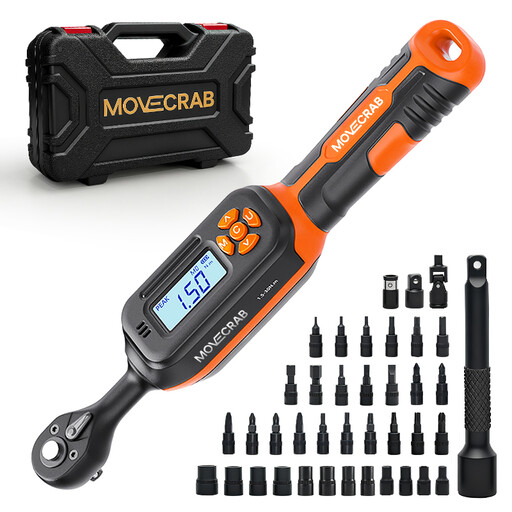
Why This Fits Their Persona: Its lower 1.5–30 N·m range and included sockets suit bicycle owners, home mechanics and beginners who want a ready-to-use kit for smaller fasteners.
The drive size and range are clearly stated, reducing the risk of buying an oversized automotive tool for delicate bicycle work.
The listed set includes 40 pieces, LED display, audible alert, preset modes and data storage for up to 500 readings.
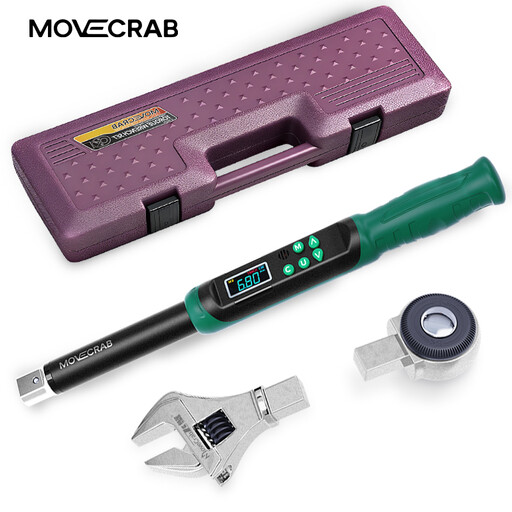
Why This Fits Their Persona: The interchangeable-head design is practical for users who work across different fasteners and want one 3/8-inch electronic torque wrench for varied workshop tasks.
It specifies the supplied ratchet and adjustable open-end heads rather than leaving compatibility unclear.
The listed specification includes ±2% accuracy, four units, three work modes, six presets and storage for up to 500 values.
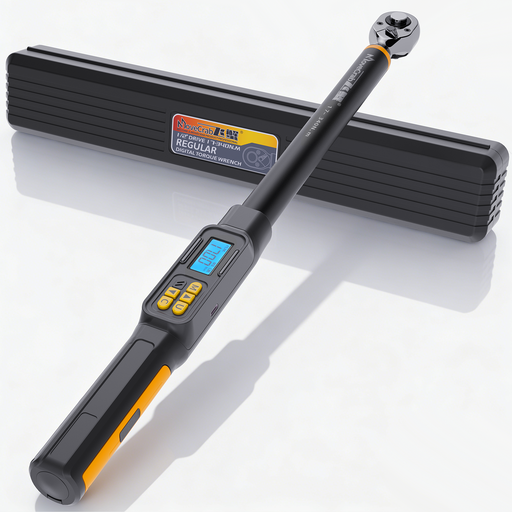
Why This Fits Their Persona: Its 17–340 N·m range is aimed at larger automotive, motorcycle and general mechanical fastening tasks where a 1/2-inch drive is appropriate.
The broad stated range makes its intended heavier-duty use clearer than choosing a low-range wrench for high-torque fasteners.
It lists ±2% clockwise accuracy, two-way ratcheting, LED, sound and vibration alerts, plus track, peak and preset modes.
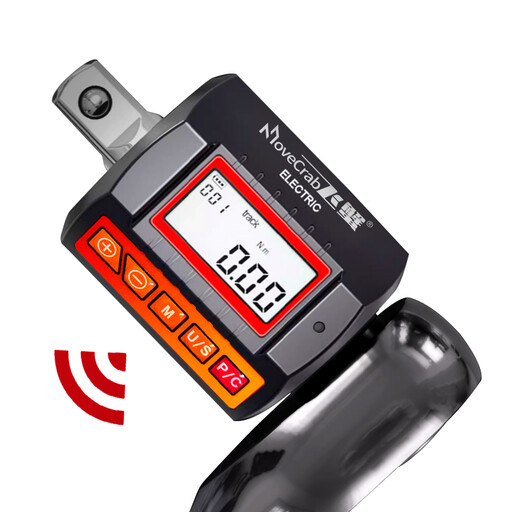
Why This Fits Their Persona: This option suits users who already own suitable handles and want one measuring device for bicycle, motorcycle, car and general mechanical work.
The listing explains that it is used between a handle and socket, helping prevent the common mistake of expecting a digital torque adapter to include a complete wrench.
The stated range is 4.05–135 N·m, with 1/2-inch drive and 3/8-inch and 1/4-inch adapters, sound and light alarms, and storage for up to 1,000 readings.
We have compiled a complete, real-time list of products that fully satisfy these strict selection criteria and UK safety regulations.
Before use, confirm the target value from the relevant manufacturer’s instructions. Select the correct unit, set the desired torque and apply force smoothly. Stop immediately when the alert indicates that the target has been reached.
Avoid using a digital torque wrench as a breaker bar or striking tool. Do not exceed its stated maximum range. Keep the device dry, remove dirt after use and store it away from excessive heat, humidity and magnetic sources where the product instructions advise this. For critical automotive or industrial work, periodic calibration and appropriate workplace procedures remain important.
Yes, provided its lower range covers the bicycle manufacturer’s specified values. A 1/4 inch digital torque wrench or bicycle torque wrench is often more suitable than a large 1/2-inch model. Check the supplied bits and socket compatibility before ordering.
The main ongoing costs are usually replacement batteries, calibration and any damaged or missing accessories. Automatic shut-off, where provided, can reduce unnecessary battery use. Storage, cleaning and avoiding overload may help protect the tool’s working accuracy.
Lifespan depends on frequency of use, storage, overload and calibration. Return the tool to its recommended storage setting if the instructions require it, avoid moisture and inspect it before use. A workshop using the tool frequently should keep calibration records and replace it if readings, alerts or the display become unreliable.