
24/7 Customer Support

Free returns

Same-day & Next-day Delivery

Quality Guaranteed

Unlock Your Welcome Offers: FREE Delivery | Up to 80% OFF | Free 30-day JoyPlus trial
Download the APP
For any serious mechanic or DIY enthusiast in the UK, precision is not a luxury; it's a necessity. When you're working on car maintenance, a motorcycle repair or even a high-end bicycle, applying the correct torque to a fastener is critical. Too little, and it could vibrate loose. Too much, and you risk stripping threads or damaging expensive components. This is where a digital torque wrench becomes an indispensable part of your toolkit.
However, the market is flooded with options, and not all are created equal. Many users find themselves disappointed with a tool that fails to deliver on its promises. Before you invest, it's crucial to understand the common pitfalls that lead to a poor purchase.
To ensure you get a tool that performs reliably, focus on these non-negotiable parameters. They are the true measure of a quality digital torque wrench.
The first step is matching the tool to the task. Drive size and torque range are directly related and determine the wrench's application.
Using a wrench outside its specified torque range will severely compromise its accuracy. Never use a large wrench for a low-torque job or attempt to exceed the maximum rating of a smaller one.
Accuracy is the primary reason for investing in a digital tool. Look for a stated accuracy of ±2% for clockwise rotation. This figure means that if you set the wrench to 100 N.m, the actual torque applied will be between 98 N.m and 102 N.m. This level of precision is vital for critical engine and safety components, ensuring reliability and preventing component failure. Anything less accurate introduces an unacceptable margin of error for professional or serious amateur work.
To overcome the "silent click" pitfall, a modern electronic torque wrench should provide clear, unmissable feedback. The most effective tools use a triple-alert system:
This combination ensures you know the exact moment you've hit the target torque, regardless of whether you're in a noisy garage or a quiet, focused environment.
Based on these critical parameters, we've identified several models that align with the needs of different users.
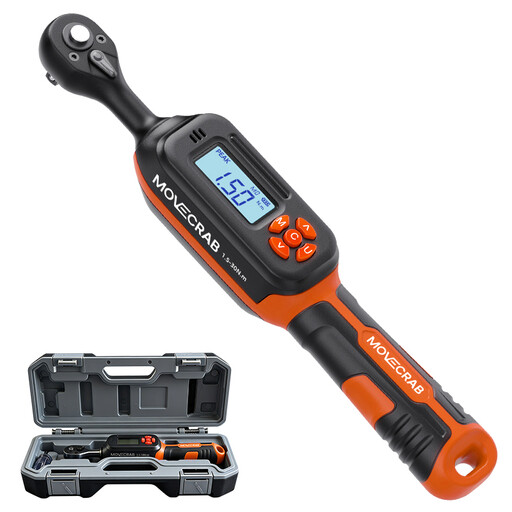
Why This Fits Their Persona: This wrench's low 1-20N.m range is perfectly suited for the delicate, low-torque requirements of modern bicycles with carbon fibre components and for precise motorcycle engine work. Its compact 1/4" drive allows access to tight spaces common on these vehicles.
The integrated triple-alert system with vibration, a loud torque wrench with audible alert and a bright LED indicator makes it impossible to miss the target torque, eliminating the risk of over-tightening expensive, fragile parts.
Offers professional-grade ±2% accuracy in a range tailored for precision work. Features Peak/Track modes and memory for 500 readings, enhancing quality control.
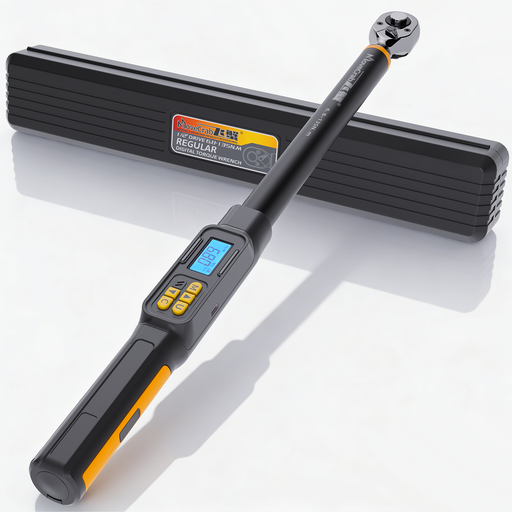
Why This Fits Their Persona: This is a highly versatile tool for the home mechanic. The 6.8-135N.m range on a 1/2 inch torque wrench covers the majority of tasks on a typical car, from oil sump plugs and brake callipers to some suspension bolts, making it an excellent single-wrench solution.
It directly counters the "impractical design" pitfall with its 10 preset memory modes. This allows you to save common torque values (e.g., for your car's wheel nuts) and recall them instantly, streamlining repetitive jobs.
A balanced and versatile torque range for most automotive needs. The clear digital display shows real-time values and allows for easy switching between N.m, ft.lb, in.lb and kgf.cm.
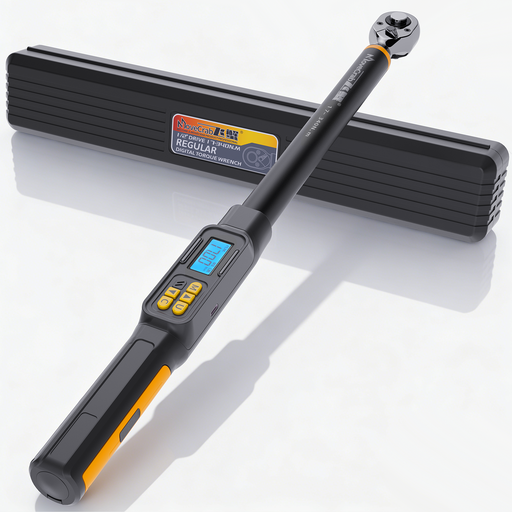
Why This Fits Their Persona: For professional mechanics working on larger vehicles, vans or heavy machinery, a high torque capacity is non-negotiable. This wrench's substantial 17-340N.m range handles everything from stubborn crankshaft pulley bolts to large commercial vehicle wheel nuts with ease.
It addresses the "questionable accuracy" trap by maintaining its ±2% accuracy across its entire high-torque range. This provides confidence that even the most critical, high-load fasteners are secured to precise engineering specifications.
Exceptional high-torque capability for demanding professional jobs. It retains all the essential digital features, including triple alerts and memory modes, in a robust, heavy-duty package.
We have compiled a complete, real-time list of products that fully satisfy these strict selection criteria and UK safety regulations.
For professional, daily use, it is good practice to have your wrench calibrated annually or after approximately 5,000 cycles, whichever comes first. For the serious home mechanic, calibration every one to two years is sufficient, unless the tool has been dropped or you suspect it is giving inaccurate readings. Always refer to the manufacturer's specific recommendations.
It is strongly advised not to. While most have a reversible ratchet head, using the wrench to break loose a stubborn, tightened bolt can put excessive strain on the internal electronic strain gauge. This action can damage the sensor and permanently compromise the tool's accuracy. Always use a dedicated breaker bar for loosening fasteners and reserve your torque wrench for precise tightening only.
For tasks where precision is paramount, the investment is often justified. A digital torque wrench provides a clear, unambiguous torque reading, eliminating the guesswork associated with feeling for a 'click'. Advanced features like multiple unit conversions, memory presets and multi-sensory alerts significantly improve both accuracy and workflow efficiency. This can prevent costly damage to parts, making it a valuable long-term investment for any serious mechanic.