
24/7 Customer Support

Free returns

Same-day & Next-day Delivery

Quality Guaranteed
Download the APP
Categories
For any professional mechanic or serious DIY enthusiast, precision is not just a goal; it's a necessity. When working on vehicles, motorcycles or bikes, applying the correct torque to a fastener is critical. Under-tightening can lead to components vibrating loose, while over-tightening can strip threads or damage expensive parts. A reliable digital torque wrench removes the guesswork, providing clear, accurate feedback to ensure every bolt is secured to the manufacturer's specification.
This guide is designed to help you navigate the key features of modern electronic torque wrenches. We will outline what to look for and present some of our top recommendations to help you find the right tool for your workshop.
Selecting the correct tool involves more than just picking one off the shelf. Consider these factors to ensure your choice meets the demands of your specific tasks.
The primary reason to choose a digital model is precision. Look for a high accuracy torque wrench, typically with a stated accuracy of ±2% to ±3%. This level of precision is vital for sensitive components like engine internals or carbon fibre bike frames. Equally important is the torque range, measured in Newton-metres (N.m). A tool intended for heavy automotive torque wrench applications, like suspension work, will require a much higher range (e.g., up to 340 N.m) than a bike torque wrench used for delicate stem bolts (e.g., up to 30 N.m). Always match the tool's range to your most common tasks.
A key advantage of an electronic torque wrench is its advanced notification system. Traditional 'click' wrenches can be difficult to hear in a noisy workshop or feel on smaller torque settings. A modern torque wrench with an alarm often provides multiple forms of feedback.
A tool with a triple-alert system (sound, light and vibration) offers the most reliable way to ensure you never miss the target torque, regardless of your working environment.
The drive size determines which sockets the wrench can accommodate. The three most common sizes each have typical uses:
Beyond the drive size, look for a clear digital display that allows for easy conversion between measurement units (N.m, ft.lb, in.lb, kgf.cm) and features like Peak and Track modes for advanced diagnostics.
Here are our recommendations, selected to cover a range of common applications for professionals and enthusiasts across the UK.
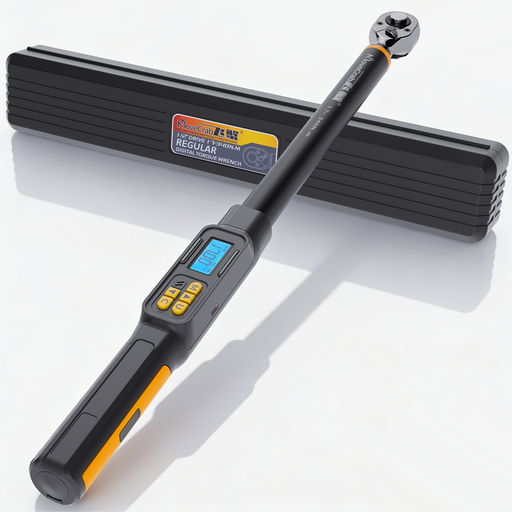
Why It Stands Out: This tool's main strength is its triple-alert system, combining a loud beep, a bright LED and handle vibration. This ensures you get the signal even in a loud garage or an awkward position under a car. The wide torque range makes it a powerful and versatile addition to any automotive workshop.
Pros:
Who is it for? Professional automotive mechanics and serious DIYers who regularly work on engine mounts, suspension components, wheel nuts and other high-torque fasteners. This is an ideal 1/2 inch digital torque wrench for heavy-duty tasks.
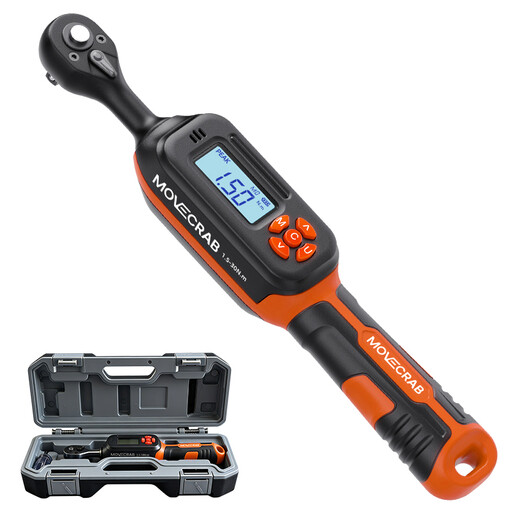
Why It Stands Out: This wrench brings the same high-end features as its larger counterpart—including the triple-alert system and ±2% accuracy—to a lower torque range. Its precision is perfect for delicate jobs where over-tightening could cause significant damage, such as on carbon fibre bicycle parts or small engine components.
Pros:
Who is it for? Bicycle mechanics, motorcycle technicians and anyone working with small, sensitive fasteners. It is an excellent choice as a dedicated bike torque wrench or for tasks on valve covers, oil pans and interior fittings.
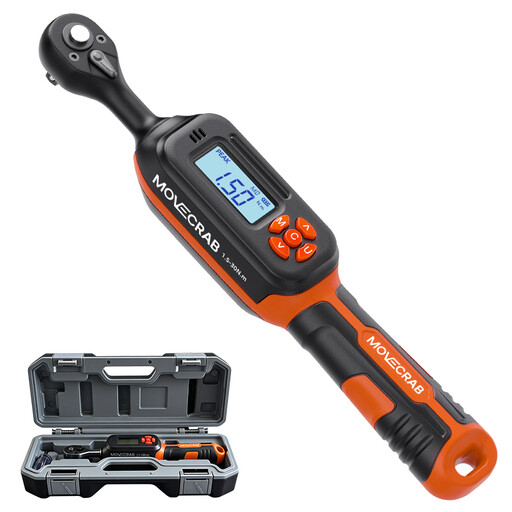
Why It Stands Out: Offering a highly practical middle ground, this 3/8" drive model is arguably the most versatile of the three. Its torque range covers a vast number of common jobs, from brake callipers to spark plugs, making it a true workshop workhorse. It includes the same professional-grade triple-alert system and digital features.
Pros:
Who is it for? This is a superb all-purpose tool for almost any home mechanic or professional technician. If you need one digital torque wrench to handle the majority of jobs on a car or motorcycle, this is an excellent candidate.
While these recommendations cover many common needs, your project may require a different torque range or specific feature. To find the perfect tool for your toolkit, browse our complete collection.
[Explore our full range of digital torque wrenches here.](https://www.joybuy.co.uk/explore/digital-torque-wrench/wQrXTzbe)
What is the main advantage of a digital torque wrench over a click-type wrench? The primary advantages are superior accuracy and clearer feedback. A digital display provides a real-time readout of the applied force, eliminating interpretation errors. Furthermore, advanced alert systems with light, sound and vibration are more reliable than the subtle 'click' of a mechanical wrench, especially in noisy environments.
How often should an electronic torque wrench be calibrated? For professional use, annual calibration is a common recommendation. For home or occasional use, this can be extended, but it's important to follow the manufacturer's guidance. To maintain accuracy, always store the wrench in its case, avoid dropping it and never use it to loosen bolts or exceed its maximum stated torque value.
Can I use a digital torque wrench to loosen bolts? While many models feature a two-way ratchet, a digital torque wrench is a precision measurement instrument. Using it to break loose tight or seized bolts can damage the internal strain gauge and compromise its calibration. It is always advisable to use a standard ratchet or a breaker bar for loosening and reserve your torque wrench for tightening only.