
24/7 Customer Support

Free returns

Same-day & Next-day Delivery

Quality Guaranteed

Unlock Your Welcome Offers: FREE Delivery | Up to 80% OFF | Free 30-day JoyPlus trial
Download the APP
For any serious mechanic or DIY enthusiast, precision is not just a preference; it is a necessity. When working on vehicles or bicycles, applying the correct torque to a fastener is critical for safety and performance. An under-tightened bolt can work loose, while an over-tightened one can strip threads or damage expensive components. This is where a high-quality digital torque wrench becomes an indispensable part of your toolkit.
Navigating the market for an electronic torque wrench can be challenging. With so many options available, it is easy to get lost in technical specifications and marketing claims. This guide is designed to cut through the jargon, providing clear, practical advice to help you select a tool that meets your needs for accuracy and reliability, whether you're working on cars, motorcycles or bicycles.
Before looking at specific models, it is helpful to understand the features that truly matter. Focusing on these key areas will ensure you invest in a tool that serves you well for years to come.
The primary reason to choose a digital torque wrench is for its precision. Look for models that specify their accuracy, often as a percentage. A high accuracy torque wrench with a tolerance of ±2% or better is a strong indicator of quality for professional and serious home use. This level of precision ensures that the torque you apply is the torque that was specified, protecting components from damage.
The physical size of the square drive and the range of torque it can apply are crucial. The three most common sizes each suit different tasks:
Always match the wrench's torque range (measured in Newton-metres, N.m) to the jobs you perform most frequently.
Working in a noisy workshop or a poorly lit garage can make it difficult to know when you have reached the target torque. Modern digital wrenches often feature a torque wrench with an alarm. The most effective tools use a combination of alerts: an audible beep, a visual LED light and a physical vibration in the handle. This triple-alert system guarantees you will never miss the signal, preventing accidental over-torquing.
Here are our recommendations for digital torque wrenches that offer a strong combination of features, accuracy and usability for a range of applications.
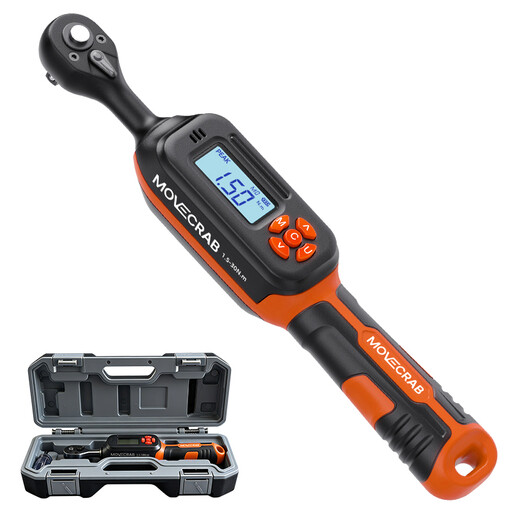
Why It Stands Out: This wrench is engineered for low-torque precision. Its 0.6-12 N.m range is perfectly suited for the delicate fasteners found on modern bicycles and in automotive interiors. It features the triple-alert system (vibration, sound and light) to ensure you hit your target torque every time, even in tight spaces. The clear digital display shows real-time values and allows for easy conversion between N.m, ft.lb, in.lb and kgf.cm.
Pros:
Who is it for? Professional bicycle mechanics, cycling enthusiasts and automotive technicians who regularly work with low-torque, critical fasteners.
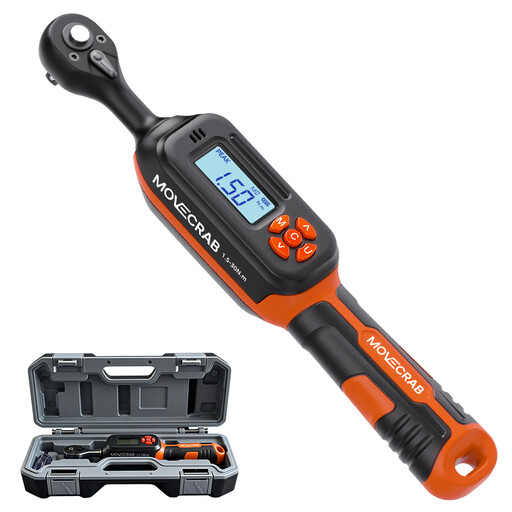
Why It Stands Out: As a versatile workhorse, this 3/8 inch digital torque wrench covers a wide spectrum of common tasks. Its 4.2-85 N.m range makes it suitable for everything from engine work on a motorcycle torque wrench to general car maintenance. It shares the same high-end features as its siblings, including the triple-alert system, preset memory and a robust two-way ratchet head, all housed in a comfortable, ergonomic body.
Pros:
Who is it for? The serious home mechanic or professional technician looking for a single, reliable tool to handle the majority of their daily tasks.
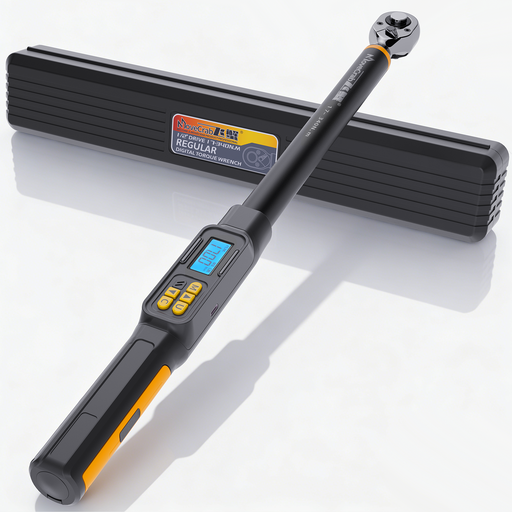
Why It Stands Out: When the job calls for serious force, this 1/2 inch digital torque wrench delivers. With a substantial range of 17-340 N.m, it is built for heavy-duty applications like tightening wheel lug nuts, suspension bolts and subframe mounts. Despite its power, it maintains the same ±2% accuracy and user-friendly features, including the indispensable triple-alert system that provides confidence when applying high torque values.
Pros:
Who is it for? Automotive technicians, tyre fitters and DIYers who regularly tackle suspension, chassis and wheel maintenance.
If the models above do not perfectly match your specific requirements, or if you would like to compare more specifications, there is a wider selection available.
Explore our full collection of digital torque wrenches to find the ideal tool for your workshop.
1. What is the main advantage of a digital torque wrench over a traditional 'click' type? The primary advantage is precision and feedback. A digital torque wrench provides a real-time display of the torque being applied, allowing you to see exactly how close you are to the target. The addition of light, sound and vibration alerts provides clearer confirmation than the single click of a mechanical wrench, which can be missed in a loud environment.
2. How often should I get my electronic torque wrench calibrated? For professional use, it is generally recommended to have your wrench calibrated annually or after a specific number of cycles, as advised by the manufacturer. For home use, annual calibration is still good practice. It is also crucial to have it checked if it has been dropped or subjected to an impact, as this can affect its accuracy.
3. Can I use a digital torque wrench to loosen bolts? It is strongly advised not to use a precision instrument like a torque wrench for loosening stubborn fasteners. This action, known as 'breaking' a bolt, can exert sudden, uncontrolled force that may damage the wrench's internal strain gauge and compromise its calibration. Always use a dedicated breaker bar for loosening and your torque wrench only for accurate tightening.