
24/7 Customer Support

Free returns

Same-day & Next-day Delivery

Quality Guaranteed

Unlock Your Welcome Offers: FREE Delivery | Up to 80% OFF | Free 30-day JoyPlus trial
Download the APP
For any serious mechanic or DIY enthusiast, precision is not just a goal; it's a necessity. The difference between a perfectly torqued bolt and one that is slightly too tight or loose can be the difference between a reliable repair and costly component failure. This is especially true for modern automotive, motorcycle and bicycle maintenance, where materials like aluminium and carbon fibre demand exact specifications.
An electronic torque wrench offers a significant step up from traditional mechanical models, providing real-time digital readouts, multiple units of measurement and clear alerts to prevent over-tightening. This guide is designed to help you understand the key features to look for and to highlight some carefully selected options that deliver on accuracy and usability.
Before diving into specific models, consider these crucial factors to ensure you select the right tool for your workshop.
The core function of a torque wrench is precision. Look for a high accuracy torque wrench with a stated tolerance, typically ±2% or ±3% for clockwise tightening. The drive size determines which sockets you can use. A 1/4 inch digital torque wrench is ideal for low-torque applications like bicycle components and engine covers, while a 3/8 drive torque wrench is a versatile workhorse for general automotive and motorcycle maintenance tools.
Working in a noisy garage or a poorly lit space can make it easy to miss the "click" of a mechanical wrench. A quality digital torque wrench with alarm features solves this problem. The most effective models use a triple-alert system: an audible beep, a visual LED light and a tactile vibration in the handle. This ensures you never miss the target torque, regardless of your working environment. Also, consider a clear, backlit LCD screen and intuitive controls for setting values and switching between units (N.m, ft.lb, in.lb, kgf.cm).
Modern electronic torque wrenches often come with helpful operational modes. 'Track' mode displays the torque value in real-time as you apply force, which is useful for understanding fastener behaviour. 'Peak' mode records the highest torque value applied, which is essential for confirming you have met the required specification. Some models also offer memory presets, allowing you to save frequently used torque settings for faster workflow.
Here are our recommendations for digital torque wrenches that offer a compelling combination of precision, features and practical design for UK users.
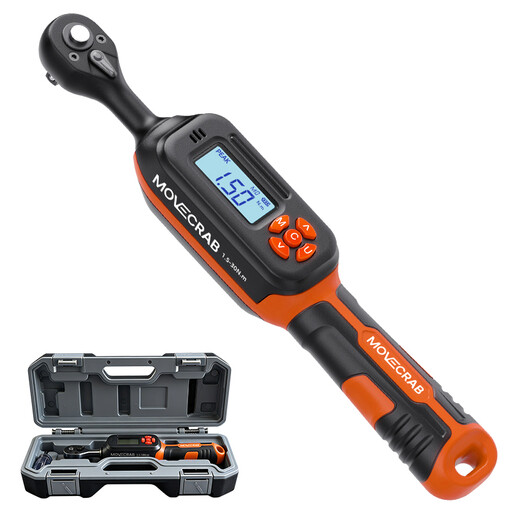
Why It Stands Out: This model combines a versatile torque range with a comprehensive triple-alert system. The combination of sound, light and vibration provides unmistakable feedback when the target torque is reached, making it highly reliable in any workshop setting.
Pros:
Who is it for? This is an excellent all-rounder for technicians and hobbyists working on motorcycles, bicycles and smaller automotive jobs where a torque range of 1.5 to 30 N.m is frequently required.
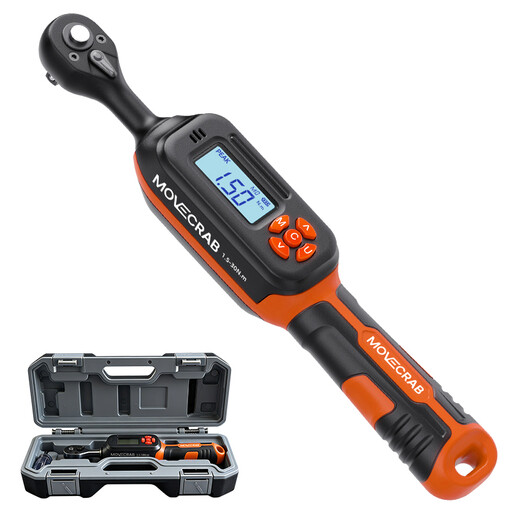
Why It Stands Out: Specifically designed for low-torque applications, this wrench offers exceptional precision at the lower end of the scale. It's the ideal bicycle torque wrench, perfect for delicate components like carbon fibre handlebars, seat posts and stems where over-tightening can cause catastrophic failure.
Pros:
Who is it for? Professional bicycle mechanics and serious cycling enthusiasts who perform their own maintenance on carbon or high-end alloy bikes. It is also suitable for any technician working with very low torque specifications.
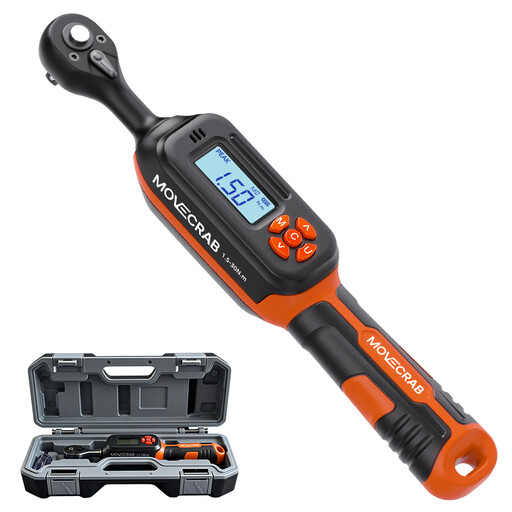
Why It Stands Out: As a robust 3/8 drive torque wrench, this tool covers the most common torque values for automotive engine, suspension and chassis work. It brings digital accuracy and advanced alert features to the tasks that mechanics perform every day.
Pros:
Who is it for? Automotive technicians, motorcycle mechanics and advanced DIYers who need a reliable and accurate tool for the majority of their vehicle maintenance and repair jobs.
Achieving true precision isn't just about the tool in your hand; it's also about your environment. Working with a high-accuracy torque wrench requires clear visibility of both the tool's display and the fastener you are working on. Poor lighting can lead to errors, no matter how good your equipment is.
Upgrading your garage or workshop lighting can make a significant difference. For a focused, low-glare environment that reduces eye strain, consider exploring a range of Orange LED lights. Proper illumination is the perfect partner to a precision tool, ensuring every job is done right.
1. Are digital torque wrenches more accurate than click-type wrenches? Generally, yes. A new, calibrated digital torque wrench typically offers higher accuracy (e.g., ±2%) compared to many mechanical click-type wrenches (often ±4% or more). The digital display also provides a real-time readout, eliminating the guesswork of interpreting a manual scale and the risk of missing the audible 'click'.
2. How often should an electronic torque wrench be calibrated? For professional use, it is common practice to have torque wrenches calibrated annually or after a specific number of cycles (e.g., 5,000) as recommended by the manufacturer. For hobbyist use, annual calibration is still a good rule of thumb. It is also crucial to have it checked if it has been dropped or subjected to a significant impact.