
24/7 Customer Support

Free returns

Same-day & Next-day Delivery

Quality Guaranteed

Unlock Your Welcome Offers: FREE Delivery | Up to 80% OFF | Free 30-day JoyPlus trial
Download the APP
Incorrect tyre pressure can affect handling, braking, comfort and fuel consumption. For UK drivers, cyclists and motorcyclists, a digital tyre pressure gauge and inflator can make routine checks more convenient at home, before a long motorway journey or during a roadside emergency.
However, not every compact pump or digital gauge suits every vehicle. Marketing often focuses on headline pressure figures while overlooking power supply, valve compatibility and practical running limits. The guide below explains which specifications matter and matches several options to different buying needs.
A 150 PSI tyre inflator, 200 PSI tyre pressure gauge or 300 PSI tyre gauge may sound impressive, but the maximum figure is not the same as everyday performance. Most cars, SUVs and motorcycles require considerably less pressure than these stated limits.
For example, a portable air compressor rated to 150 PSI may be suitable for cars, bicycles, motorcycles and sports balls, but not for large commercial vehicles requiring higher-pressure inflation. Always compare the product’s stated compatibility with your tyre type rather than selecting the largest number.
Most cars and motorcycles use Schrader valves, while many road bicycles use Presta valves. A gauge or pump without the correct connector may be inconvenient or unusable for a particular bicycle.
If you maintain several types of vehicle, look for a supplied Presta valve adaptor or a multi-nozzle system. The connection also needs to form a secure seal. A loose nozzle can allow air to escape and produce an unreliable reading.
A cordless air pump for car tyres is convenient, but it needs charging before use and may have a limited operating period. A 12V car air compressor avoids battery charging, but it requires access to a vehicle socket and may need the engine running to reduce the risk of draining the battery.
Other details are easy to overlook: whether the display can be read in low light, whether the pump has auto shut-off and whether the hose and accessories can be stored securely.
Select a gauge with a range that covers your intended use. A digital tyre pressure gauge for a family car does not necessarily need a 300 PSI range, while a multi-vehicle household may appreciate broader coverage.
Useful display units include:
Always use the pressure recommended by your vehicle manufacturer, usually found on the driver’s door pillar, fuel-filler flap or handbook. Check car tyres when they are cold, as heat from driving can temporarily alter the reading.
An auto shut-off tyre inflator stops when the preset pressure is reached. This reduces the need to monitor the display continuously, although you should still remain nearby and follow the manufacturer’s instructions.
Cordless inflators are useful for emergency kits and bicycles, while 12V models may be practical for repeated car-tyre maintenance. Consider the hose length, connector design and whether the device is intended for short inflation tasks rather than continuous workshop use.
For a household covering cars, motorcycles and bicycles, check for:
A compact design is helpful, but it should not make the controls too small or the valve connection difficult to handle.
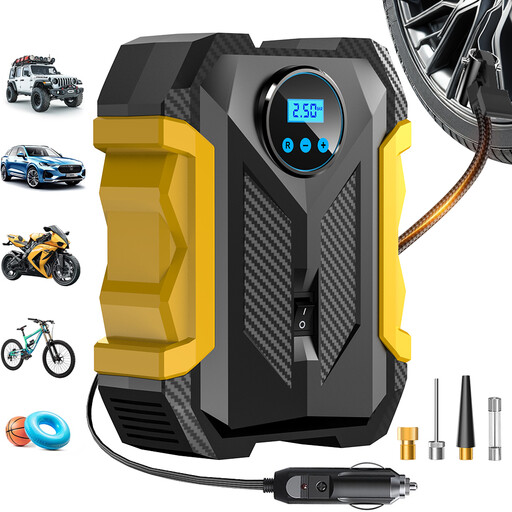
Why This Fits Their Persona: A practical option for UK motorists who want one compact device for car, motorcycle, bicycle and ball inflation without relying on a built-in rechargeable battery.
Its 12V connection makes the power requirement clear, avoiding uncertainty about battery charge before use. The digital display helps you monitor the selected pressure.
150 PSI specification; 3 m cable; digital display and LED light; supports cars, bikes and balls.
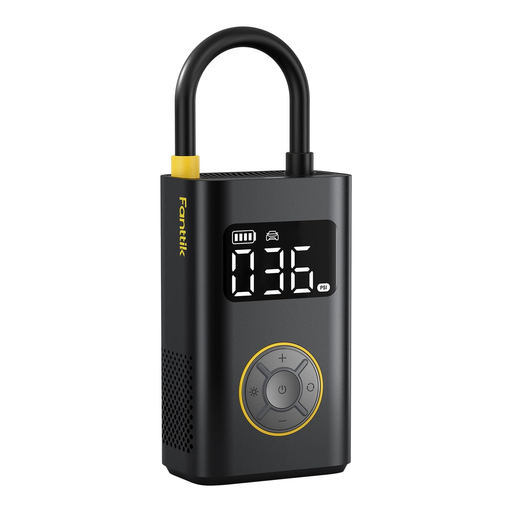
Why This Fits Their Persona: Suits drivers and cyclists who prefer a cordless, self-contained device with preset modes and integrated accessory storage.
The integrated hose and storage slot reduce the chance of misplacing connectors. Its automatic shut-off helps limit over-inflation when the target is set correctly.
150 PSI maximum specification; built-in 7.4 V, 2.5 Ah battery; four preset modes plus manual mode; automatic shut-off.
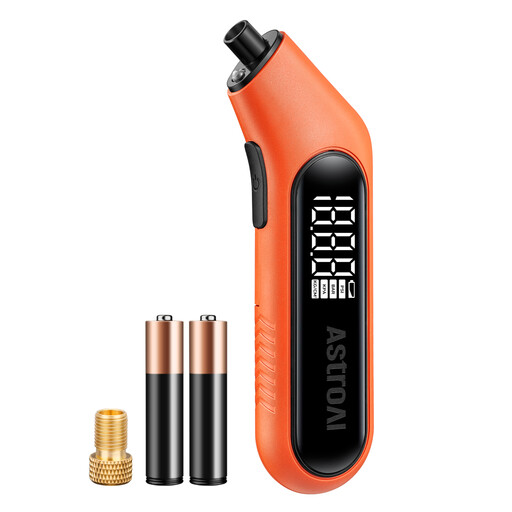
Why This Fits Their Persona: Designed for households managing cars, SUVs, motorcycles, bicycles or higher-pressure applications that need a broad checking range rather than inflation.
The stated 0–300 PSI range is clearly separated from an inflator’s capability. Its extended nozzle and brass valve are intended to support a secure Schrader connection.
Four pressure units; large backlit screen; built-in torch; supplied AAA batteries and Presta-to-Schrader adaptor.
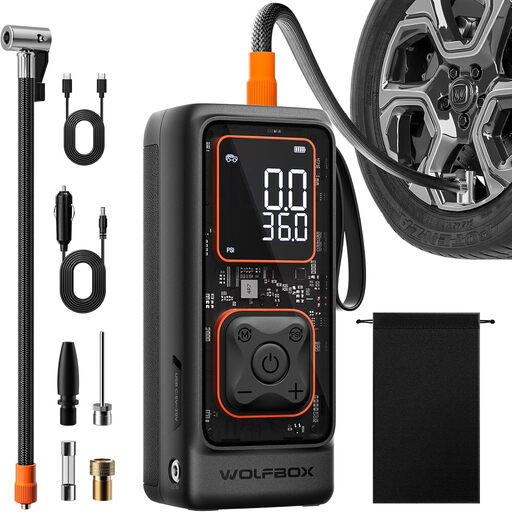
Why This Fits Their Persona: A cordless air pump for car tyres, SUVs, MPVs, motorcycles, bicycles and sports balls, making it suitable for mixed household use and roadside preparation.
The instructions specify charging before use and identify the 150 PSI limit, helping buyers avoid treating it as equipment for large trucks or engineering vehicles.
Digital pressure setting; auto shut-off; LED torch; suitable for tyres up to the stated 150 PSI maximum.
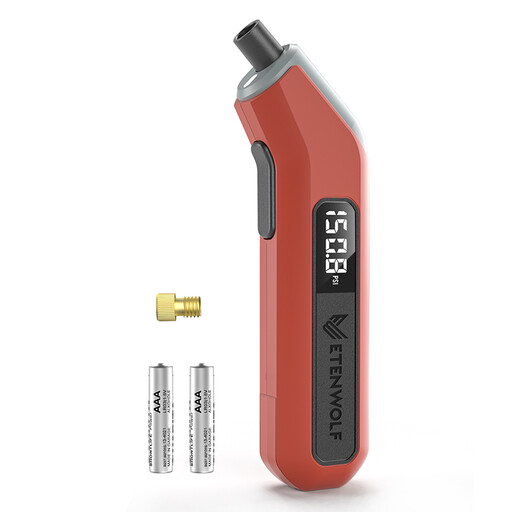
Why This Fits Their Persona: Suitable for regular pressure checks when you already have access to an air compressor or forecourt pump and want a dedicated gauge for cars, SUVs, motorcycles and bicycles.
It is presented as a pressure gauge rather than an inflator, so buyers are less likely to confuse pressure checking with air delivery. The supplied adaptor addresses Presta valve use.
200 PSI stated range; bright LED display; two AAA batteries included; Presta valve adaptor supplied.
We have compiled a complete, real-time list of products that fully satisfy these strict selection criteria and UK safety regulations.
It can be useful for checking pressure away from a garage or forecourt, particularly before long journeys or when a warning light appears. A gauge-only model is smaller, while a portable tyre inflator can both measure and add air. Choose according to whether convenience or compact storage is the priority.
The main practical cost is electricity for recharging the internal battery. The amount depends on battery capacity and usage frequency. A 12V model draws power from the vehicle, while a battery-powered electric bike pump or cordless inflator needs charging before use. Always follow the stated operating and cooling instructions.
Some models support all three, but valve fittings and pressure requirements differ. Check whether the product includes a Presta valve adaptor, the correct nozzle and suitable pressure settings. A 150 PSI model may cover many domestic vehicles and bicycles, but it is not intended for every commercial or heavy-duty application.