One-pan egg cooks
If the eggs are your only timed task, quick controls, a readable countdown and a visible position near the hob may matter more than extra channels.


For one saucepan of eggs, choose a straightforward countdown timer with a display you can read, an alarm you can hear and a position where it will stay visible. If eggs and other dishes need separate finish times, independently running timers let you follow each countdown without resetting the egg timer. Timing alone does not establish whether an egg is suitable for every diner.
If the eggs are your only timed task, quick controls, a readable countdown and a visible position near the hob may matter more than extra channels.
If eggs cook alongside other dishes, separate countdowns help you keep track of which part of the meal needs attention next.
If you set the table or work in a noisy kitchen, consider where you will place the timer and whether you can hear its alarm from there.
Decide how many dishes need their own countdown before comparing alarm volume, display and placement.
| Concern | What to check | Who this matters to |
|---|---|---|
| Separate meal timings | Check how many countdowns run independently and whether you can identify each alert. | When eggs and another dish finish at different times, I need to see both countdowns without replacing one. Around 40% of consumers would put separate timings first. |
| Noticeable alerts | Check the available alarm settings and whether the display stays readable in your intended position. | While I set the table, I do not want to miss the egg alarm or lose sight of the remaining time. For around 30% of consumers, hearing and seeing the alert would be the main concern. |
| Simple egg countdown | Check that the controls are easy to reset and the countdown range covers your intended tasks. | If I usually time just one saucepan, I want to start the next countdown without navigating extra channels. Simplicity would come first for around 30% of consumers. |
Resetting the egg timer for another dish can leave you tracking the eggs from memory.
Count the dishes you regularly time at once. Choose independently visible channels if their countdowns overlap; one channel is enough when eggs are the only timed task.
A manufacturer’s description does not tell you whether you will hear the timer over your cooker hood or from another room.
Check for adjustable volume and consider where the timer will sit. Compare sound figures only when their measurement conditions match.
A timer cannot establish an egg’s source, assurance status or final degree of cooking.
For soft or runny eggs, check the egg’s assurance status and current Food Standards Agency advice for the people you are serving.
Battery-powered timers and their batteries need appropriate collection when they reach the end of their useful life.
Take removable batteries to a suitable battery collection point and treat a timer with a non-removable battery as electrical waste.
Salter lists several digital kitchen timer formats, including models focused on alarm volume or display size.
Lakeland lists an extra-loud digital timer suited to a straightforward egg countdown.
ThermoWorks’ TimeStack is a four-channel example for cooks following several timings at once.
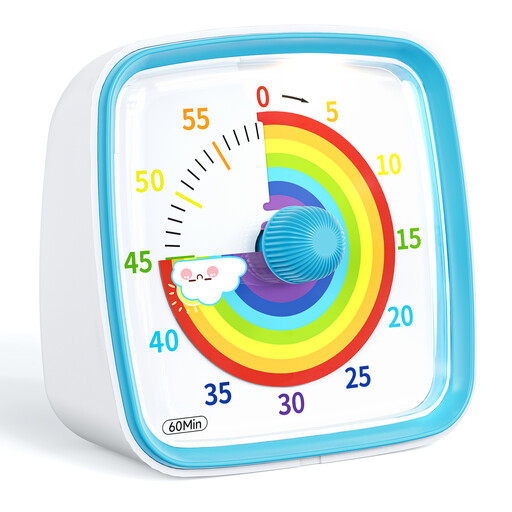
This visual timer is an option for timing one saucepan of eggs. If you specifically want a digital readout or need to hear an alarm away from the hob, check those functions before choosing it.
 No image available
For one saucepan of eggs, this visual timer offers a countdown of up to 60 minutes. Its name lists a mute alarm function; check how the alert works if you need an audible reminder. Check the display type if a numeric digital readout is important to you.
One timer is enough if the eggs are your only time-critical task. If other dishes need overlapping countdowns, choose independently running channels so you do not have to reset the egg timer.
Choose an alarm you can hear from wherever you will be during cooking, rather than relying on the word “loud” alone. Adjustable volume gives you a setting to try in your kitchen; sound figures need matching measurement conditions before they can be compared.
No. A timer follows your chosen cooking time but cannot establish egg assurance status or the final degree of cooking. Check the egg source and current Food Standards Agency advice for the people you are serving.
Use suitable battery and electrical-waste collection points rather than household rubbish. Take out replaceable batteries for separate collection; treat a timer with a non-removable battery as electrical waste.