Choose tinned salmon when the menu calls for flaked fish in a salad, fishcake or pasta bake. Choose frozen salmon fillets when guests will receive individual plated portions, provided you have the oven space and time to follow the pack’s cooking instructions. Check the exact product for portion count, bones, fish-allergen information and storage directions; these details vary between products.
Who each format suits
Hosts serving individual mains
Frozen fillets suit a menu built around plated salmon portions. Check the pack’s portion count and cooking method against the number of guests and available oven space; Sainsbury’s describes its frozen salmon portions as individually frozen.
Hosts preparing a buffet or mixed dish
Tinned salmon suits recipes in which the fish is flaked or mixed in. John West suggests salads, fishcakes and pasta bakes for its canned salmon range.
Hosts checking bones and labels for guests
Compare the actual bone statement, ingredients and fish-allergen information before choosing either format. Sainsbury’s says its cited tinned pink salmon contains small edible bones, while its cited frozen fillets are described as boneless.
What to check before buying
Let the planned dish determine the format, then check the quantity and instructions on the particular pack you intend to serve.
| Concern | What to check | Who this matters to |
|---|
| Plated portions |
Check the stated portion count and whether the fillets can be cooked using your planned method and oven space. |
If each guest is to receive a recognisable fillet, I need to plan portions and cooking time together. About 36% of consumers put plated portions first. |
| Make-ahead dishes |
Check that the recipe calls for flaked salmon, then compare can size and instructions for storing any unused fish. |
For a salad, fishcake or pasta bake, I would rather prepare a mixed dish than cook individual fillets just before serving. Make-ahead flexibility is the primary need for about 29% of consumers. |
| Bones and label details |
Read the current pack’s bone statement, ingredients, fish-allergen declaration and salt values using the same per-serving or per-100 g basis. |
When serving guests with different requirements, I need to know what the particular product contains before it reaches the table. About 21% of consumers prioritise bone and label checks. |
| Sourcing information |
Check the specific pack for species, origin and any certification or sourcing mark. |
If sourcing influences my choice, I want a statement that applies to the salmon I am buying, not just a retailer’s wider range. It is the primary concern for about 14% of consumers. |
Mistakes to avoid
-
Choosing a tin for an intact fillet main
Canned salmon works in flaked preparations, but it will not provide the plated fillet presentation intended for that menu.
Settle the serving format before choosing the product: use tinned salmon for a mixed dish or portioned fillets for individual mains.
-
Assuming every tin has the same bone or salt details
Sainsbury’s describes its cited tinned pink salmon as containing small edible bones. Ingredients and nutrition values also need to be checked for the particular product.
Read the current label for bones, fish-allergen information and salt, comparing salt figures on a like-for-like basis.
-
Using a range-wide claim as a product specification
A retailer’s sourcing statement or an older category listing does not establish the details or availability of the pack you plan to buy.
Check the current product listing and pack for origin, sourcing marks, ingredients and availability.
-
Planning frozen fillets without their cooking directions
Frozen raw fillets need preparation time, and a cook-from-frozen method stated for one product should not be assumed for another.
Follow the exact pack’s thawing and cooking instructions. UK government food-safety guidance says to follow packet instructions and check that food is cooked completely before serving.
Brands and retailers to consider
John West
A canned-salmon range for dishes that use flaked or ready-to-use fish.
- John West says its salmon can be eaten straight from the can and suggests salads, fishcakes and pasta bakes.
- Check the ingredients and directions on the particular can; the range includes different products.
Princes
A canned range that includes red and pink salmon.
- The Princes range offers a choice of canned salmon types for recipes calling for this format.
- Check the chosen can’s ingredients and nutrition panel rather than applying one product’s details to the whole range.
Tesco
A retailer with listings for both tinned salmon and frozen fillets.
- Tesco’s listed tinned range includes own-brand products alongside John West and Princes; its frozen range includes wild salmon fillets.
- Check the current store or delivery listing for the exact product and pack size.
Sainsbury’s
Own-brand tinned pink salmon and frozen wild Pacific salmon fillets provide two distinct serving formats.
- Sainsbury’s describes its cited frozen fillets as individually frozen, skinless and boneless.
- Its cited tinned pink salmon contains small edible bones, so check which format and bone statement suit the planned dish.
M&S
A retailer with tinned red salmon and published sourcing statements for its salmon and trout range.
- M&S states that its salmon and trout range meets RSPCA Assured standards; check the specific product when sourcing matters.
- For its cited tinned red salmon, M&S instructs customers to transfer unused contents to a non-metallic container, refrigerate and eat within 24 hours of opening.
Joybuy salmon selections
These selections span salmon for flaked dishes, a ready-to-use pot and frozen products. Match each pack to the intended recipe rather than treating a sashimi-labelled product as a substitute for a cooked fillet main.
 No image available
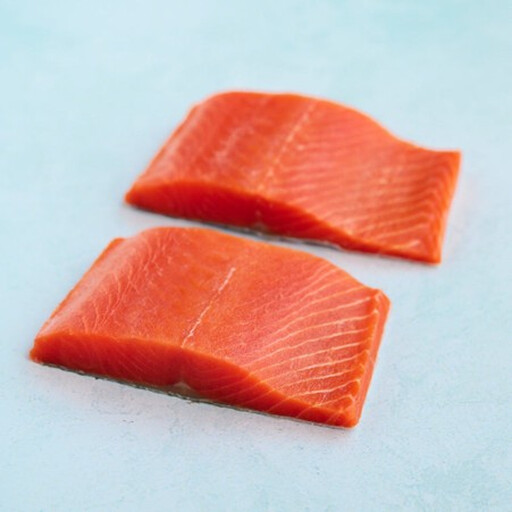
The Fish Society Wild Sockeye Salmon Fillet Steaks 220g
For a plated main rather than a flaked dish, check how many servings the 220 g pack will provide. Follow its thawing and cooking instructions, and confirm bone status on the pack if it matters to guests.
View on Joybuy
 No image available
Morrisons Pink Salmon 213g
This tinned format suits salads, fishcakes or pasta bakes using flaked salmon. Check how much the 213 g can yields for your recipe, along with the current label’s bone and fish-allergen information.
View on Joybuy
 No image available
Morrisons Pink Salmon 213g (4 Packs)
For a dish using tinned salmon, confirm the number of cans and total quantity in this 4 Packs listing before calculating portions. Check the current pack’s bone and fish-allergen statements.
View on Joybuy
 No image available
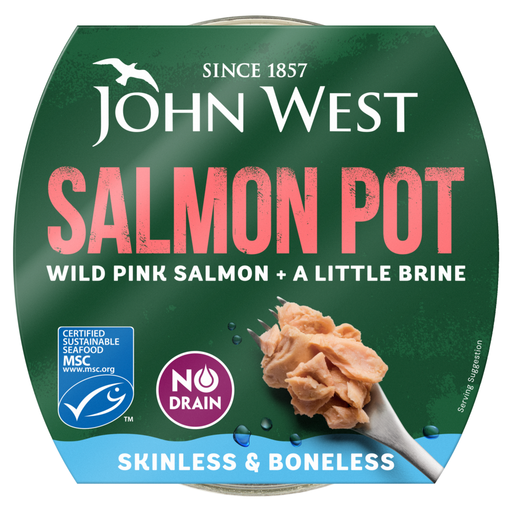
John West Pink Salmon Fridgepot 80g
This ready-to-use pot suits a small dish that does not need intact fillets. Check whether 80 g covers the recipe and read the current label for bone information and storage instructions.
View on Joybuy
 No image available
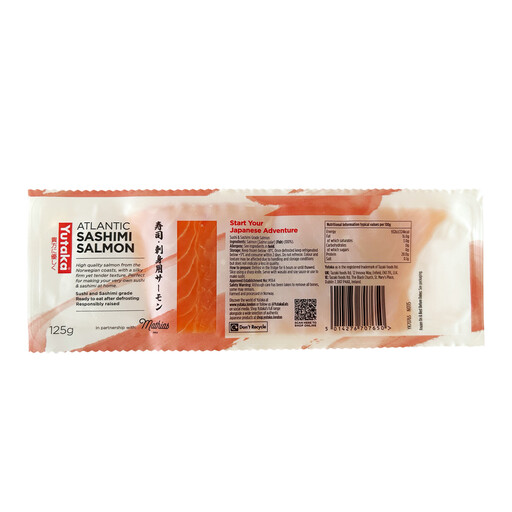
Yutaka Atlantic Sashimi Salmon 125g
For a menu considering this 125 g sashimi-labelled product, do not take the name alone as confirmation that it can be served raw. Check the current pack’s preparation, thawing and storage instructions; the listing says bones may remain.
View on Joybuy
Questions about serving salmon
Can I cook frozen salmon fillets without thawing them?
Yes, if the exact pack provides a cook-from-frozen method. Sainsbury’s gives such instructions for its cited frozen fillets; follow your product’s directions and check that the fish is cooked completely before serving, as UK government food-safety guidance advises.
Can tinned salmon go into a cold dinner-party dish?
John West says its canned salmon can be enjoyed straight from the can, making that product route suitable for a cold dish such as a salad. Check the instructions on your particular can, especially for a flavoured or speciality product.
What should I do with leftover salmon from an opened tin?
Follow the storage directions on the exact can. For its cited tinned red salmon, M&S instructs customers to transfer unused contents to a non-metallic container, refrigerate them and eat them within 24 hours of opening.
How do I check for bones and fish-allergen information?
Read the current pack’s ingredients, allergen declaration and bone statement before serving. Sainsbury’s says its cited tinned pink salmon contains small edible bones, while its cited frozen fillets are described as boneless; neither description establishes the bone status of another product.


