
24/7 Customer Support

Free returns

Same-day & Next-day Delivery

Quality Guaranteed

Unlock Your Welcome Offers: FREE Delivery | Up to 80% OFF | Free 30-day JoyPlus trial
Download the APP
A good dish drying rack should be a quiet, reliable helper in the kitchen. Yet, many of us have been let down by a purchase that promised much but delivered little. A wobbly frame, a perpetually damp countertop or the unwelcome appearance of rust spots after just a few months are common frustrations. These issues often stem from a few recurring design flaws that are easy to overlook when buying.
Before you invest in a new dish drainer, it pays to be aware of these common pitfalls:
Understanding these potential issues is the first step towards choosing a kitchen draining rack that genuinely works for your space and daily routine.
To avoid buyer's remorse, focus on a few core features that determine a dish rack's long-term performance and value. Analysing these parameters will help you select a product that is both functional and durable.
The material of your dish rack is fundamental to its lifespan. For metal options, look for products specifying 304 stainless steel. This grade contains a higher chromium and nickel content, offering superior resistance to rust and corrosion compared to cheaper alternatives. For plastic models, check for durable, non-brittle materials like ABS or polypropylene (PP), which are easy to clean and won't scratch your dishes. A well-made stainless steel dish rack or a high-quality plastic one will serve you well for years.
An effective drainage system is non-negotiable. The goal is to move water away from your dishes and countertop and into the sink. Look for these features:
Consider your household's needs and your kitchen's layout.
Based on these practical criteria, we've matched several products to different UK household needs.
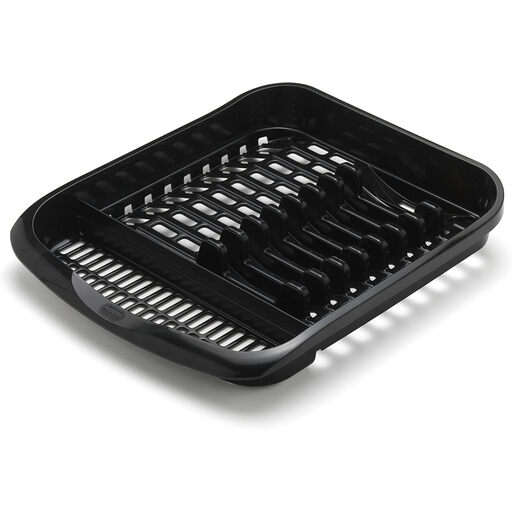
Why This Fits Their Persona: Ideal for students, renters or anyone needing a straightforward, no-fuss solution. Its compact footprint is perfect for small utility areas or kitchens where counter space is limited, providing essential drying capacity without the bulk.
Made from durable plastic, it completely sidesteps the issue of rust. Its simple, open design promotes airflow and is exceptionally easy to rinse and wipe clean, preventing grime build-up.
Affordable and lightweight. The low-profile design fits neatly beside any sink and is easy to store when not in use.
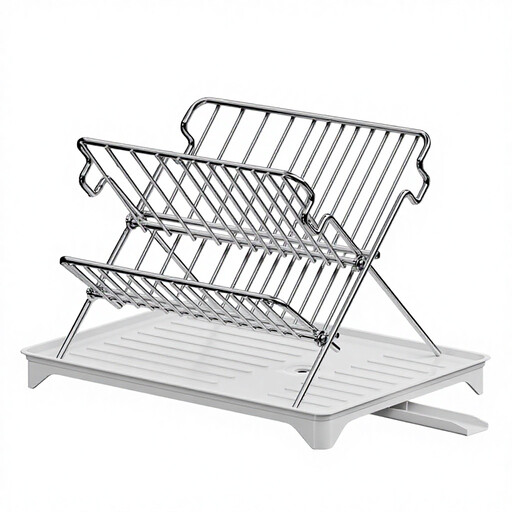
Why This Fits Their Persona: Perfect for those in city flats or with compact kitchens who need high capacity without sacrificing precious worktop space. The two-tier design doubles the drying area and its foldable nature means it can be tucked away completely.
This rack directly solves the problem of bulky, impractical design. It folds flat for storage and its built-in drainage pipe ensures water is channelled away efficiently, preventing countertop pooling.
Foldable design for easy storage. The 2-tier structure provides a large capacity on a small footprint, keeping tableware sorted and accessible.
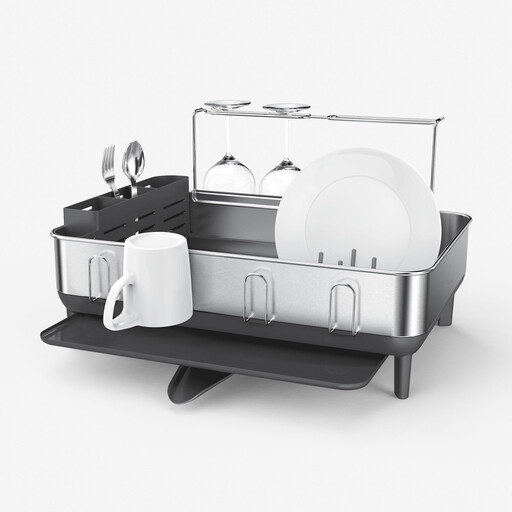
Why This Fits Their Persona: For homeowners who have invested in a modern kitchen and want accessories that match in both form and function. Its large capacity, durable materials and sophisticated aesthetic make it a worthwhile long-term addition.
It features a superior drainage system with a 360-degree swivel spout and a hydrophilic coating on the tray to prevent water spots. The rustproof materials and anti-slip feet ensure long-lasting stability and cleanliness.
Advanced drainage system prevents water pooling. It has a large, stable capacity with thoughtful features like a wine glass holder and silicone-capped wires to protect dishes.
We have compiled a complete, real-time list of products that fully satisfy these strict selection criteria and UK safety regulations.
The most effective way is to choose a rack made from genuinely rust-resistant materials from the start, such as 304 stainless steel or high-quality coated steel. If you already have a rack, ensure you wipe it down regularly, especially in joints and crevices where water can sit. For plastic racks, rust is not an issue, but regular cleaning is still needed to prevent limescale.
A dish drainer with an excellent drainage system is the most hygienic. Models that channel water directly into the sink via a spout and have good airflow prevent stagnant water, which is a breeding ground for bacteria and mould. Materials that are non-porous and easy to clean, like stainless steel and smooth plastic, also contribute to better hygiene.
For optimal hygiene, it's good practice to give your dish rack a quick clean once a week. Use warm, soapy water and a soft brush to remove any soap scum or food residue. Pay special attention to the cutlery holder and the drainage tray or spout, as these are areas where build-up is most common. A clean rack not only looks better but also ensures your clean dishes stay that way.