What matters when choosing?
Settle the kitchen fit and installation type first. Then compare usable capacity and the operating figures of models that will actually fit; loading features matter most when they solve a problem posed by your usual dishes.
| Concern |
What to check |
Who this matters to |
| Kitchen fit and installation |
Measure height, width and depth, allowing for rear pipework and an open door. For an integrated model, check the niche and cabinet-door requirements. |
I need the dishwasher to fit the available gap and open properly; the installation format has to work with my kitchen. Around 39% of consumers put kitchen fit first. |
| Everyday capacity |
Compare place settings and rack layout against your usual plates, bowls, glasses and pans. |
If several meals produce a full load, I want room for the dishes I actually use without awkward loading. Capacity comes first for around 23% of consumers. |
| Resource use and noise |
Compare UK label figures for kWh per 100 ECO cycles, litres per ECO cycle and noise in dB(A), alongside capacity. |
My machine may run regularly or close to where we sit, so its declared consumption and sound level affect my choice. Around 23% of consumers prioritise these operating figures. |
| Loading and convenience |
Check rack adjustment, cutlery space and relevant programmes; confirm any automatic-dosing consumables. |
My everyday crockery sometimes shares a load with taller glasses or pans, and I want a rack arrangement I can use easily. These loading needs lead the choice for around 15% of consumers. |
Bosch describes standard dishwashers as 60 cm wide and slimline models as 45 cm wide; Beko lists 12–15 place settings for its full-size range and 10 for its slimline range. Those are useful starting points, not specifications for every model. For operating figures, Energy Saving Trust explains the A–G label scale, while UK government dishwasher label guidance specifies ECO-programme electricity consumption in kWh per 100 cycles. Compare the exact candidates’ labels rather than relying on the letter alone.
Joybuy dishwasher choices
These full-size Joybuy models offer freestanding and fully integrated ways to wash everyday crockery. Choose between them on kitchen fit and usual load size; check each model’s label and installation instructions before comparing operating figures or ordering.
 No image available
Hisense HS642D90WUK 60 cm freestanding dishwasher, white
Consider this freestanding model if your usual crockery load calls for its stated 14 place settings and you have room for a 60 cm appliance.
Its product name specifies energy class D. Measure for rear pipework and door clearance, and use the model’s UK energy label when comparing consumption and noise.
View on Joybuy
 No image available
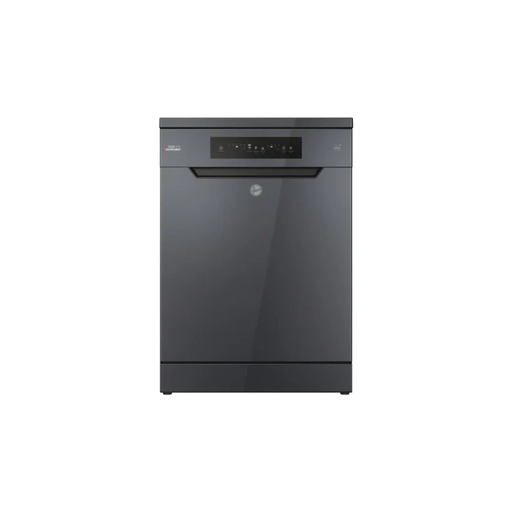
Hoover H-Dish 300 HFP 4C7E0A-80 freestanding dishwasher, graphite
This full-size freestanding option is worth checking if 14 place settings suit your regular crockery loads.
The product name specifies energy class C. Confirm the space needed for pipework and an open door, then compare its UK label with other models of suitable capacity.
View on Joybuy
 No image available
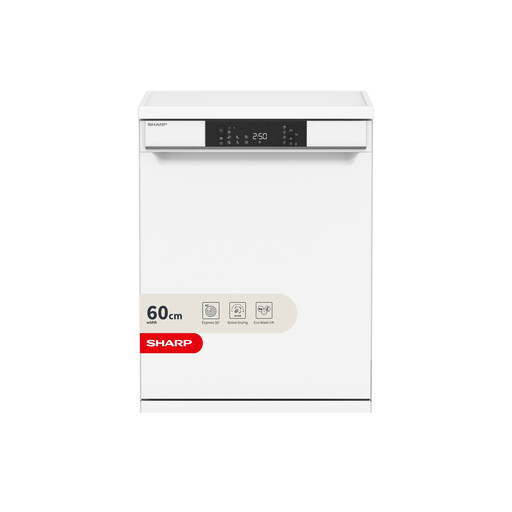
Sharp QW-NA1FF47D3W2-EN 60 cm dishwasher, white
Consider this model if you need a full-size freestanding dishwasher for everyday crockery and its physical fit works in your kitchen.
The product name states 47 dB and energy class D. Check the UK label for comparable declared operating figures, as well as clearance for pipework and the open door.
View on Joybuy
 No image available
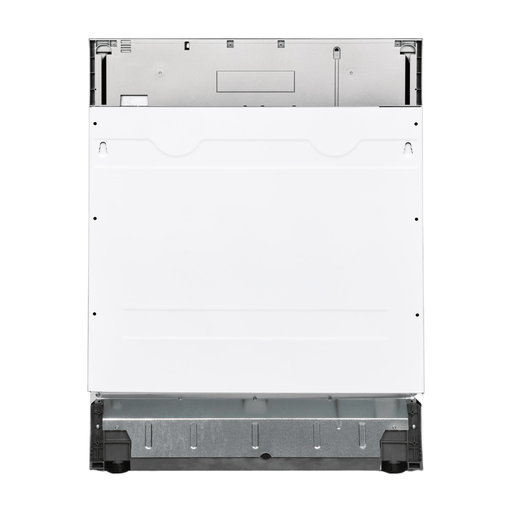
Sharp QW-NI1FI47D3X-EN 60 cm integrated dishwasher, white
This integrated model is a candidate for a fitted kitchen when its niche and cabinet-door requirements match your installation.
The product name states 47 dB and energy class D. Check the exact installation plan before ordering and its UK label when comparing operating figures.
View on Joybuy
 No image available
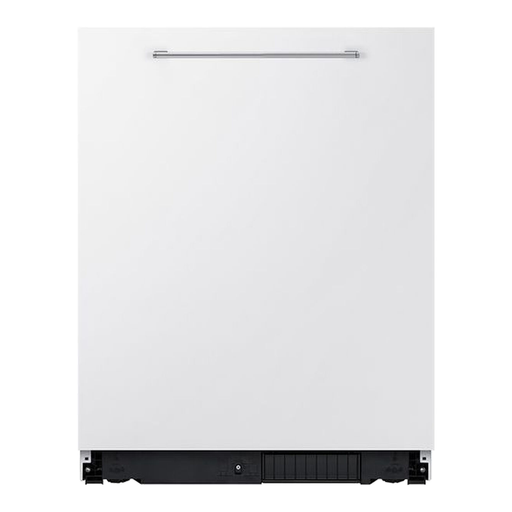
Samsung DW60CG550B00EU Series 7 fully integrated dishwasher
Consider this fitted-kitchen option if its stated 14 place settings match your everyday loads and its cabinet-door arrangement suits your kitchen.
The product name specifies energy class D. Check the UK label for ECO-cycle electricity and water use before assessing consumption, and confirm the installation dimensions against the model instructions.
View on Joybuy
Common questions
Is a 60 cm or 45 cm dishwasher better for everyday crockery?
Choose the width that fits your kitchen and still accommodates your usual load. Beko lists 12–15 place settings for its full-size range and 10 for its slimline range, while Bosch points to 45 cm models for smaller households or restricted space. Check the exact machine’s racks against your plates, glasses and pans rather than treating those range figures as a rule for every model.
Which figures should I compare on a UK dishwasher energy label?
Compare the A–G class alongside declared ECO-cycle electricity use in kWh per 100 cycles, water use per cycle, capacity and noise for models that suit your kitchen. Energy Saving Trust explains the efficiency scale, and UK government dishwasher label guidance specifies the ECO-cycle electricity measure. The letter by itself does not describe the whole machine.
What should I measure before ordering an integrated dishwasher?
Measure the available height, width and depth, then check rear pipework space, door-opening clearance and the exact model’s niche and cabinet-door requirements. Fitting guidance calls for room behind a dishwasher for pipework; an integrated model also needs an installation arrangement that works with your cabinetry.
Do all dishwashers need the same salt and rinse-aid routine?
No single maintenance routine should be assumed for every dishwasher. A Miele dishwasher manual includes water-softener settings as well as salt and rinse-aid instructions; follow the manual for the exact model and check which consumables its setup requires.


