High-turnover cottage operators
For owners and managers clearing cutlery with plates and other guest tableware between stays, usable capacity and the cutlery layout matter as much as the appliance’s exterior width.


For dishwasher-safe cutlery washed alongside guest tableware, choose a 60 cm freestanding dishwasher if larger loads are frequent and the kitchen has room; a 45 cm slimline model makes more sense when the available space is narrow. Consider an integrated model where it suits the fitted kitchen, and check the chosen machine’s cutlery layout, programme conditions and installation requirements before ordering.
For owners and managers clearing cutlery with plates and other guest tableware between stays, usable capacity and the cutlery layout matter as much as the appliance’s exterior width.
When the available space is narrow, the choice starts with measured appliance dimensions. The machine still needs enough room inside for the cottage’s usual combined load.
For a cottage where guests or cleaners need a straightforward routine, compare programme conditions and stated noise alongside installation access and routine upkeep.
Measure the space and check the available connections first, then compare the capacity and programmes against a typical guest-changeover load. A freestanding machine can be selected by its measured width; an integrated machine also has to suit the fitted cabinetry.
| Concern | What to check | Who this matters to |
|---|---|---|
| Capacity and cutlery layout | Compare place settings and the actual basket or tray arrangement with the cottage’s usual mix of cutlery, plates and pans. | If a full guest load has to go through together, I need room for the cutlery without crowding the other dishes; around 36% of consumers put usable load capacity first. |
| Space and installation | Measure width, height, depth and door clearance; confirm the water supply, drain and suitable wall socket. | In a tight kitchen, I need a machine that fits the opening and can be connected properly; for around 29% of consumers, fit and installation are the primary concern. |
| Turnover routine | Read each programme’s stated duration, permitted load and soil conditions rather than choosing by its name alone. | When cleaning time between stays is limited, I need a cycle suited to the dishes actually left behind; around 21% of consumers prioritise a workable turnaround routine. |
| Running data and noise | Compare the exact model’s energy label, Eco-cycle information and stated noise level. | If the kitchen opens onto guest living space, I want predictable running information and less disturbance; that is the main concern for around 14% of consumers. |
Beko describes the 30-minute programme on its DVS05C20 as suitable for lightly soiled dishes. That condition matters when guest cutlery and tableware are dirtier.
Check the selected model’s programme instructions and keep a suitable dirtier-load programme in the cleaning routine.
A slimline machine may fit a narrow space yet require the usual guest load to be split. The researched Beko DVS05C20 is 44.8 cm wide and has 10 place settings; those figures apply to that model.
Measure the opening, then compare capacity and cutlery arrangement against the loads the cottage normally produces.
Electrical Safety First advises against an extension lead for a dishwasher and calls for access to a water supply, drain and wall socket.
Confirm a suitable connection and arrange competent installation before placing the appliance in service.
Water Regulations UK explains that backflow-protection requirements depend on an appliance’s use and location; a domestic installation should not simply be assumed to cover every commercially operated cottage.
Ask the installer and, where necessary, the local water undertaker what protection applies to the particular premises.
A reference point for slimline freestanding machines in a kitchen with limited width.
Useful to consider when comparing 45 cm and 60 cm freestanding formats.
A reference for comparing the features and programme data of a higher-specification 60 cm machine.
These freestanding 60 cm and slimline 45 cm dishwashers give cottage buyers options for different kitchen widths and stated load capacities. Check the actual opening, cutlery arrangement and programme instructions before choosing for a guest-cleaning routine.
 No image available
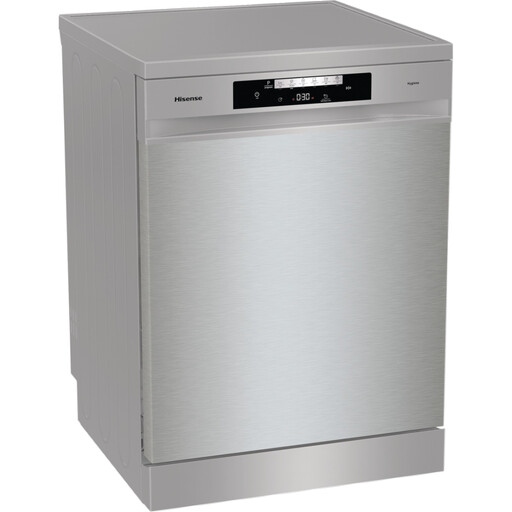
Consider this freestanding format where the kitchen accommodates a 60 cm appliance and guest loads call for the stated 14 place settings.
D energy rating. Check the cutlery layout and the quick programme’s load and soil conditions before relying on it for changeovers.
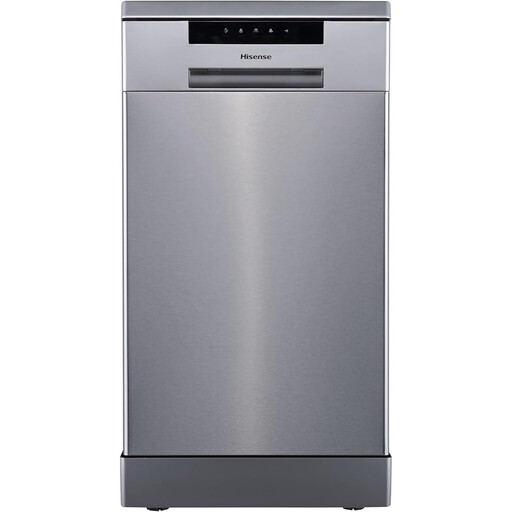 No image available
Consider this freestanding model for a narrower kitchen if its stated 9 place settings accommodate the usual guest load.
E energy rating. Confirm the programme durations and load conditions for the cottage’s cleaning routine.
 No image available
Consider this freestanding model where there is room for a 60 cm machine and the stated 14 place settings suit larger combined loads.
D energy rating. Confirm whether the model uses a cutlery basket or tray, and check the relevant programme conditions.
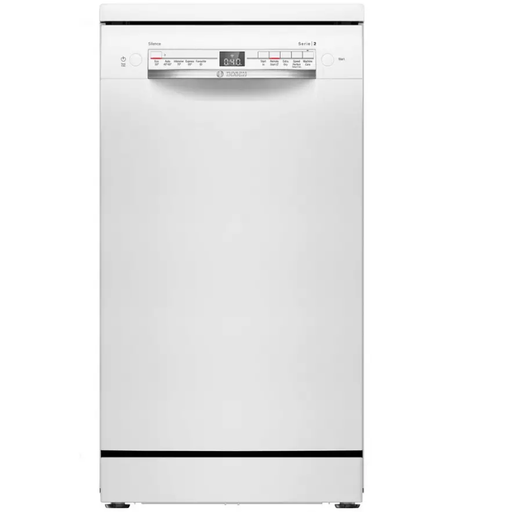 No image available
Consider this freestanding model for a measured narrow space if its stated 9 place settings suit the cottage’s combined cutlery and tableware load.
F energy rating; the product name also identifies Home Connect and ExtraDry. Check programme load and soil conditions if short changeovers matter.
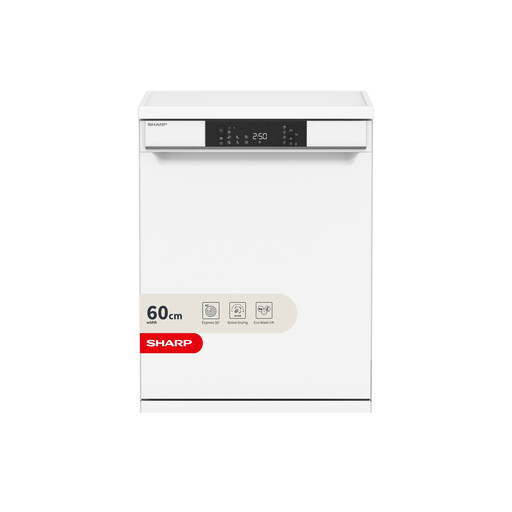 No image available
Consider this 60 cm model where the kitchen has room for a full-size appliance; confirm its capacity against the cottage’s usual guest load.
D energy rating and a stated 47 dB noise level. Check the cutlery arrangement and Quick 30 programme conditions before planning a changeover around that cycle.
Use a suitable wall socket instead of planning the installation around an extension lead. Electrical Safety First warns that dishwashers can overload an extension lead, particularly when it is shared with other large appliances.
Check the measured appliance space and access to a water supply, drain and suitable wall socket. Electrical Safety First also advises running a test cycle after installation to check water flow and drainage.
Do not assume that a domestic installation arrangement suits every holiday cottage. Water Regulations UK says the backflow protection needed for a mains-water appliance depends on its use and location; confirm what applies with a competent installer and, where necessary, the local water undertaker.
Check the rules for the cottage’s location rather than treating one country’s guidance as UK-wide. GOV.UK’s guidance on letting a self-catering holiday home applies to England; it is not a rulebook for cottages in Scotland, Wales or Northern Ireland.