Who each format may suit

Lunchbox users with very little space

If a conventional dishwasher will not fit, a compact model may cover lunchboxes, cups and a light daily load. Check its actual capacity against everything you usually wash together; Which? describes compact capacity in terms of roughly 40–60 items per wash.

Small households with a 45 cm position

A slimline machine is worth considering when lunchboxes need to go in with ordinary dishes but a 60 cm-wide appliance will not fit. Bosch identifies 45 cm as the slimline width; rack layout still matters for bulky containers and lids.

People fitting out a small kitchen

An integrated slimline dishwasher can sit behind a cabinet front, provided the niche, furniture door and connections suit the exact appliance. Check those requirements before choosing a model on appearance alone.

What matters when choosing

Compact or tabletop

Consider when: Neither a 45 cm nor a 60 cm machine fits and your usual load is light.

Trade-off: Which? reports that compact models can be awkward to load and may use comparatively more energy and water than larger alternatives; compare exact models before deciding.

45 cm freestanding slimline

Consider when: You have a suitable position and regularly wash lunchboxes with everyday dishes.

Trade-off: It saves width against a 60 cm format but still needs adequate depth, door clearance and connections.

45 cm integrated slimline

Consider when: A fitted-kitchen finish matters and the niche can take a compatible appliance and furniture door.

Trade-off: The cabinet and door requirements make installation and later replacement less flexible.

60 cm full-size

Consider when: A 60 cm space is available and lunchboxes often share a wash with larger household loads.

Trade-off: It uses more kitchen width; check the individual model’s capacity and consumption rather than assuming its size determines running costs.

ConcernWhat to checkWho this matters to
Fit and installation Measure width, height, depth and door clearance; confirm power, cold-water and waste connections, plus the furniture door for an integrated model. If the kitchen has little spare room, I need to know that the appliance and its open door will fit before considering features. Around 40% of consumers put fit and connections first.
Daily loading Compare capacity and rack layout against your lunchboxes, lids and usual dishes; check that loaded items will not obstruct the spray arms. When lunchboxes go in with plates and cutlery, I need a load I can arrange without routinely leaving things for hand-washing. Around 30% of consumers prioritise practical loading capacity.
Energy, water and noise Compare exact-model energy labels, Eco-cycle electricity and water figures, capacity and quoted noise, preferably between similar formats. If I run the dishwasher regularly in a small home, its ongoing resource use and sound matter to me. Roughly 20% of consumers make these their primary concern.
Finish or flexibility Check the niche and compatible door for an integrated model, or consider whether a freestanding appliance better suits future kitchen changes. I may value a concealed cabinet front, or prefer a machine that is simpler to relocate or replace. Around 10% of consumers put that choice ahead of the other factors.

Mistakes to avoid

  • Measuring only the width

    A 45 cm slimline dishwasher can still be unsuitable if its height, depth, open door or connections do not fit. An integrated model also needs a compatible cabinet front.

    Measure the whole space and check the exact model’s installation instructions before arranging delivery or fitting.

    An unsuitable niche or connection position may mean rearranging the installation before the appliance can be fitted.

  • Choosing compact solely because it is smallest

    A light lunchbox load may suit a compact machine, but limited capacity can mean more cycles or items left for hand-washing. Which? also cautions that compact machines can be less efficient and more awkward to load than larger alternatives.

    If a 45 cm machine fits, compare its rack layout, capacity and exact Eco-cycle figures before choosing a tabletop model.

  • Judging running use by energy class alone

    Energy Saving Trust advises looking beyond the A–G rating: appliance size and the product-specific energy, water and noise information affect a useful comparison.

    Compare the label information and Eco-cycle figures for the exact models you are considering, especially when they differ in size or capacity.

  • Putting every plastic part on any rack

    Dishwasher-safe instructions can specify placement. Sistema, for example, directs marked containers to the top rack and says its Lunch containers should be secured away from the heating element.

    Check the marking and care instructions separately for each lunchbox, lid and insert, then load permitted parts as directed by their maker.

    Incorrect placement can damage container parts that could otherwise remain in use.

Brands to consider

Bosch

Bosch’s UK buying guidance covers compact, 45 cm slimline and 60 cm formats, including freestanding and integrated choices.

  • Its format guidance can help you narrow the choice by available space before comparing individual machines.
  • Check current exact-model labels and availability: Bosch marks its compact SKS62E32EU example as no longer available, so its specifications should not be applied to other models.

Beko

Beko lists both freestanding and integrated 45 cm slimline dishwashers in its UK range.

  • The DVS04X20 is a specific freestanding example with 10 place settings and a removable cutlery basket, according to Beko.
  • Those loading features are model-specific; inspect the racks and programmes of the Beko machine you are actually considering.

Miele

Miele’s UK range includes 45 cm freestanding and integrated dishwashers.

  • Miele lists the freestanding G 5740 SC SL with a cutlery tray, AutoOpen and a quoted 44 dB noise figure.
  • Compare that exact model’s C energy class, capacity and installation needs with alternatives; its listed features do not establish how your lunchboxes will wash or dry.

Joybuy dishwasher choices

These 45 cm slimline choices suit consideration where a freestanding position or a compatible fitted-kitchen niche is available. Compare their racks with your lunchboxes and confirm the full installation requirements before choosing.
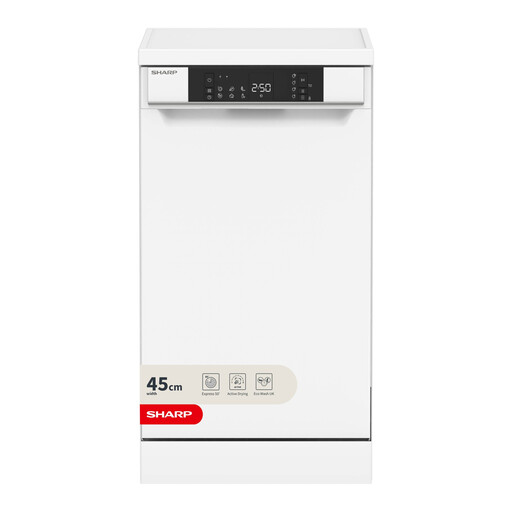
Sharp QW-NS1EF49E0W-EN dishwasher

Sharp QW-NS1EF49E0W-EN 45 cm dishwasher

Consider this model for a narrow dishwasher position; check whether your lunchboxes fit securely in its racks and confirm the required connections. The title specifies a 45 cm width, 49 dB noise figure, E energy class and white finish.

View on Joybuy
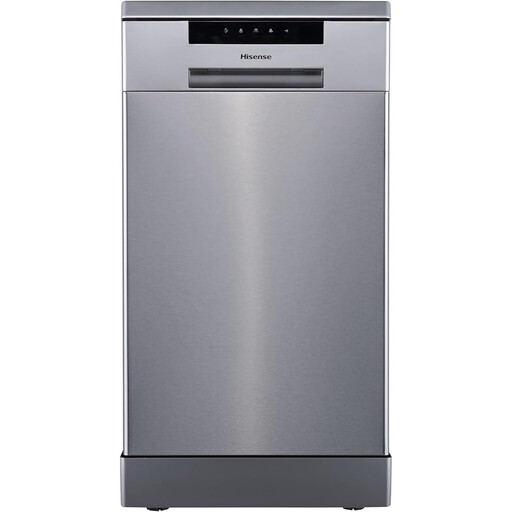
Hisense HS523E15XUK slimline dishwasher

Hisense HS523E15XUK 45 cm slimline dishwasher

Consider this freestanding model if a slimline position is available and you need to wash lunchboxes with daily dishes. Its title specifies nine place settings, an E energy class and a stainless-steel finish; confirm the exact model details, rack fit and installation requirements before buying.

View on Joybuy
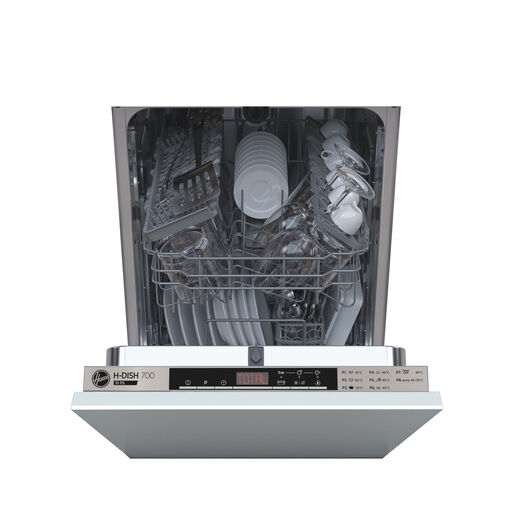
Hoover HDIH 2T1047-80 H-Dish 500 dishwasher

Hoover HDIH 2T1047-80 H-Dish 500 integrated slimline dishwasher

Consider this model for a fitted kitchen only after checking the niche, furniture door and connections. Its title specifies 10 place settings and an E energy class; check rack clearance for your lunchboxes and the exact-model energy information.

View on Joybuy
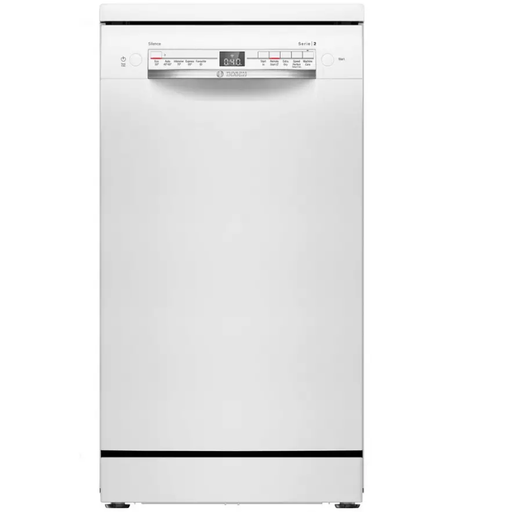
Bosch SPS2IKW01G slimline dishwasher

Bosch SPS2IKW01G 45 cm freestanding dishwasher

Consider this slimline model where a freestanding machine will fit. Its title specifies nine place settings, Home Connect and ExtraDry; confirm lunchbox clearance, connections and the exact-model energy label before buying, as energy-class statements for this listing conflict.

View on Joybuy
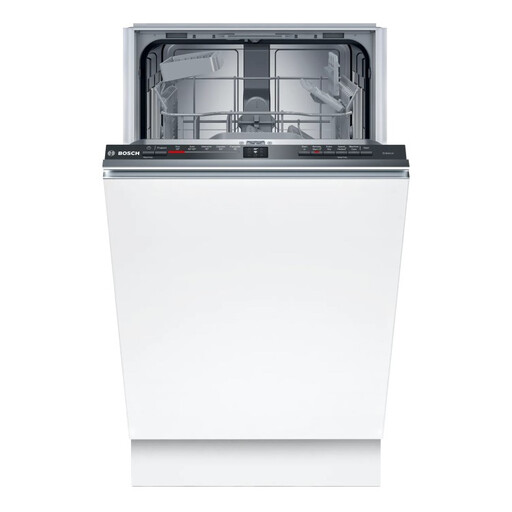
Bosch Series 2 SPV2HKX42G integrated dishwasher

Bosch Series 2 SPV2HKX42G integrated slimline dishwasher

Consider this fully integrated model if the niche and cabinet door are compatible. Its title identifies Wi-Fi connectivity, a fixed-door hinge kit and an E energy class; confirm the door arrangement, connections and lunchbox rack clearance for your installation.

View on Joybuy

Common questions

Can a dishwasher-safe lunchbox go on any rack?

Not necessarily: follow the instructions for that lunchbox and each removable part. Sistema, for example, specifies the top rack for products bearing its dishwasher-safe symbol and says its Lunch containers should be secured away from the heating element; do not apply that brand’s instructions to every container.

What should I check before installing an integrated dishwasher?

Check the appliance niche, furniture door and service connections against the exact model and your installer’s requirements. Integrated-dishwasher installation guidance commonly calls for a power connection within 1 metre and cold-water and waste connections behind the appliance.

Is a compact dishwasher always the right choice for a small kitchen?

No: choose compact chiefly when a larger format will not fit and its load size meets your routine. Which? cautions that compact models can be harder to load and less efficient than larger alternatives, so compare a 45 cm slimline model if your space and connections allow one.

Will plastic lunchboxes come out completely dry?

Do not assume they will. Which? notes that plastic is harder to dry than crockery or glass because it retains heat differently; compare drying assessments for the exact dishwasher, without treating a named drying option as a guarantee for your containers.

What energy information should I look for online?

Look for the energy label for the exact dishwasher listing, then compare its figures alongside capacity and your likely loading pattern. GOV.UK states that products covered by UK energy-information rules must display an energy label at the point of sale, including on a website.