Households with limited kitchen width
If mugs are a regular part of a modest load, a slimline or compact fitted dishwasher may suit the available space. Check that its capacity and baskets accommodate the mugs you actually use.


Choose a dishwasher format that fits your kitchen and usual load before comparing programmes. If tall mugs or handles make loading awkward, check the upper-basket layout; then compare Eco-programme figures and short-cycle conditions without overlooking each mug’s care instructions.
If mugs are a regular part of a modest load, a slimline or compact fitted dishwasher may suit the available space. Check that its capacity and baskets accommodate the mugs you actually use.
When mugs go in alongside plates, bowls and cookware, basket flexibility and space for the whole load matter more than a mug-only washing routine.
A short programme may be useful for suitable lightly soiled loads. For routine comparisons between machines, look separately at Eco-programme figures and the stated noise level.
Consider it when: Kitchen width is limited and your usual mug-and-dishes load is modest.
Trade-off: Check whether the narrower baskets accommodate the number and shape of mugs you wash together.
Consider it when: Mugs are part of a larger regular load and you have space for a full-size appliance.
Trade-off: Allow for the appliance footprint and door clearance, and check basket features on the exact model.
Consider it when: The dishwasher needs to fit a matching cabinet niche in a fitted kitchen.
Trade-off: Niche dimensions, furniture-front requirements and installation instructions need checking before ordering.
For consumers choosing a dishwasher to wash dishwasher-safe mugs alongside household dishes, start with physical fit and loading, then consider cycle conditions and the figures for the exact model.
| Concern | What to check | Who this matters to |
|---|---|---|
| Fit and usable loading space | Measure the appliance opening and inspect upper-basket adjustment and the arrangement for handled mugs. | If the kitchen opening is narrow, I need a machine that fits without making mugs awkward to arrange. Around 31% of consumers put fit and usable loading space first. |
| Mixed-load capacity | Compare place-setting capacity and basket flexibility for mugs alongside your usual dishes. | When the day’s mugs go in with plates and bowls, I want enough adaptable room for the whole load. Mixed-load capacity comes first for around 31% of consumers. |
| Short-cycle convenience | Read the programme’s load and soil-level conditions, as well as any temperature limit in the mug’s care instructions. | If I need lightly soiled mugs again soon, a suitable shorter cycle matters more to me than the shortest advertised time alone. Around 23% of consumers prioritise short-cycle convenience. |
| Energy, water and noise | Compare Eco-programme energy, water and duration figures, plus the stated noise level, for each exact model. | For regular washing, I want to understand the labelled resource use and how noisy the machine may be. These comparisons are the primary concern for around 15% of consumers. |
Dishwasher-safe care can have conditions: John Lewis & Partners lists a 40°C recommendation for one glass mug and notes a metallic-detail exception on another mug listing.
Follow the instructions for each mug, particularly if it has decoration, metallic details or a specified temperature limit.
A narrower machine may fit the kitchen but still leave an awkward arrangement for tall mugs, handles and other dishes.
Measure the installation space and inspect the exact basket layout before deciding whether its stated capacity works for your usual load.
Energy-label comparisons use Eco-programme information, while a quick programme can have different load and soil-level conditions.
Compare Eco figures between models, then assess the short programme separately against your mugs’ care instructions and typical load.
These model examples illustrate features worth checking; the same specifications do not necessarily apply across a brand’s range.
Relevant when comparing full-size freestanding and 45 cm integrated formats with model-specific basket arrangements.
Relevant to consumers considering a slimline freestanding machine with a choice of shorter programmes.
Relevant when comparing freestanding and compact integrated models with specified basket and programme features.
These models cover freestanding, slimline and integrated ways to wash mugs with everyday dishes. Compare the format with your kitchen opening and usual load, then check the basket arrangement and mug-care instructions.
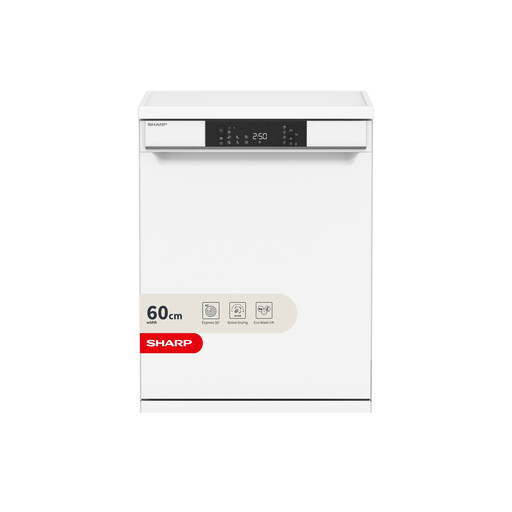 No image available
Consider this freestanding format if mugs are part of a mixed load and your kitchen accommodates a 60 cm machine.
White; D-rated; stated noise level 47 dB. Check how your handled mugs fit in the baskets and whether any shorter programme suits their care instructions.
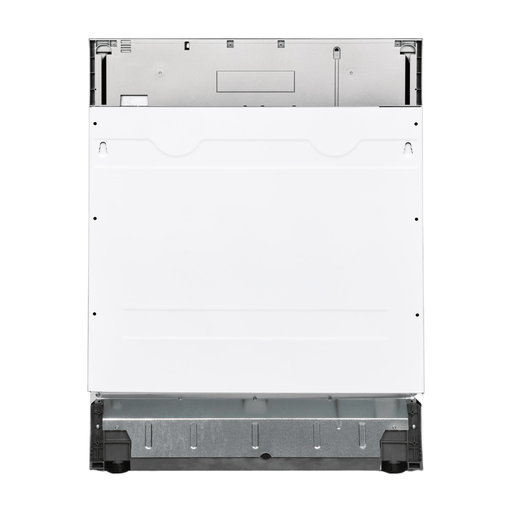 No image available
Consider this integrated format for mixed loads if your fitted-kitchen opening matches the appliance.
White; D-rated; stated noise level 47 dB. Confirm the cabinet niche, furniture-front requirements and basket fit before ordering.
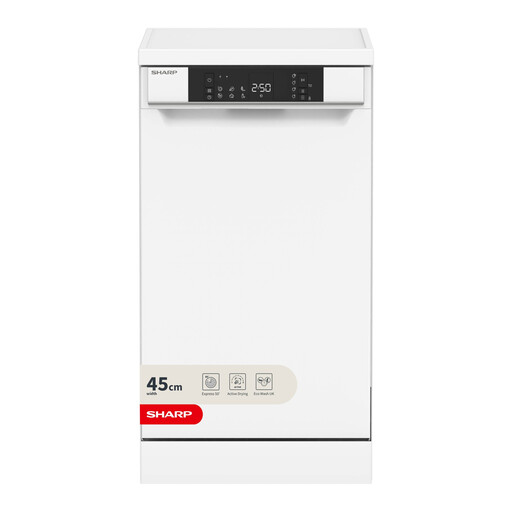 No image available
Consider this slimline freestanding format where kitchen width is limited and your usual load fits a narrower machine.
White; E-rated; stated noise level 49 dB. Check the space available for tall or handled mugs and the conditions of any short programme.
 No image available
Consider this full-size format if mugs go in with a larger load of everyday dishes.
14 place settings; white; D-rated. Inspect the basket layout for your mugs, and check the load and soil conditions before choosing a quick programme.
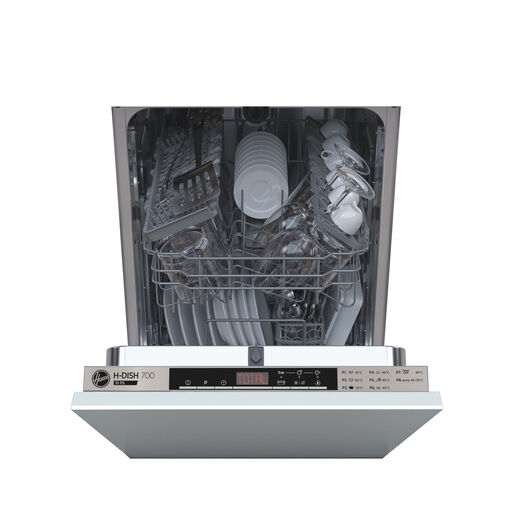 No image available
Consider this slimline integrated format if you need a fitted installation for a more modest mixed load.
10 place settings; E-rated. Confirm the niche and installation requirements, inspect the basket fit and check any rapid programme’s conditions.
No. Follow the individual mug’s care instructions: John Lewis & Partners recommends a 40°C cycle for one dishwasher-safe glass mug and notes that metallic details can be an exception on another listing. Check those conditions before selecting a hot or intensive programme.
Compare the exact models’ Eco-programme energy use, water use and duration, alongside rated capacity and noise information. GOV.UK guidance says dishwashers within the scope of UK energy-information rules must have an energy label and product information sheet; quick-cycle times describe a different programme.
Use a 30-minute cycle only when its stated conditions and the mug’s care instructions suit the load. Beko UK describes its BDFS16030 Mini 30' programme for lightly soiled dishes; a short-cycle name on another model does not establish the same conditions.
Match the exact appliance dimensions to the cabinet niche, then check the furniture-front and installation instructions. Integrated models are intended for a fitted opening, so a matching width alone is not enough to establish that the installation will work.