Family-meal clear-up households
If mugs go in with plates, cutlery, cookware and serving pieces, usable basket space matters as much as the stated place-setting capacity.


For regular family-meal clear-ups, start by checking whether a 60 cm dishwasher can hold your dishwasher-safe mugs alongside plates, pans and serving pieces: its place-setting figure alone will not tell you that. Choose between freestanding and integrated models according to your kitchen and installation needs; consider a 45 cm slimline model when space is the overriding constraint, and check its baskets against your usual load.
If mugs go in with plates, cutlery, cookware and serving pieces, usable basket space matters as much as the stated place-setting capacity.
If the dishwasher needs to sit behind a cabinet front, check the niche and installation requirements before comparing programmes.
If you want to protect decorated mugs and compare routine use, check each mug’s care instructions alongside the dishwasher’s programme, energy, water and noise information.
Settle the installation format first, then judge capacity by the mugs and meal dishes you actually need to load together.
Choose when: You want a full-size machine without a matching cabinet front.
Allow for: The selected model’s dimensions, door clearance and water and drain connections.
Choose when: A concealed front matters and the fitted kitchen can accommodate the appliance.
Allow for: Niche, cabinet-front and installation compatibility; an integrated format alone does not establish how your mugs will fit.
Choose when: Available kitchen width rules out a 60 cm model or the usual load is smaller.
Allow for: Less room to arrange mugs, pans and serving pieces together; inspect the actual baskets.
| Concern | What to check | Who this matters to |
|---|---|---|
| Mixed-load space | Compare the upper basket and cup supports with your mugs, then check the room left for pans and serving pieces. A place setting is not a mug count. | After a shared meal, I need mugs and larger dishes to fit without crowding each other; around 46% of consumers put mixed-load space first. |
| Routine programme information | Compare the exact models’ Eco energy, water, duration and noise figures on the UK energy label and product information. | If the machine runs regularly, I want comparable information about its routine cycle and can plan around its duration; roughly 36% of consumers make that their primary concern. |
| Turnaround and mug care | Check the short programme’s stated load and soil conditions, plus each mug’s dishwasher-safe marking and care instructions. | When lightly soiled mugs are needed again soon, I want a suitable cycle without overlooking their care requirements; about 18% of consumers prioritise this combination. |
A place setting describes tableware for one person, not the number of mugs that will fit. The definition excludes serving pieces, which still need space after a family meal.
Compare basket adjustment, cup supports and the arrangement of your usual cookware and serving dishes before relying on the capacity figure.
A quick programme can have different load and soil conditions from the Eco programme used for comparable consumption figures. Beko describes a 30-minute Mini programme for slightly dirty dishes on a selected model.
Check the chosen model’s programme table for the load you intend to wash, and assess its Eco information separately.
The mug’s finish and decoration matter independently of the dishwasher. Spode advises checking for a dishwasher-safe backstamp and warns that unsuitable washing can cause fading or crazing.
Follow each mug maker’s temperature and detergent guidance, and load mugs so that ceramics do not knock together.
An integrated dishwasher must work with the kitchen niche, cabinet front and installation arrangement. Beko lists its DIN15330 example at 59.8 cm wide, 81.8 cm high and 55 cm deep; another model may differ.
Check the exact appliance dimensions, front-panel requirements, door clearance and service connections before ordering.
Relevant if you are comparing freestanding formats for different kitchen widths.
Relevant when comparing integrated and freestanding models with different loading and programme arrangements.
Relevant if an integrated model or a narrower 45 cm kitchen niche is under consideration.
These models cover full-size freestanding dishwashers and one fully integrated option for a fitted kitchen. Check each basket against your mugs and wider family-meal load; the integrated model also calls for installation checks.
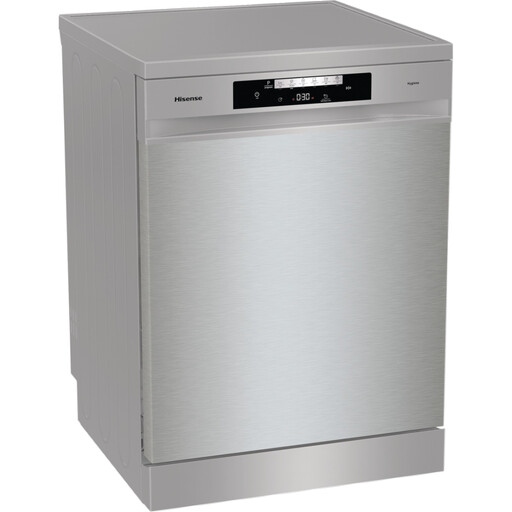 No image available
A full-size freestanding option to assess for mugs and the rest of a family-meal load.
The title states 14 place settings and energy class D. Check the basket layout for your mugs and compare the exact model’s Eco programme information.
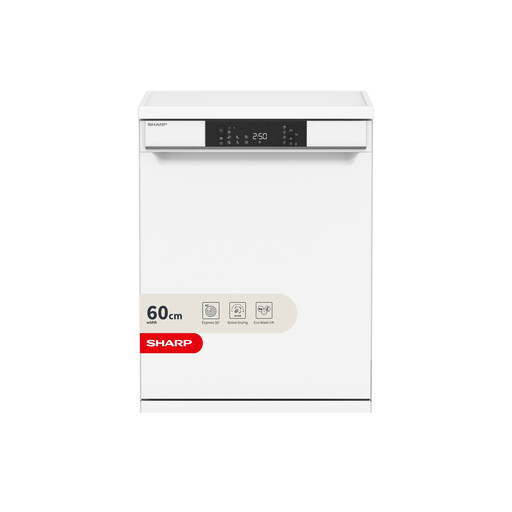 No image available
A full-size option if a freestanding machine suits your kitchen and mixed meal loads.
The title states 47 dB and energy class D. Check mug spacing and the manual’s load and soil conditions before choosing a short programme.
 No image available
A full-size freestanding variant to compare against your available space and usual family-meal load.
The title states 14 place settings and energy class D. Confirm that mugs fit securely, and check the exact model’s Eco duration and rapid-programme conditions.
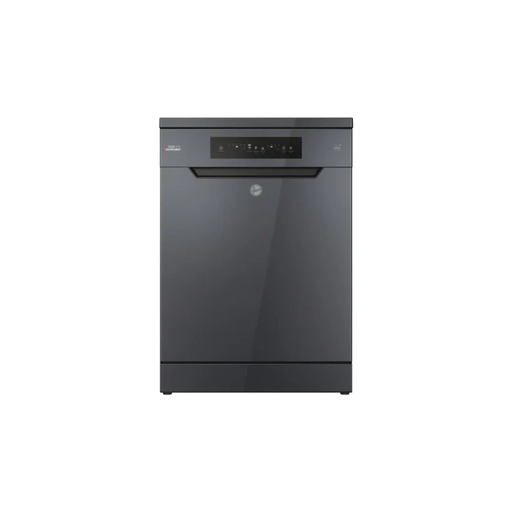 No image available
A full-size freestanding model to consider when mugs must share a load with larger meal dishes.
The title states 14 place settings and energy class C. Check the upper-basket and cup-support layout for your mugs, as well as the conditions of any rapid programme you intend to use.
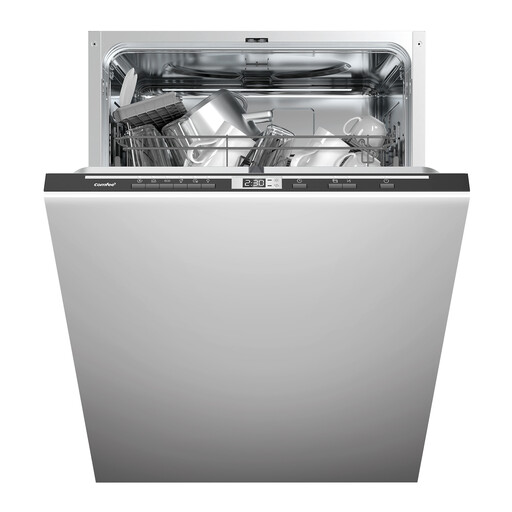 No image available
An integrated option if a fitted kitchen can accommodate the appliance and its cabinet front.
The title states 14 place settings, an adjustable upper basket, 44 dB and energy class D. Confirm niche and front-panel requirements, then check mug spacing and the exact model’s Eco information.
Yes: follow the individual mug’s care instructions as well as its dishwasher-safe marking. Spode advises checking the backstamp and notes that metallic or gold-decorated ceramics generally need explicit confirmation that they are dishwasher safe.
No. The place-setting definition covers tableware for one person and excludes serving pieces; it is not a count for mugs of different shapes. Check the actual baskets against your mugs, pans and serving dishes.
Compare the UK energy label for each exact model, then check its product information for Eco energy use, water use, duration and noise. UK government energy-labelling guidance requires an accurate label for products in scope, including at the point of online sale.
Not necessarily. Match the selected dishwasher’s programme conditions to the load and soil level: Beko describes a 30-minute Mini programme for slightly dirty dishes, which does not establish its suitability for every pan or heavily soiled load.
Check the electrical-appliance collection options available through your retailer, installer or local council before replacing it. Ask about the service terms and collection arrangements for your address rather than assuming collection is included.