Who is choosing the dishwasher?

Shared-household kitchen organisers

If several residents use the same machine for daily plates, mugs and cutlery, check how the available space, basket layout, stated noise and energy-label figures work together. An energy-class letter alone cannot settle the choice.

Fast-turnaround shared-kitchen users

If clean crockery needs to be available between meals or repeated uses, check whether the exact rapid programme is stated to wash and dry a full load. A quick-cycle name alone does not establish that.

Food-business kitchen operators

If the kitchen serves a food business, assess the dishwasher against its documented cleaning procedures, required throughput and temperature-monitoring arrangements. GOV.UK requires food businesses to make and follow a system for managing food safety.

What matters when choosing?

Concern What to check Who this matters to
Fit and loading Measure the opening and door clearance, then compare the exact model’s rated capacity and basket arrangement. Bosch lists both 60 cm and 45 cm domestic formats. When several residents share plates, bowls and mugs, I need a machine that fits the kitchen without making everyday loads awkward to arrange. Around 36% of consumers put fit and usable capacity first.
Turnaround Check the rapid programme’s stated duration, load size and drying conditions for the exact model. If crockery is needed again soon after a meal, I care whether a quick cycle covers the load we actually produce. Roughly 29% of consumers prioritise getting dishes back into use.
Running impact and noise Compare eco-programme energy use, water use, duration, rated capacity and noise on the exact model’s label. GOV.UK identifies these as dishwasher label fields. When the machine runs repeatedly in a shared space, I want to weigh its labelled electricity and water use alongside disturbance. About 21% of consumers make running impact and noise their primary concern.
Food-safety process For a food business, check whether the machine supports its documented cleaning and monitoring procedures. GOV.UK requires a food-safety-management system. If the kitchen prepares food as a business, I need the washing process to fit the operation’s food-safety controls, not just clear the dishes quickly. Around 14% of consumers put that process first.

Purchasing pitfalls

  • Choosing by energy class alone

    The A-to-G letter is useful, but it does not by itself show a dishwasher’s eco-programme water use, capacity, duration or noise. Energy Saving Trust notes that appliance size also matters when assessing energy use.

    Compare the complete label for models suited to the same space and load, including kWh per 100 cycles, litres per eco cycle, place settings and dB(A).

  • Assuming a domestic machine suits a food business

    GOV.UK requires food businesses to make and follow a food-safety-management system. A dishwasher therefore needs to fit the operation’s cleaning procedures, rather than being chosen solely for household convenience.

    Set out the required throughput and cleaning controls before choosing equipment. For commercial dishwashers, Richmond upon Thames recommends temperatures above 81°C for effective disinfection; assess monitoring within the business’s procedures.

    Monitoring and maintaining those controls can add work to the kitchen routine.

  • Treating every rapid cycle as a full-load cycle

    Programme claims are model-specific. Beko states that Fast45 on its BDFN36550PF washes and dries a full load in 45 minutes; that does not describe other models’ quick settings.

    Check the stated load and drying conditions of the programme you intend to use.

  • Ordering before checking installation

    A freestanding appliance and an integrated appliance have different placement requirements. The dimensions in a model name also do not establish door clearance or connection arrangements.

    Measure the space and access route, then confirm water, waste and electrical requirements. For an integrated model, check the cabinet and door-panel requirements too.

Brands to consider for these dishwasher formats

Bosch

Relevant when comparing freestanding, built-in, 60 cm and 45 cm domestic formats.

  • Bosch lists a B energy class, 9.0 L eco-programme water use, VarioFlex baskets and a VarioDrawer for the SMS4EMW06G.
  • Those specifications belong to the SMS4EMW06G; check the configuration and label of any other Bosch model separately.

Beko

Relevant when a stated full-load rapid wash-and-dry programme is central to the shortlist.

  • Beko states that Fast45 on the BDFN36550PF washes and dries a full load in 45 minutes.
  • Fast45 and its loading and drying arrangements are model-specific, not features to assume across the range.

Miele

Relevant when comparing 60 cm domestic machines with particular loading, noise and programme requirements.

  • Miele lists an A energy class, 45 dB noise figure, QuickPowerWash and AutoOpen drying for the G 5611 SC Active.
  • Compare the exact model’s dimensions, programmes and loading arrangement; features described for one model do not apply to every Miele dishwasher.

Hotpoint

Relevant when the kitchen layout makes full-size, slimline, freestanding or integrated installation the deciding factor.

  • Hotpoint describes full-size and slimline freestanding options as well as integrated formats in its UK range.
  • Check capacity, noise, energy-label figures and feature availability on the exact model rather than inferring them from the range.

Joybuy dishwasher choices for shared household kitchens

These domestic dishwasher choices cover freestanding, slimline and integrated installations. Match the format to the kitchen first, then compare each model’s stated capacity, label figures and programme conditions.
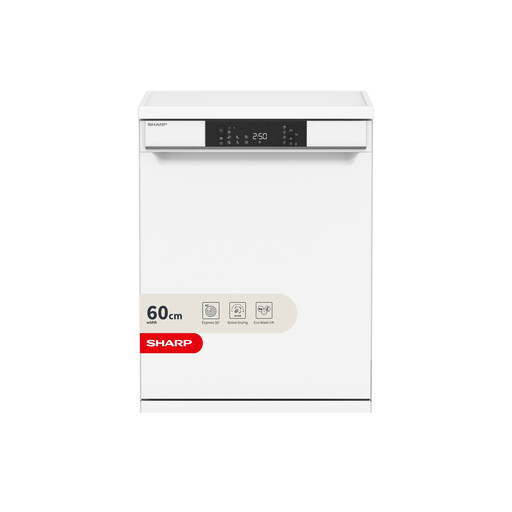
Sharp QW-NA1FF47D3W2-EN white dishwasher

Sharp QW-NA1FF47D3W2-EN 60 cm Dishwasher, White

Consider this freestanding format where a 60 cm appliance suits the shared household kitchen; confirm clearances and connections before ordering.

The product name states a D energy rating and 47 dB noise figure. Compare the exact energy label if eco-programme use matters to your choice.

View on Joybuy
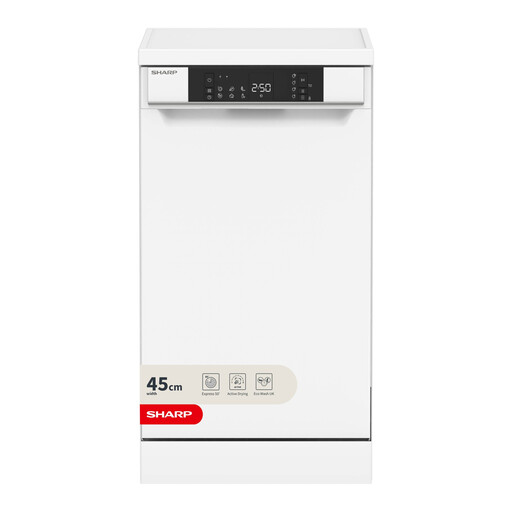
Sharp QW-NS1EF49E0W-EN white dishwasher

Sharp QW-NS1EF49E0W-EN 45 cm Dishwasher, White

Consider this narrower format if kitchen width limits the choice; check the complete dimensions, door clearance and connections.

The product name states an E energy rating and 49 dB noise figure. Check programme load conditions if quick turnaround is important.

View on Joybuy
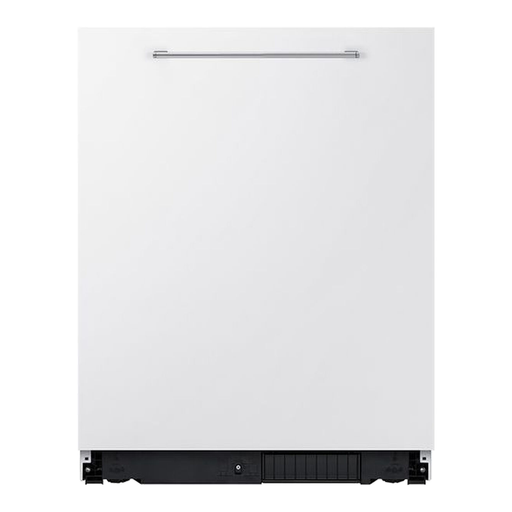
Samsung DW60CG550B00EU Series 7 integrated dishwasher

Samsung DW60CG550B00EU Series 7 Fully Integrated Dishwasher, 14 Place Settings

Consider this model where the shared household kitchen calls for an integrated appliance; confirm cabinet, door-panel and service requirements.

The product name states a D energy rating. If rapid washing is important, check the programme’s specified load before relying on it for everyday crockery.

View on Joybuy
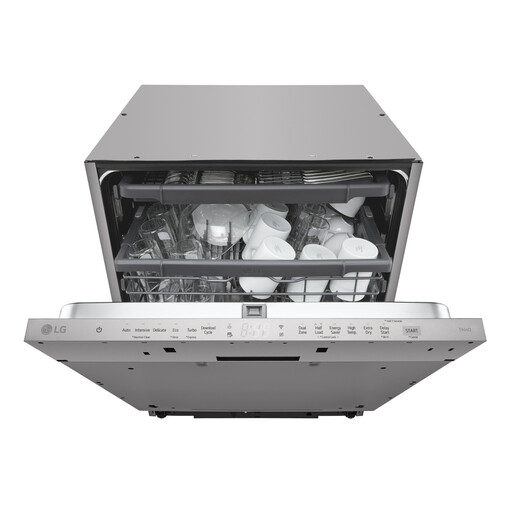
LG DB243TX Quad Wash integrated dishwasher

LG DB243TX Quad Wash Fully Integrated Dishwasher, 14 Place Settings

Consider this integrated domestic model if its stated capacity meets the shared load. Confirm the exact appliance width against the cabinet opening and check the installation requirements before ordering.

The product name states a D energy rating. Compare the exact model’s programme and eco-label details for the way the kitchen will use it.

View on Joybuy
Hisense HS642D90WUK white freestanding dishwasher

Hisense HS642D90WUK 60 cm Freestanding Dishwasher, 14 Place Settings, White

Consider this model where a 60 cm freestanding dishwasher fits and the stated capacity suits the shared household load; confirm installation clearances and connections.

The product name states a D energy rating. If dishes need to return to use quickly, check the quick programme’s duration and load conditions.

View on Joybuy

Common questions

Should a shared kitchen have a 60 cm or 45 cm dishwasher?

Choose the width that fits the measured space and handles the expected shared load. A 45 cm format addresses a constrained width, while a 60 cm format needs room for a full-size appliance; check each model’s dimensions, door clearance, rated capacity and baskets before deciding.

Is the energy-class letter enough to compare dishwashers?

No. Energy Saving Trust explains that appliance size matters as well as the A-to-G rating. Compare exact-model eco-programme energy and water figures alongside rated capacity, duration and noise when deciding which machine suits the shared load.

Will a quick programme wash the whole shared-kitchen load?

Only if the exact programme is stated to handle that load. Beko says Fast45 on the BDFN36550PF washes and dries a full load in 45 minutes, but that claim does not establish the capacity or drying result of another quick programme.

What changes when the shared kitchen serves a food business?

The dishwasher must be assessed within the business’s food-safety-management process, rather than chosen solely as a domestic convenience appliance. GOV.UK requires food businesses to make and follow such a system; for commercial dishwasher disinfection, Richmond upon Thames recommends temperatures above 81°C. Match equipment and monitoring to the operation’s documented procedures.

What should I confirm before arranging installation?

Confirm the exact appliance dimensions, access and door clearance, water and waste connections, and electrical requirements. For an integrated model, also check cabinet and door-panel requirements; confirm the selected retailer’s installation, disconnection and recycling arrangements separately.