If several people leave bowls, mugs and cutlery in a shared kitchen, consider a full-size dishwasher where there is space and permission to install one. A 45 cm slimline model addresses a narrower floor space; an integrated model needs compatible cabinetry, while a tabletop or tank-fill model can address tighter installation constraints but holds fewer dishes. Check the actual rack layout and programme conditions before relying on a stated place-setting capacity or quick wash.
Who is this for?
Shared-house load managers
If several people add bowls, mugs and cutlery to the kitchen each morning, capacity and usable rack space matter more than the place-setting figure alone. Check whether the household can load its usual dishes without creating a second queue.
Space-constrained sharers
When a standard-width machine will not fit, a 45 cm slimline or tabletop format may be worth considering. The choice depends on both the available space and how many people's dishes the smaller machine must handle.
Quiet, cost-conscious household organisers
If the dishwasher will run while others cook or use a nearby living area, compare model-specific noise figures. The energy label and a workable shared loading routine also help occupants compare and manage use.
What matters when choosing?
Start with the space, connections and permission available in the kitchen; then choose enough usable capacity for the dishes people actually leave. Compare noise and label information for the exact models that fit.
| Concern | What to check | Who this matters to |
|---|
| Capacity and turnaround |
Compare place settings with the rack layout for your bowls and mugs. Check the load and soil conditions of any quick programme. |
If several people leave breakfast dishes before the kitchen is cleared, I need one load to hold more than just bowls; around 31% of consumers put capacity and turnaround first. |
| Space and installation |
Measure the appliance location, door clearance and connection route. Confirm permission and, for an integrated model, cabinet and panel compatibility. |
With limited floor or worktop space, I need a format the kitchen can accommodate and I am allowed to install; space and installation come first for around 31% of consumers. |
| Noise during shared hours |
Compare each model's stated noise figure and consider when the household will run it. |
If a wash cycle would coincide with cooking, studying or time in a nearby living area, I want to judge how disruptive it may be; around 23% of consumers prioritise noise. |
| Energy, water and routine |
Compare exact-model energy labels and programme information, then agree when a full or eco load is practical. |
When everyone shares the running costs, I want a loading routine we can follow rather than frequent small loads; around 15% of consumers place ongoing use first. |
Common buying mistakes
-
Choosing a tabletop machine without counting the dishes
A compact machine addresses a space constraint, but a multi-person breakfast load may need repeated cycles. Which? also notes loading and per-item efficiency drawbacks for compact models in its tests.
Count the usual bowls, mugs, plates and cutlery. If a plumbed slimline or full-size machine fits, compare its usable loading space before settling on a tabletop format.
-
Assuming an integrated model fits any cabinet
An integrated dishwasher needs a compatible opening and furniture-panel arrangement. Appliance width alone cannot establish that it will fit.
Check the exact model's dimensional drawing and installation instructions against the cabinet, door panel and connection route before ordering.
-
Judging running use by the energy class alone
The label helps compare models, but the household's loading habits affect how often the machine runs. Energy Saving Trust advises running a dishwasher full to reduce water use.
Read the exact-model label and programme information, then agree when to run full and eco loads where appropriate.
-
Leaving installation and old-appliance removal until delivery
Delivery, installation, disconnection and recycling can be separate service choices rather than one combined arrangement.
Check which services are available for the chosen product and delivery address, and arrange any disconnection or removal the household needs.
Brands to consider
Bosch
Bosch UK lists freestanding and built-in dishwashers, including 60 cm and 45 cm formats relevant to different shared-kitchen spaces.
- The range gives households a choice between standard-width capacity and a narrower floor-standing format.
- Check specifications on the exact model: the energy and water figures published for Bosch SMS6ZCW10G do not apply to every Bosch dishwasher.
Beko
Beko's BDIN25440 is an integrated, 14-place-setting model to consider where the shared kitchen has a suitable cabinet opening.
- Beko lists this model at 59.8 cm wide, 81.8 cm high and 55 cm deep, giving dimensions to check against the available space.
- Its integrated format requires compatible cabinetry and permission for installation.
Miele
Miele UK lists freestanding and integrated dishwashers in slimline and standard formats.
- Its published range includes machines with 9–14 place settings, giving buyers several stated capacities to compare.
- Capacity, noise and energy ratings are model-specific; check the appliance that fits the kitchen rather than assuming range-wide performance.
Comfee
The Comfee CDWMT201DW-UK tabletop model is relevant where a floor-standing dishwasher or permanent water connection is impractical.
- Its Joybuy product listing describes a 5-litre built-in tank and an optional tap connection.
- The same listing describes approximately 2–3 place settings, so count the shared breakfast load before relying on this format.
Joybuy product choices
These models cover standard-width freestanding, integrated and slimline choices for a shared kitchen. Decide which format the space permits before comparing their stated capacity, energy class and loading details.
 No image available
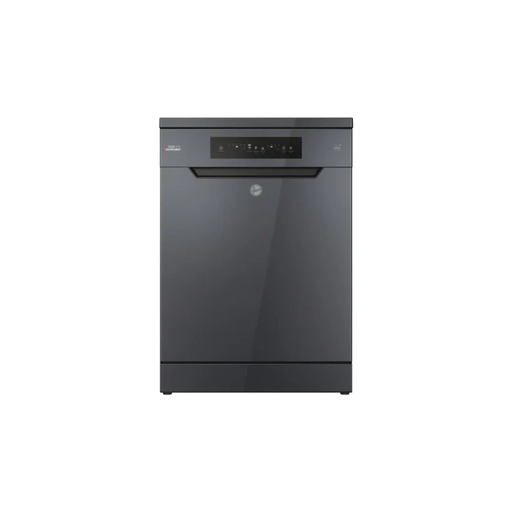
Hoover H-Dish 300 HFP 4C7E0A-80, graphite
Consider this freestanding, full-size model where several people share the load and there is room for it. Its name specifies 14 place settings and energy class C; check the racks against your bowls and the available installation space.
View on Joybuy
 No image available
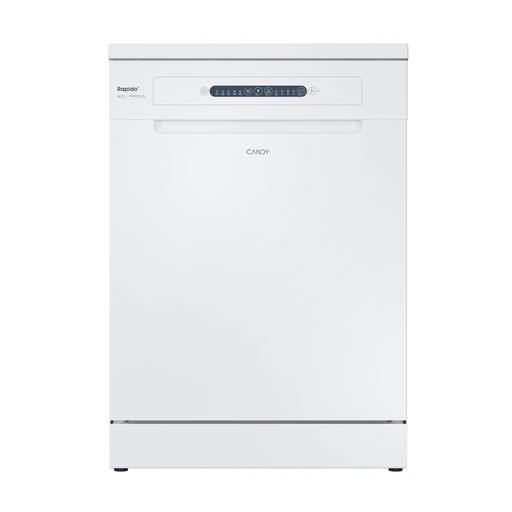
Candy RapidÓ CF 3C9E0W-80, white
This freestanding model is worth comparing for a shared kitchen with space for a full-size machine. Its name states 13 place settings, energy class C and a 49-minute rapid cycle; check which loads and soil levels that cycle accommodates.
View on Joybuy
 No image available
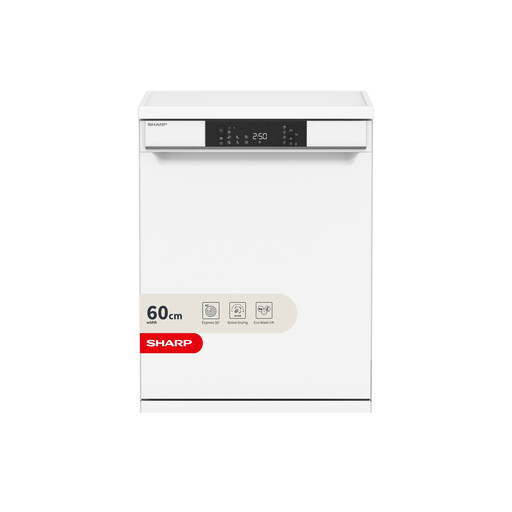
Sharp QW-NA1FF47D3W2-EN, white
Consider this model if the kitchen has space for a 60 cm dishwasher. Its name states 47 dB and energy class D; check the rack arrangement and programme details for the household's breakfast load.
View on Joybuy
 No image available
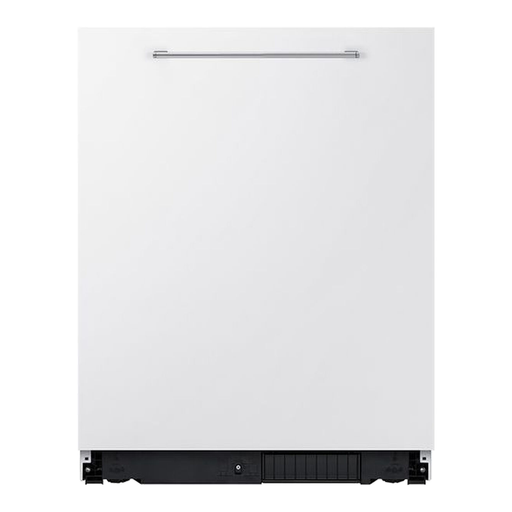
Samsung Series 7 DW60CG550B00EU
This fully integrated model is a choice only where cabinetry and installation permission suit it. Its name states 14 place settings and energy class D; confirm the cabinet opening, furniture-panel requirements and bowl clearance before ordering.
View on Joybuy
 No image available
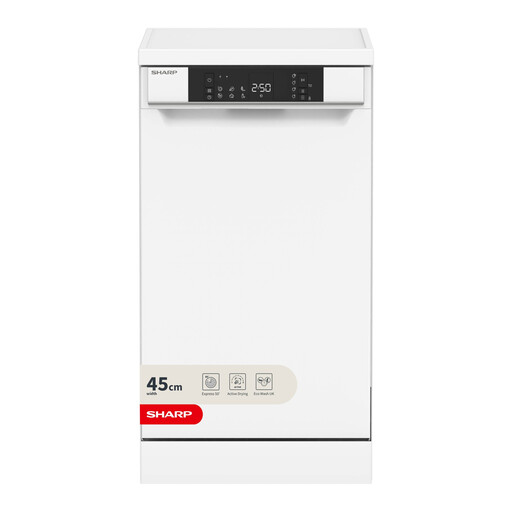
Sharp QW-NS1EF49E0W-EN, white
Consider this narrower model when a standard-width dishwasher will not fit but a floor-standing appliance is possible. Its name states 45 cm width, 49 dB and energy class E; check whether its racks hold the usual shared load.
View on Joybuy
Frequently asked questions
Should a shared household run the dishwasher after every breakfast?
Not necessarily: if dishes can be held without hygiene or odour problems, wait for a suitably full load. Energy Saving Trust advises running a dishwasher full to reduce water use and using eco modes where appropriate.
Can a tabletop dishwasher work without permanent plumbing?
Some models can use a built-in water tank. The Joybuy listing for Comfee CDWMT201DW-UK describes a 5-litre tank or an optional tap connection; check its drainage arrangement, electrical requirements and kitchen permissions as well.
Will an integrated dishwasher fit an existing kitchen cabinet?
Only if the opening, furniture panel and installation arrangements suit the exact model. For comparison, Beko lists its BDIN25440 at 81.8 cm high, 59.8 cm wide and 55 cm deep; those dimensions alone do not confirm a fit.
What should I use to compare dishwasher energy use?
Compare the energy label and product information for the exact models you are considering, alongside their capacity and the programmes you expect to use. GOV.UK guidance says energy labels must be displayed for products in scope at the point of sale, including online; Energy Saving Trust explains that the ratings run from A to G.


