
24/7 Customer Support

Free returns

Same-day & Next-day Delivery

Quality Guaranteed

Unlock Your Welcome Offers: FREE Delivery | Up to 80% OFF | Free 30-day JoyPlus trial
Download the APP
Choosing disinfectant and antiseptic products is not simply a matter of picking the bottle with the strongest wording on the label. UK shoppers need to match the formula to the surface, follow contact-time instructions and understand whether a product is intended for household cleaning, personal hygiene, first aid or professional use.
A low-priced bottle can become poor value if it needs replacing frequently, cannot be used on important surfaces or requires additional products to complete the job. The guide below highlights common buying traps, essential specifications and suitable options for different household and workplace needs.
A product may remove grease, dust and visible marks without providing a disinfecting action. Look for clear instructions explaining the required contact time and intended use. A multipurpose disinfectant spray may need to remain wet on a surface for several minutes before wiping.
For food preparation areas, check whether the surface needs rinsing afterwards. Even a household disinfectant cleaner labelled for worktops may require a clean-water rinse before food contact.
An antibacterial surface cleaner is not automatically suitable for skin, toys, electronics, fabrics or food utensils. Likewise, hand sanitiser gel should not be used as a substitute for a floor cleaner and liquid antiseptic must be diluted exactly as directed.
Read the permitted-use section, ingredients and warnings. Products containing bleach or chlorine should never be mixed with acids, ammonia or other household cleaners because dangerous gases may be released.
A concentrated disinfectant can offer good value, but only if it is measured accurately. Using too little may not meet the stated performance conditions, while using too much can increase residue, odour and material damage.
Ready-to-use sprays are more convenient for quick cleaning, whereas concentrates may suit larger homes, offices or commercial premises. Compare the usable volume rather than only the bottle size.
Check whether the formula uses benzalkonium chloride, quaternary ammonium compounds, sodium hypochlorite, alcohol or chlorhexidine. Each has a different purpose and safety profile.
A label may specify five, fifteen or another number of minutes for disinfection. Wiping immediately can remove the product before the required contact time has passed.
For a concentrated disinfectant, check the stated ratio. Astonish Concentrated Disinfectant, for example, lists separate dilution instructions for antibacterial and antiviral use. A measuring cap or clearly marked dosing system can make regular use easier and reduce waste.
Before applying any household disinfectant cleaner, check whether it can be used on:
Look for hazard statements, storage instructions and personal protective equipment requirements. Gloves and ventilation may be necessary for bleach, professional disinfectant cleaner and concentrated formulas. Keep all biocidal products away from children and pets.
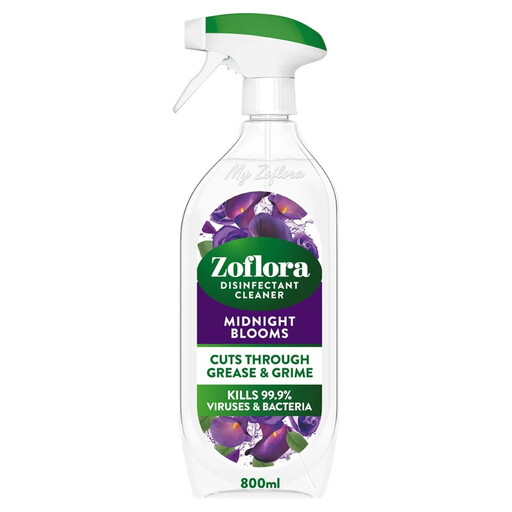
Why This Fits Their Persona: A ready-to-use option for households wanting a straightforward spray for floors, tiles, sinks and worktops without mixing a concentrate.
The spray format avoids uncertain dilution measurements. Users should still follow the label, wipe thoroughly and never mix it with other cleaners.
800ml ready-to-use format; listed for multiple hard surfaces; Midnight Blooms fragrance.
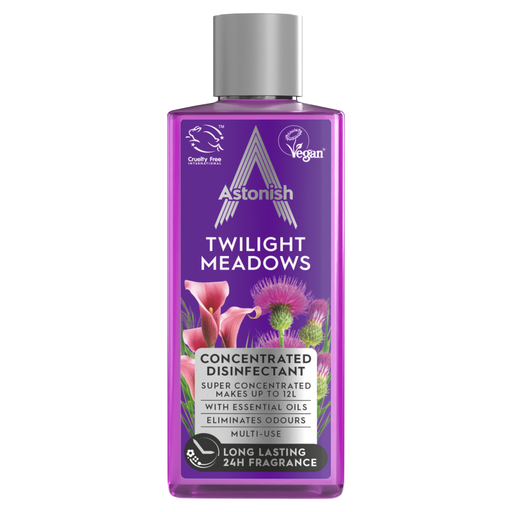
Why This Fits Their Persona: Suitable for shoppers who want a concentrated format for repeated spraying, mopping or wiping at home or in an office.
Its instructions specify 1:40 antibacterial and 1:20 antiviral dilution ratios, helping users avoid guessing. Diluted solution should be used within the stated period.
300ml makes up to 12 litres according to the product information; supports spray, mop and wipe applications.
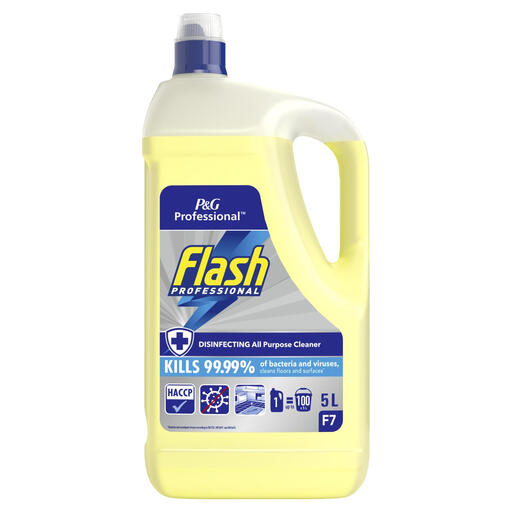
Why This Fits Their Persona: A 5-litre professional disinfectant cleaner for workplaces, hospitality areas and larger cleaning routines requiring measured dosing.
The product information provides separate 50ml cleaning and 150ml disinfecting doses per 5 litres of water, reducing reliance on guesswork.
5-litre size; references EN1276, EN13697 and EN14476; suitable for washable hard surfaces and floors when used as directed.
For portable hand hygiene, Carex Antibacterial Hand Sanitiser Gel Moisture 50ml lists 70% ethanol and a pocket-sized format. Apply to dry hands and rub across palms, backs, fingers and between fingers until dry. Soap and water remain the preferred option when hands are visibly dirty.
For first-aid cupboards, Sudocrem Antiseptic Healing Cream 250g contains zinc oxide and is intended for external skin use. Check the ingredients before application, particularly if someone has sensitive skin or known allergies.
A medicated antibacterial mouthwash such as Corsodyl contains chlorhexidine digluconate and should be used according to its patient information and dental guidance. It is not a general daily surface disinfectant, and temporary tooth or tongue staining can occur.
Toilet cleaner bleach, including bleach-based gel products, should be reserved for the uses stated on the label. Never combine toilet cleaner bleach with another product, particularly acidic limescale removers.
We have compiled a complete, real-time list of products that fully satisfy these strict selection criteria and UK safety regulations.
Shelf life varies by formula and packaging. Check the expiry date, storage instructions and any “use within” guidance after opening. Keep bottles tightly closed, upright and away from heat or direct sunlight. Do not keep diluted solutions longer than the label permits.
It can be, particularly for frequent mopping or large premises, because one small bottle produces multiple litres. However, include the cost of a measuring container, water, gloves and storage. For occasional kitchen or bathroom cleaning, a ready-to-use multipurpose disinfectant spray may be more convenient.
Only when the label specifically permits the intended surface and use. Keep products locked or stored out of reach, ventilate the room and allow treated surfaces to dry. Rinse food-contact surfaces whenever the instructions require it and never apply household disinfectants directly to skin, food or animal bedding unless the product is specifically designed for that purpose.