
24/7 Customer Support

Free returns

Same-day & Next-day Delivery

Quality Guaranteed

Unlock Your Welcome Offers: FREE Delivery | Up to 80% OFF | Free 30-day JoyPlus trial
Download the APP
A disinfectant spray can make everyday cleaning faster, but choosing the wrong formula may lead to wasted money, damaged surfaces or inadequate contact time. UK households often need one product for kitchen worktops, another for bathroom grime and a gentler option for pet areas or soft furnishings.
Before buying, look beyond phrases such as “kills 99.9% of bacteria and viruses”. This statement may refer to specific test conditions, surfaces and contact times shown on the label. It does not mean every germ is removed instantly from every material.
A multipurpose disinfectant spray may be suitable for sealed worktops and tiles but unsuitable for untreated wood, marble, painted surfaces, fabrics, aluminium or acrylic. Bleach spray formulas require particular care because chlorine-based ingredients can discolour materials and corrode some metals.
Always check the surface list and test a small, hidden area first. For food preparation surfaces, follow the label’s rinsing instructions even when the product is described as rinse-free for general cleaning.
An antibacterial surface cleaner may remove grease and visible dirt while also offering a disinfecting function, but the two tasks are not identical. Dirt can reduce the effectiveness of a disinfectant, so heavily soiled areas usually need cleaning before disinfection.
Contact time also matters. Some ready-to-use products require the surface to remain wet for several minutes before wiping. A quick spray-and-wipe routine may clean a mark without completing the stated disinfection process.
A fragranced disinfectant may leave a pleasant scent, but fragrance ingredients can be unsuitable for people with sensitivities. Larger bottles may offer a lower cost per use, yet they are not automatically more economical if the formula is unsuitable for the surfaces you clean most often.
Concentrated disinfectant products can reduce packaging and storage space, but accurate dilution is essential. Using too little concentrate may not provide the stated performance, while using too much creates unnecessary chemical exposure and cost.
For routine hard-surface cleaning, look for a clearly stated active disinfectant and usage instructions. Benzalkonium chloride and other quaternary ammonium compounds appear in several household disinfectant formulas. Alcohol-based aerosol sprays, such as some fast-drying options, may be convenient for door handles and selected soft surfaces.
A bleach cleaning spray contains chlorine-based bleaching agents and is generally intended for suitable hard surfaces. Never mix bleach with other cleaning products, including acids, descalers or ammonia-based formulas, as dangerous fumes may result.
Check whether the product is designed for:
“Multipurpose” should never replace reading the label. For example, several bleach products specifically exclude textiles, linoleum and porous surfaces, while some non-bleach sprays exclude windows, fabrics or varnished materials.
Compare how each cleaning spray must be used. Some products need five minutes of wet contact, while others specify 15 minutes for disinfection. Concentrates must be measured and diluted in a suitable container, and unused diluted solution may have a limited storage period.
Pressurised aerosol cans must be kept away from heat, sunlight and open flames. Trigger bottles should be stored upright, securely closed and out of children’s reach.
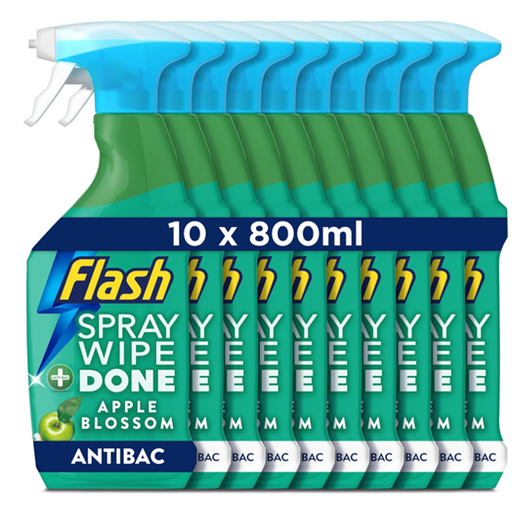
Why This Fits Their Persona: The 800ml format suits regular kitchen and household cleaning, with a straightforward spray-and-wipe routine for busy UK homes.
It states a 15-minute contact time for disinfection and identifies surfaces to avoid, helping shoppers distinguish everyday wiping from disinfecting.
Listed features include grease removal, a 99.9% bacteria claim and no rinsing for general use; food surfaces require rinsing.
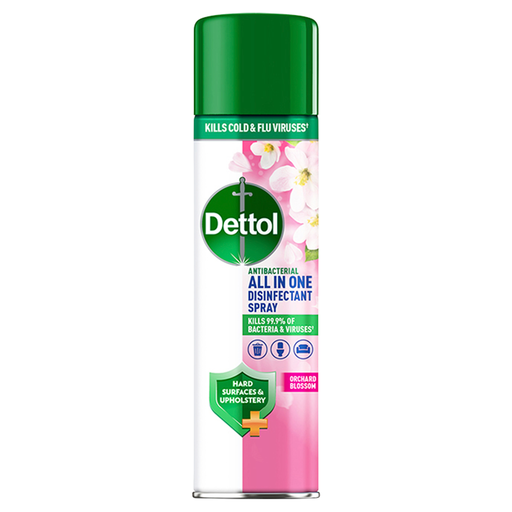
Why This Fits Their Persona: A compact aerosol format is convenient for frequent touchpoints and selected hard or soft surfaces where a fine mist is preferred.
The listing identifies non-bleach use, surface testing and soft-surface instructions rather than treating “all-in-one” as unlimited compatibility.
The product information lists hard-surface and upholstery use, fast drying and an Orchard Blossom fragrance.
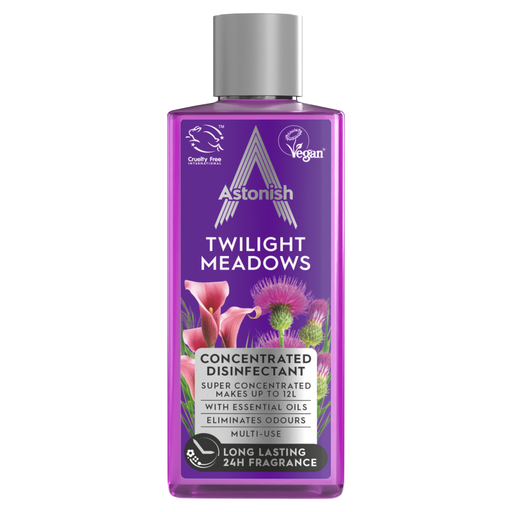
Why This Fits Their Persona: Regular cleaners covering floors, worktops and other hard surfaces may prefer a concentrate that reduces the need to store multiple ready-to-use bottles.
The stated 1:40 antibacterial and 1:20 antiviral dilution ratios make the amount of concentrate and water explicit.
The 300ml bottle is listed as making up to 12 litres of diluted product and can be applied by spraying, mopping or wiping.
We have compiled a complete, real-time list of products that fully satisfy these strict selection criteria and UK safety regulations.
It depends on the formula. Some products specify five minutes, while others require 15 minutes for the stated disinfecting action. Check the label and keep the surface visibly wet for the full contact period before wiping.
Some products are formulated for homes with pets, but “pet-safe” does not mean animals should be present during spraying. Remove pets, ventilate the room and wait until treated surfaces are fully dry. Follow the product’s specific instructions for pet beds, bowls and toys.
It can be, particularly for frequent mopping or large-area cleaning, but the result depends on the dilution ratio and purchase price. Calculate the cost per diluted litre rather than comparing bottle sizes alone. Accurate measuring is essential for the product to perform as labelled.