
24/7 Customer Support

Free returns

Same-day & Next-day Delivery

Quality Guaranteed

Unlock Your Welcome Offers: FREE Delivery | Up to 80% OFF | Free 30-day JoyPlus trial
Download the APP
Disposable gloves are useful for food preparation, healthcare and cleaning, but choosing by price or colour alone can lead to poor fit, tearing and unsuitable protection. UK households and professionals also need to distinguish between single-use gloves, reusable kitchen gloves and gloves designed for specific chemical or workplace risks.
Before placing an order, consider three common traps:
Powder-free nitrile gloves are widely used for food handling, cleaning, gardening, tattoo and piercing work, vehicle maintenance and healthcare-related tasks. Nitrile is latex-free and generally offers a close fit with good tactile sensitivity. A textured fingertip can help when handling wet or oily items.
Latex gloves can offer flexibility, but natural rubber latex may cause allergic reactions. For household use, check the material statement carefully rather than relying on a product title. Some reusable kitchen gloves contain natural rubber latex and should be avoided by latex-sensitive users.
Synthetic disposable gloves can be suitable for light domestic tasks and food preparation. However, they may not be designed for prolonged immersion, sharp objects or harsh chemicals. Always follow the product instructions.
For food-safe disposable gloves and gloves for food preparation, look for clear food-contact information and follow the manufacturer’s instructions. Gloves should be changed between tasks, especially when moving from raw ingredients to ready-to-eat food. Wearing gloves does not replace handwashing.
Examination gloves may be appropriate for certain healthcare, beauty or hygiene tasks, but the label must match the intended use. They are not a substitute for certified PPE where a workplace risk assessment requires protection against a particular chemical, splash or mechanical hazard.
If you work with disinfectants, solvents, oils or other chemicals, read the relevant safety data sheet and select gloves with documented suitability. Do not rely solely on the phrase “chemical-resistant”.
Measure the widest part of your hand, excluding the thumb, and compare it with the seller’s sizing guide. Small, medium and large options can vary between manufacturers. The glove should sit close to the hand without restricting movement.
For short tasks, a powder-free single-use glove in a box of 100 may be convenient. A beaded cuff can make donning easier and help reduce liquid rollback. For repeated washing-up or household cleaning, reusable kitchen gloves with a cotton lining, roll-top cuff and anti-slip surface may be more practical.
Touchscreen compatibility can be useful for cleaners, carers and food handlers who need to operate a phone or tablet without removing their gloves. It should be treated as a convenience feature, not evidence of additional protective performance.
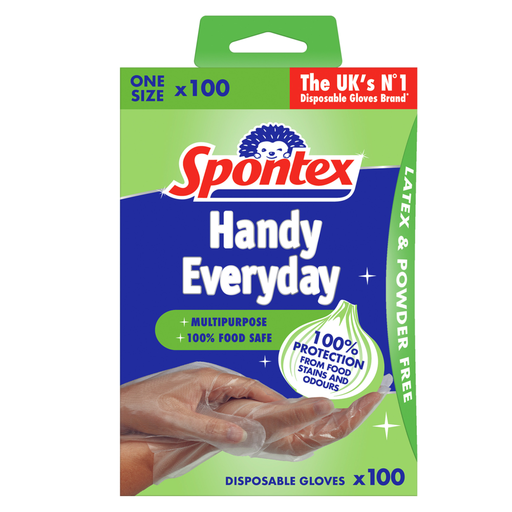
Why This Fits Their Persona: A practical option for occasional food preparation, pet care, light cleaning, DIY and car maintenance around a UK home.
The latex-free, powder-free design avoids the common material mismatch, while the single-use format helps prevent reusing contaminated gloves.
Universal fit for either hand, dispenser-style box and synthetic material described as suitable for direct food contact.
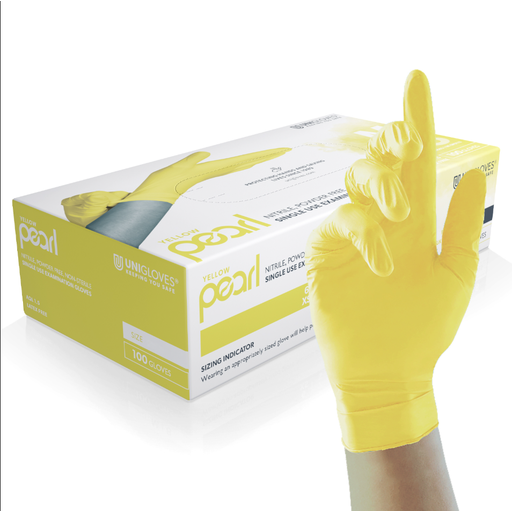
Why This Fits Their Persona: Suitable for users who value a close nitrile fit for food handling, cleaning, gardening, tattoo and piercing work or healthcare environments.
The product information identifies nitrile, latex-free and powder-free construction, helping buyers avoid unclear material descriptions.
Box of 100, textured fingertips, beaded cuff, touchscreen compatibility and stated suitability for contact with all food types.
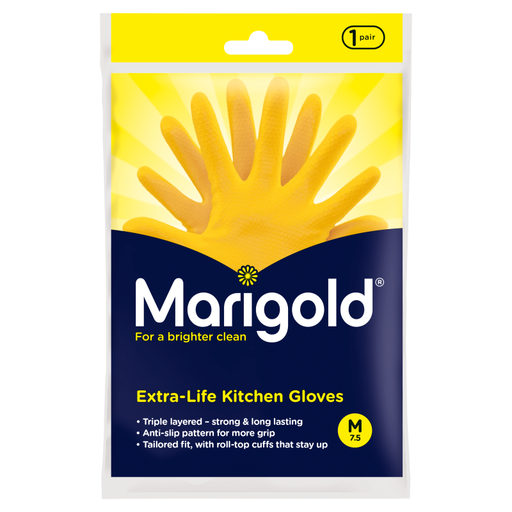
Why This Fits Their Persona: Designed for people who clean frequently and prefer a reusable household cleaning glove instead of changing disposable gloves for every chore.
The reusable construction counters the false economy of frequent replacement, while the instructions clearly exclude strong corrosive chemicals.
Cotton lining, nitrile coating, anti-slip grip, beaded roll-top cuffs and a triple-layer structure for routine household cleaning.
We have compiled a complete, real-time list of products that fully satisfy these strict selection criteria and UK safety regulations.
Some nitrile gloves are labelled as suitable for food contact, but not every nitrile glove has the same approval or intended use. Check the product information and change gloves between raw and ready-to-eat food tasks.
There is no universal time limit. Replace them when they tear, become visibly dirty, become contaminated or when changing tasks. For healthcare, tattooing and professional cleaning, follow your workplace procedure and risk assessment.
Usually not unless the manufacturer specifically states otherwise. Household cleaning gloves are intended for routine detergents and warm water, while strong corrosive substances may require task-specific chemical-resistant gloves selected from safety data and workplace guidance.