
24/7 全天候客户支持

免费退货

当日/次日达

品质保障

开启新人专享福利: 全场免邮 | 低至 2 折 | 免费试用 30 天 JoyPlus 会员
下载 Joybuy
Choosing disposable incontinence pants is not simply a matter of selecting the largest pack or the product with the highest absorbency wording. The right option depends on leakage volume, body shape, wearing time, mobility and whether you need women’s incontinence underwear, unisex protection or postpartum disposable underwear.
Marketing language can make comparison difficult, particularly when product listings use terms such as “maximum”, “overnight” or “leak-proof” without explaining the construction behind them. This guide highlights the details that matter before you buy and matches several options to common UK shopping needs.
A product may mention absorption equivalent to a number of standard pads, but this does not explain how it performs around the legs, waist or back. Liquid can escape through gaps even when the central absorbent core has spare capacity.
For more dependable urinary incontinence protection, look for features such as:
Overnight incontinence underwear needs to manage longer wearing periods and movement in bed. Side sleepers may need additional side protection, while people who remain in one position may benefit from a wider core and a backsheet designed to resist sagging.
“Overnight” is not a universal performance measurement. Check the stated construction, fit and intended use rather than relying on the label alone.
A familiar clothing size does not always correspond to the sizing of adult pull-up pants. An oversized garment may gape at the legs, while a smaller one can cause discomfort and channel liquid towards the edges.
Measure according to the product’s own size guide. If between sizes, consider the person’s body shape, mobility and whether the waistband remains secure when sitting, walking or lying down.
Match the garment to the type of leakage rather than automatically selecting heavy absorbency incontinence pants. Light protection may be more discreet for occasional small leaks, while heavier protection is more appropriate for larger leaks, overnight use or when changing frequently is difficult.
Useful construction details include super-absorbent polymer, gel-forming cores, dual-core systems and quick-drying layers. These terms describe how the internal core handles fluid, but they do not guarantee a particular result for every user. Product descriptions should be read alongside the fit and coverage design.
For overnight use, features such as interior leg gathers, anti-leak side barriers and a sag-resistant backsheet can be more relevant than a simple “maximum absorbency” label.
Pull-up pants should sit close to the body without leaving marks or restricting movement. A flexible waistband and four-way stretch can help the garment follow the body during everyday activity. Women’s styles may use a curve-hugging shape, while men’s and women’s incontinence underwear with a unisex cut can be practical for shared household supplies or care settings.
For discreet use under clothing, check:
Soft, breathable non-woven fabrics can improve comfort during extended wear. If the wearer has sensitive skin, check whether the product is lotion-free, fragrance-free or made with materials suitable for the intended use. Stop using any product if irritation develops and seek medical advice where appropriate.
Odour-control incontinence pants may include an odour-lock layer or filter. This can help manage unpleasant smells within the garment, but it should not replace regular changing and good hygiene.
Disposable products should be placed in household waste according to local arrangements. Do not flush disposable incontinence pants, even when they appear thin or degradable. Keep packaging away from children and store products in a cool, dry place.
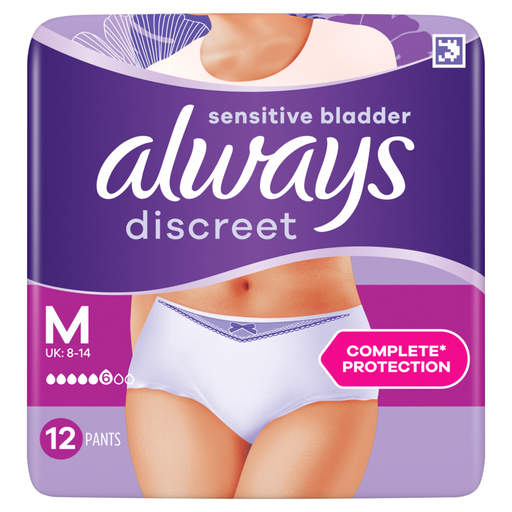
Why This Fits Their Persona: A 12-pack offers a practical starting point for women comparing everyday protection, including use at home, during commuting or while travelling around the UK.
The listing identifies a 360° FormFit design, Double LeakGuards and an absorbent RapidDry core, rather than relying only on a broad absorbency phrase.
Women’s pull-up style; odour-control technology; low-waist design and size information for UK 10–16 is stated in the listing.
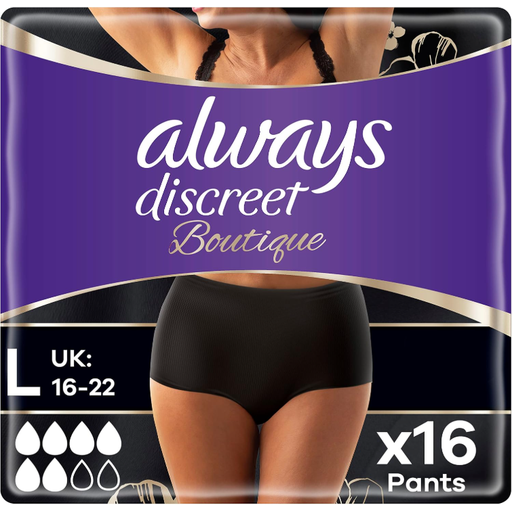
Why This Fits Their Persona: The black, fabric-like appearance may suit shoppers who prioritise a closer resemblance to ordinary underwear under darker clothing.
The product information specifies Double LeakGuards, a super-absorbent core and a curve-hugging fit, helping shoppers assess more than colour and appearance.
Black finish; high-rise shape; odour-control technology and 16 pants supplied across two packs.
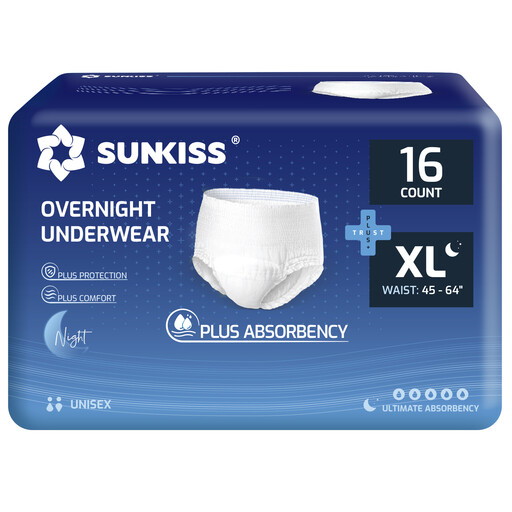
Why This Fits Their Persona: Designed for unisex use and described for heavy absorbency, this option may suit overnight wear, carers and people seeking a pull-up garment for day-and-night routines.
Its listed dual-core system, extra-wide core, interior leg gathers and sag-resistant backsheet provide concrete details for comparing overnight coverage.
Unisex pull-up construction; heavy absorbency description; odour control and flexible, latex-free fabric are listed features.
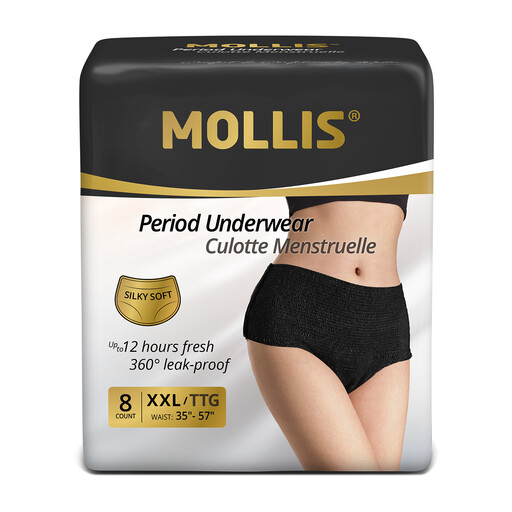
Why This Fits Their Persona: This women’s disposable underwear is described for heavy flow and postpartum recovery, making it relevant when broad coverage and individually wrapped pairs are useful.
The listing specifies a five-layer absorbent core, extra-long core, raised side edges and a three-times stretchable waistband.
Individually wrapped for travel; non-woven fabric; listed absorption equivalent to four regular pads. It is for single use only.
We have compiled a complete, real-time list of products that fully satisfy these strict selection criteria and UK safety regulations.
Change them when wet or soiled, or according to the wearer’s care routine. A stated duration such as “up to 12 hours” is a product-description limit, not a requirement to wear the garment for that entire period. Regular changes can support comfort and hygiene.
Some are specifically described for overnight or heavy absorbency use. Check for a wider core, leg gathers, side barriers and a secure waistband. Side sleepers or people with larger leaks may need a design with additional back and side coverage.
They should not be flushed. Dispose of used pants in household waste, following local council guidance. Packaging and recycling instructions can vary, so check the product packaging before disposal.