
24/7 Customer Support

Free returns

Same-day & Next-day Delivery

Quality Guaranteed

Unlock Your Welcome Offers: FREE Delivery | Up to 80% OFF | Free 30-day JoyPlus trial
Download the APP
Buying disposable nitrile gloves can seem straightforward, but product pages often place more emphasis on colour, pack size or broad phrases such as “multi-use” than on the details that affect everyday performance. The wrong choice may split during food preparation, feel loose when handling instruments or provide less protection than expected when exposed to cleaning products.
This guide from the Joybuy Product Recommendation Officer explains the practical checks that matter before choosing disposable nitrile gloves for UK homes, workplaces and professional settings.
Nitrile is valued for its latex-free composition and resistance to many substances, but no disposable glove protects against every chemical. Solvents, concentrated acids, strong alkalis and specialist products may require a glove with specific chemical permeation data. Always check the product label and the cleaning product’s safety data sheet before use.
Likewise, a glove listed as an examination glove should not automatically be treated as suitable for industrial chemical handling. “Medical-grade” describes a product classification or intended standard; it does not remove the need to follow workplace procedures.
A low price can be misleading if the glove tears easily, fits poorly or requires frequent replacement. Colour can also be practical rather than decorative. Colour-coded gloves help separate food preparation, cleaning, healthcare or beauty tasks, but only when a consistent colour system is used.
A box of 100 gloves is useful for regular work, although the cost per glove should be considered alongside thickness, fit and the number of replacements needed during a shift.
Gloves that are too tight can reduce comfort and dexterity, while loose fingertips make it harder to handle tools, ingredients or small equipment. A rolled or beaded cuff can help with donning and reduce liquid rolling towards the wrist. Textured fingertips are useful for wet or oily tasks, but touchscreen compatibility should be treated as a convenience feature, not a substitute for removing contaminated gloves when hygiene procedures require it.
For many users, powder-free nitrile gloves are a sensible starting point. Powder can transfer to surfaces and may leave hands feeling dry. Latex-free gloves are also suitable for workplaces and households seeking to avoid natural rubber latex proteins. However, people can still react to other glove materials or chemicals, so stop using the product if skin discomfort occurs.
Nitrile usually provides a close fit and good tactile sensitivity, making it suitable for food handling, examination procedures, tattooing, beauty treatments, cleaning and light DIY tasks.
For healthcare, dentistry and tattoo work, look for gloves clearly described as examination gloves and check the relevant conformity information on the packaging. A stated AQL value, such as AQL 1.5, relates to a manufacturer’s pinhole testing level; it is not a guarantee that an individual glove cannot fail.
For food work, select food-safe disposable gloves with clear instructions for contact with food. Wash hands before putting them on, change gloves between tasks and never use gloves as a replacement for hand hygiene. Gloves for food preparation should be discarded if torn, contaminated or moved from raw to ready-to-eat food handling.
Measure the widest part of the hand, excluding the thumb, and compare it with the seller’s size guide. If you work for long periods, consider how the glove conforms to the hand and whether the finish supports natural movement.
Useful features include:
Chemical-resistant gloves should always be matched to the specific substance. For prolonged exposure, concentrated chemicals or industrial cleaning, a specialist reusable glove may be more appropriate than a disposable option.
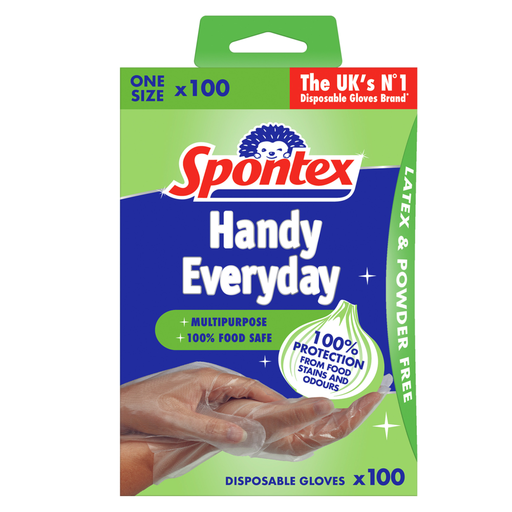
Why This Fits Their Persona: A practical option for households beginning to use disposable gloves for food preparation, cleaning, pet care or light DIY tasks.
The latex-free, powder-free design and clearly stated domestic-use limitations help prevent overestimating its suitability for harsh chemicals or industrial work.
Universal fit for either hand, dispenser-style box and food-contact approval stated in the product description.
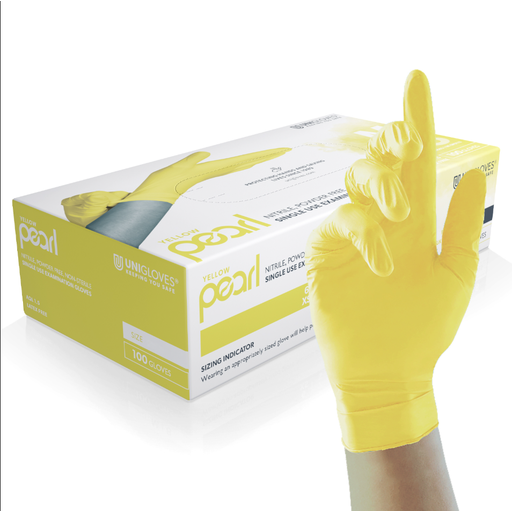
Why This Fits Their Persona: Suitable for users who want one powder-free, latex-free glove for food handling, healthcare-related work, gardening, cleaning or professional services.
The product description identifies its intended examination, food-contact and multipurpose uses, while also stating single-use directions and an AQL 1.5 value.
Textured fingertips, touchscreen compatibility, beaded cuffs and a box of 100 gloves. Other colours and sizes support colour-coded workflows.
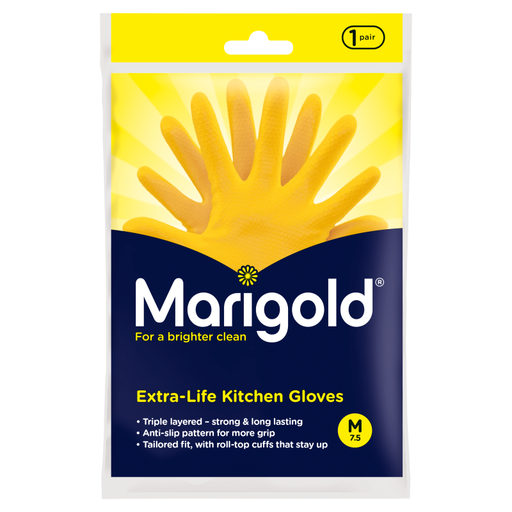
Why This Fits Their Persona: A reusable option for households carrying out repeated washing-up and cleaning tasks where a thicker glove is more suitable than a disposable glove.
Its product guidance states that it is not intended for strong corrosive chemicals or industrial-grade cleaning, preventing use beyond its stated limits.
Triple-layer construction, nitrile coating, cotton lining and an anti-slip grip for wet household cleaning.
We have compiled a complete, real-time list of products that fully satisfy these strict selection criteria and UK safety regulations.
Some are. Choose gloves specifically marked as suitable for food contact and follow the product instructions. Change them between raw and ready-to-eat food tasks, after touching non-food surfaces and whenever they become torn or contaminated.
They are intended for single use, not for wearing throughout an entire shift regardless of condition. Replace them when damaged, visibly dirty, after changing tasks or when leaving and returning to a controlled work area. Never wash and reuse disposable gloves.
Not necessarily. Thickness can support durability, but protection also depends on material formulation, fit, cuff design and compatibility with the substance involved. For chemical work, consult the glove’s technical information rather than choosing by thickness alone.