
24/7 全天候客户支持

免费退货

当日/次日达

品质保障

开启新人专享福利: 全场免邮 | 低至 2 折 | 免费试用 30 天 JoyPlus 会员
下载 Joybuy
Disposable nitrile gloves are used across healthcare, dentistry, tattooing, food preparation, cleaning, gardening and vehicle care. They can offer a practical barrier between hands and contaminants, liquids or selected chemicals, but not every product labelled “nitrile” is suitable for every task.
The main buying challenge is separating useful specifications from vague marketing language. A low-cost box may be unsuitable if the glove tears during use, fits poorly or provides no clear information about food contact or chemical compatibility. This guide explains what to check before buying and highlights suitable options for different UK users.
Nitrile is a synthetic rubber, but glove thickness, formulation, finish and intended use vary. A lightweight glove designed for brief examination tasks should not automatically be treated as suitable for concentrated solvents, sharp materials or heavy-duty cleaning.
For chemical work, check the manufacturer’s chemical-resistance information and match it to the specific substance. The phrase “chemical-resistant gloves” does not mean resistance to every chemical or exposure time.
A glove that is too tight can restrict movement and split around the fingers. One that is too loose may reduce grip and catch on tools. Check the supplier’s size guide rather than relying only on your usual clothing size.
For healthcare, tattoo and piercing work, dentistry and food preparation, a close fit is particularly useful for dexterity. For household cleaning, a reusable glove with a more generous cuff may be more practical.
Single-use gloves should be changed between tasks and discarded when damaged, contaminated or removed. Washing and reusing disposable gloves can compromise hygiene and material integrity.
Reusable household gloves are a different category. They may have a lining, thicker construction and reinforced cuffs, but they are not automatically suitable for medical examination, food handling or hazardous chemical use.
Latex-free gloves made from nitrile can be a sensible option for users who wish to avoid natural rubber latex. However, no glove should be worn if it causes irritation, itching or redness. Stop using it and follow the product warning or seek medical advice where appropriate.
Powder-free nitrile gloves are generally preferable for tasks where particulate contamination is undesirable, including healthcare, dentistry, tattooing and food preparation. A chlorinated finish may also make donning easier, although users should still put gloves on gently to avoid stretching or tearing.
Look for clear information about whether the product is intended as:
A reference such as AQL 1.5 describes a pinhole quality level used for certain examination gloves; it is not a guarantee that the glove is suitable for every hazard. Where medical or workplace use is involved, check the packaging, declaration, markings and workplace risk assessment rather than relying on colour or product title alone.
A beaded cuff can improve strength when putting gloves on and help reduce liquid rolling towards the wrist. Textured fingertips or palms can improve handling in wet or oily conditions.
Some touchscreen-compatible gloves allow users to operate phones or tablets without removing them. This is convenient for delivery, cleaning, clinical or workshop tasks, but it does not remove the need to change gloves when moving between areas or handling clean equipment.
Colour can also support workplace colour-coding. Black, violet, green, pink, orange, yellow and white gloves may help separate duties, but colour alone does not prevent cross-contamination. Good hand hygiene and correct disposal remain essential.
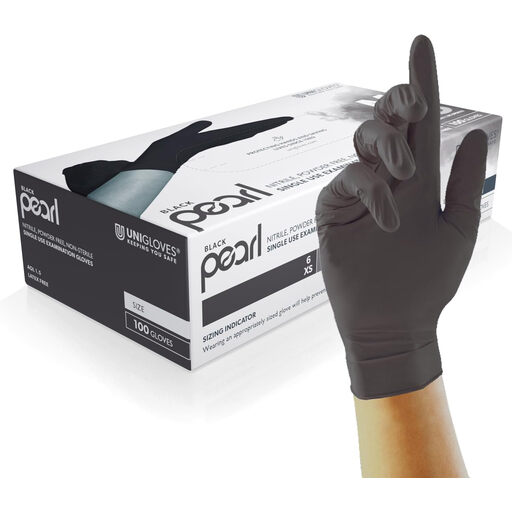
Why This Fits Their Persona: A 100-glove box gives households, beauty professionals and occasional users a straightforward way to keep single-use protection available for routine tasks.
It is listed as powder-free and latex-free, with a defined small size rather than a one-size-fits-all description.
Textured fingertips, touchscreen compatibility, beaded cuffs and a medium-weight nitrile construction.
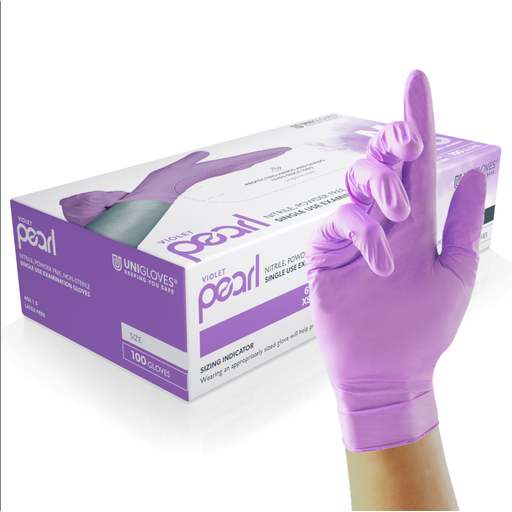
Why This Fits Their Persona: Suitable for users who value clear specifications, colour-coding and features that support frequent professional handling.
The listing identifies powder-free, latex-free nitrile, food-contact suitability and an AQL 1.5 specification.
Chlorinated finish, textured grip, touchscreen use and a beaded cuff designed to reduce liquid rollback.
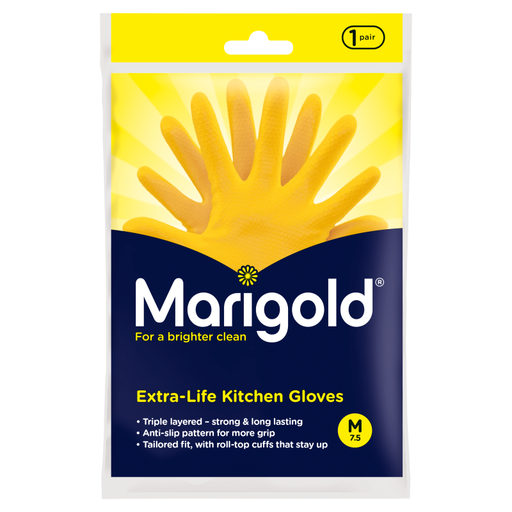
Why This Fits Their Persona: A reusable household option for regular washing-up, bathroom cleaning and everyday chores where disposable gloves would create unnecessary waste.
The listing clearly limits use to regular household cleaning and warns against strong corrosive chemicals.
Triple-layer construction, cotton lining, anti-slip grip and roll-top cuffs that help limit water ingress.
We have compiled a complete, real-time list of products that fully satisfy these strict selection criteria and UK safety regulations.
Some are listed as suitable for contact with food types, but this must be confirmed on the product packaging or listing. Use clean gloves, change them between tasks and remember that gloves do not replace hand washing.
There is no universal wear time. Replace them when torn, visibly contaminated, wet inside, after contact with a different task or when moving from an unclean area to a clean one. Disposable gloves are designed for single use rather than extended wear.
They may be suitable for selected household products, but nitrile does not resist every chemical. Check the chemical-resistance information, concentration and recommended contact time. For routine household cleaning, reusable gloves such as the Marigold option may be more practical; for stronger substances, use protection specifically rated for that hazard.