
24/7 全天候客户支持

免费退货

当日/次日达

品质保障

开启新人专享福利: 全场免邮 | 低至 2 折 | 免费试用 30 天 JoyPlus 会员
下载 Joybuy
Disposable nitrile gloves are used by healthcare professionals, dentists, tattoo and piercing artists, food handlers, cleaners, gardeners, pet carers and DIY users across the UK. They can help create a hygienic barrier against dirt, liquids and some workplace substances, but choosing by colour or pack size alone can lead to wasted money.
The right pair should match the task, fit securely and carry suitable information for the intended use. Here are the main buying pitfalls to avoid in 2026.
“Chemical-resistant gloves” is not a universal description. Resistance depends on the chemical, concentration, contact time, temperature and glove thickness. A glove suitable for diluted household detergent may not be suitable for solvents, fuel, strong acids or industrial cleaners.
For demanding work, check the product’s chemical permeation information and the manufacturer’s instructions. If this information is unavailable, choose a glove only for low-risk, short-duration contact rather than treating it as full chemical protection.
Single-use gloves are designed to be discarded after a task or when contaminated. They are not a replacement for thicker, lined household cleaning gloves. Reusable kitchen gloves, such as the Marigold Kitchen Gloves Medium, are designed for repeated domestic cleaning, while disposable nitrile gloves are more suitable where frequent changes and hygiene control are important.
Using a disposable glove repeatedly can spread contaminants, weaken the material and increase the risk of tearing.
An oversized glove can catch on tools and reduce control. A glove that is too tight may cause discomfort, split more readily at the fingers or make extended work tiring. Check the seller’s size guide and measure the hand as directed. If several people will use the box, consider buying separate sizes rather than relying on a loose universal fit.
For users concerned about natural rubber latex sensitivity, latex-free nitrile gloves are a practical option. Nitrile is a synthetic material and does not contain natural rubber latex proteins. However, latex-free does not mean that every user is guaranteed to avoid skin irritation; stop using the gloves if discomfort occurs and check the full material information.
Powder-free disposable gloves are generally preferable for food handling, healthcare and tattooing because they avoid loose powder contaminating surfaces or drying the hands. A chlorinated finish may also make some gloves easier to put on without internal powder.
For food preparation, look for clear wording that the gloves are suitable for food contact, along with the relevant packaging or declaration information. “Food-safe gloves” should not be assumed simply because a glove is made from nitrile.
For healthcare, dentistry and clinical tasks, select medical examination gloves that are labelled for the intended medical use. Check the packaging for applicable UKCA or CE information and relevant standards, such as EN 455 where stated by the manufacturer. Gloves for healthcare are not a substitute for proper hand hygiene or task-specific protective equipment.
Tattoo gloves and piercing gloves should be powder-free, well-fitting and suitable for the studio’s hygiene procedures. For cleaning, gardening and DIY, consider grip, cuff design and resistance to the substances involved.
Textured fingertips can improve handling in wet or oily conditions. A beaded cuff may make donning easier and help reduce liquid rolling towards the wrist. A close fit usually supports better dexterity, while a thicker glove may offer more durability but can feel less flexible.
Some touchscreen-compatible gloves allow the wearer to use a mobile or tablet without removing the gloves. This is useful for checking recipes, cleaning schedules or work instructions, but the feature does not make the glove suitable for every liquid or chemical.
The following options are matched to different buying situations rather than ranked as universally suitable.
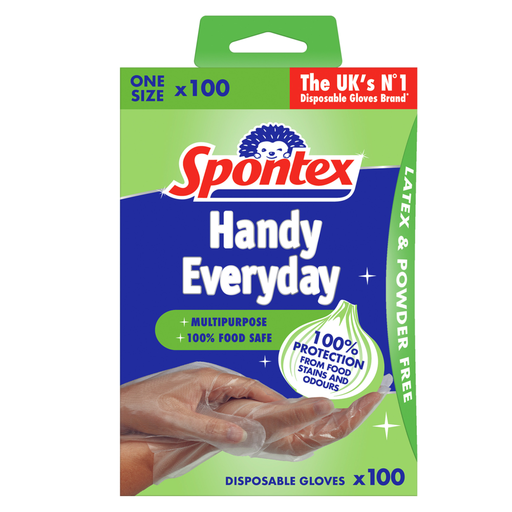
Why This Fits Their Persona: A practical choice for households needing gloves for food preparation, cleaning, pet care, car maintenance and small DIY jobs.
The latex-free, powder-free formulation and stated food-contact suitability address common assumptions about household use. It is not intended for prolonged immersion or harsh chemicals.
Universal left- or right-hand fit, dispenser-style box and synthetic material designed to resist tears during everyday domestic tasks.
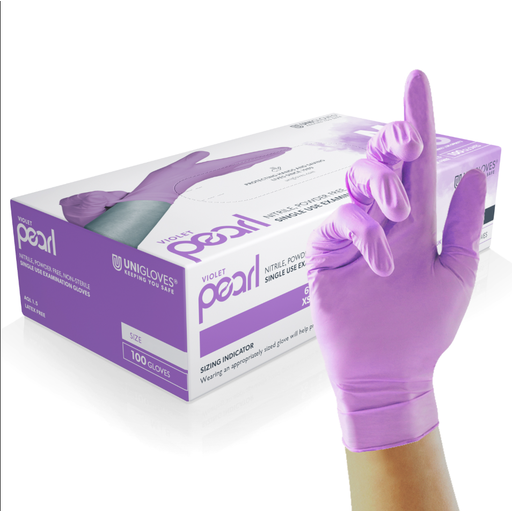
Why This Fits Their Persona: Suitable for users wanting a clearly specified, powder-free option for food handling, cleaning, healthcare-related environments, gardening or tattoo work.
The listing identifies nitrile construction, latex-free and powder-free design, food-contact suitability and an AQL 1.5 specification. Always confirm the latest packaging before professional use.
Textured fingertips, touchscreen compatibility, chlorinated finish and beaded cuff. The box contains 100 gloves, and several sizes and colours are available.
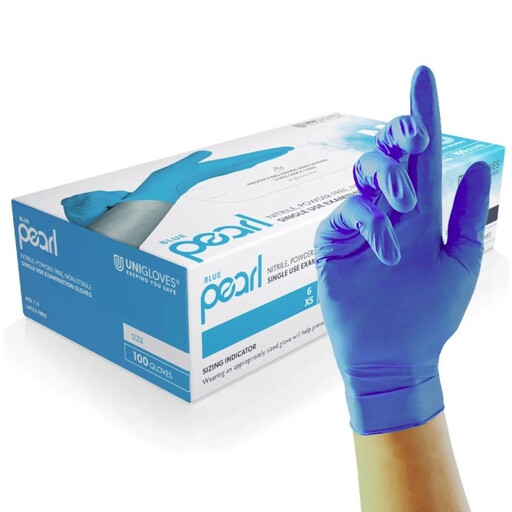
Why This Fits Their Persona: The extra-large size suits users who need more hand room for cleaning, gardening, workshop jobs or frequent glove changes.
The size-specific listing helps avoid relying on an uncomfortable universal fit. Its chemical-resistance wording should still be checked against the particular substance being handled.
Powder-free nitrile, textured grip, beaded cuff and touchscreen compatibility. The blue colour can also support workplace colour-coding routines.
We have compiled a complete, real-time list of products that fully satisfy these strict selection criteria and UK safety regulations.
Some are labelled for contact with food, but not all nitrile gloves have the same approval. Choose a product that specifically states suitability for food contact and follow the manufacturer’s conditions. Change gloves between different food-handling tasks and wash hands before and after use.
There is no universal time limit. Replace gloves when they become torn, visibly dirty, wet inside, contaminated or when changing tasks. In healthcare, tattooing and food preparation, the correct change point is normally determined by the hygiene procedure rather than by a fixed number of minutes.
Not automatically. Check chemical permeation data for the exact substance and exposure conditions. For strong corrosive chemicals, solvents or prolonged immersion, use gloves specifically selected for that hazard and follow the product’s safety instructions.