
24/7 全天候客户支持

免费退货

当日/次日达

品质保障

开启新人专享福利: 全场免邮 | 低至 2 折 | 免费试用 30 天 JoyPlus 会员
下载 Joybuy
Whether you work in healthcare, prepare food, clean professionally, garden or run a tattoo studio, disposable nitrile gloves can provide a convenient barrier between your hands and substances you would rather not touch. However, choosing a box based only on colour or price can lead to poor fit, tearing and unsuitable protection.
This guide from the Joybuy Product Recommendation Officer explains which specifications matter, how to avoid common buying traps and which options may suit different UK users.
Nitrile is resistant to a range of substances, but no disposable glove protects against every chemical for the same length of time. Solvents, concentrated acids, fuels and strong cleaning agents may require a glove with specific compatibility data, a heavier construction or a different material altogether.
For routine household cleaning, gardening and handling diluted products, disposable nitrile gloves may be suitable. For industrial chemicals, always check the manufacturer’s resistance information and the product’s intended use.
Latex-free gloves are useful for people wishing to avoid natural rubber latex, but “latex-free” alone does not confirm that a glove is suitable for healthcare, food contact or chemical handling. Likewise, powder-free gloves help minimise loose particulate residue, but they still need the correct size, barrier classification and intended-use information.
A glove described as suitable for food preparation should have clear food-contact information. A glove for clinical work should be labelled for the relevant professional application rather than assumed suitable from its appearance.
A loose glove can catch on tools, while an overly tight glove may split at the fingers or feel uncomfortable during extended use. Check the seller’s sizing information and measure the hand if necessary. A snug fit generally supports better dexterity, especially for dentistry gloves, tattoo gloves and other precision tasks.
Nitrile is a synthetic material commonly selected as an alternative to natural rubber latex. It can offer useful flexibility, tactile handling and resistance to many everyday substances. For professional applications, look for clear descriptions such as nitrile examination gloves, food-contact suitability or the relevant conformity information on the packaging.
“Medical-grade gloves” should not be treated as a universal guarantee of protection. Confirm the product’s intended classification, markings and instructions before using it in a regulated environment.
Powder-free construction is a practical choice for healthcare, food handling, beauty work and cleaning because it avoids powder being transferred to surfaces or skin. A chlorinated finish may make gloves easier to pull on, while textured fingertips can improve grip when handling wet or oily items.
Some disposable nitrile gloves are also touchscreen-compatible gloves, allowing you to use a phone or tablet without removing them. This is convenient, but the screen may respond less reliably if the glove is wet, loose or heavily textured.
A beaded cuff can make donning easier and help reduce liquid rolling back towards the wrist. Medium-weight gloves may balance dexterity and everyday durability, but they are still intended for single use. Replace them immediately if they tear, become contaminated or are used for a different task.
A box of 100 gloves usually contains 100 individual gloves, equivalent to 50 pairs when used on both hands. For a business, calculate consumption by task rather than assuming a box will last a fixed period.
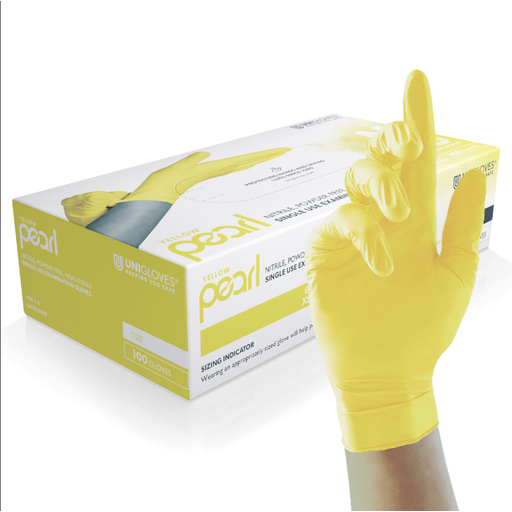
Why This Fits Their Persona: A practical starting point for home users, food handlers and small businesses wanting a box of 100 gloves in a visible colour and larger size.
The product description specifies latex-free, powder-free nitrile construction and single-use directions, rather than relying on colour alone.
Powder-free and latex-free material, textured fingertips, beaded cuff and touchscreen compatibility.
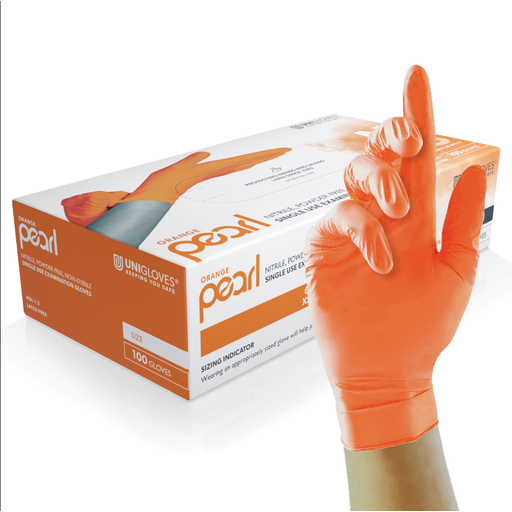
Why This Fits Their Persona: A suitable consideration for professionals who value visible colour-coding, a closer fit and features for healthcare, dentistry, tattoo or food-preparation settings.
The listing identifies the glove as powder-free and latex-free, with a chlorinated finish and a stated AQL 1.5 specification.
Medium-weight nitrile, food-contact suitability stated by the listing, textured fingertips and a beaded cuff.
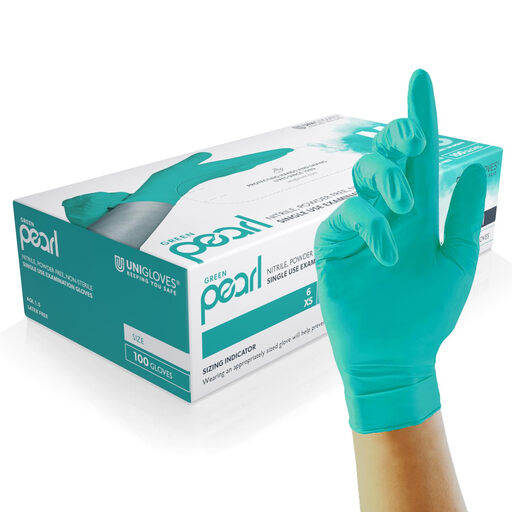
Why This Fits Their Persona: The larger size and coloured design may suit cleaners, gardeners, DIY users and workplaces using colour-coding for different tasks.
Its stated single-use design discourages reusing contaminated gloves, while the textured finish addresses grip concerns during wet or oily tasks.
Large size, green colour for task separation, beaded cuff, powder-free nitrile and touchscreen-compatible fingertips.
We have compiled a complete, real-time list of products that fully satisfy these strict selection criteria and UK safety regulations.
Nitrile gloves are made from synthetic rubber rather than natural rubber latex, so they are commonly considered when latex-free gloves are required. Always read the packaging and ingredient information, particularly if you have a known sensitivity to other glove components.
There is no universal wear time. Replace them when they tear, become visibly dirty, contaminated, wet inside or when you change tasks. Healthcare, food handling and tattoo work may require more frequent changes under workplace procedures.
Some products are specifically listed as suitable for contact with food types. Do not assume every nitrile glove is food-safe; check the product description, packaging and intended-use information before handling food.