
24/7 Customer Support

Free returns

Same-day & Next-day Delivery

Quality Guaranteed

Unlock Your Welcome Offers: FREE Delivery | Up to 80% OFF | Free 30-day JoyPlus trial
Download the APP
Choosing disposable party plates can look straightforward until you are faced with different sizes, materials, pack quantities and design claims. A plate that works for birthday cake may not be suitable for a buffet meal, while a large pack may offer poor value if half of it is left over.
For UK households, caterers, schools and event planners, the practical choice depends on what you are serving, how many guests are attending and how the plates should be disposed of afterwards. This guide highlights common buying traps and compares suitable options for different occasions.
Marketing descriptions often use words such as “strong” or “leak-resistant” without giving useful construction details. A thin paper plate may soften under pasta sauce, gravy, oily foods or fruit salad.
Look for information about the material, coating, weight or intended use. Even a heavier plate has limits, particularly when food is hot, oily or left standing for a long time.
Small packs of eight are convenient for a family birthday, but can become expensive for a school event or community buffet. Conversely, a 100-pack of bulk disposable plates may create unnecessary waste when you only need a few place settings.
Allow for children taking a second plate, damaged items and separate plates for desserts where appropriate. For catering, calculate the total number of servings rather than simply matching the guest list.
Terms such as “eco-friendly”, “compostable” and “recyclable” do not always mean a product can go into your household recycling or food-waste bin. Acceptance varies between UK councils, and coatings, food residue and commercial composting requirements can affect disposal.
Check the packaging and your local council’s guidance. A product described as compostable may require a suitable industrial composting facility, while a coated paper plate may not be accepted in kerbside paper recycling.
A 9-inch paper plate is approximately 23cm in diameter and is a practical size for a main meal, buffet serving, cake and party snacks. It offers more space than a small dessert plate without taking up as much table or storage space as a 10-inch option.
For children’s parties, 21–23cm plates are generally easier to handle than very large dinner plates.
Paperboard, virgin fibreboard and bamboo fibre each offer different characteristics. A thicker board may retain its shape more effectively, but thickness alone does not guarantee suitability for very wet or oily food.
The Royal Markets white plates, for example, are listed as 220gsm virgin fibreboard with a plastic-coated surface. The product listing describes them as suitable for mains, sides, snacks and desserts, with resistance to moisture, sauces and oils. However, the coating means buyers should check local disposal instructions rather than assuming they can be recycled with ordinary paper.
Bamboo fibre plates can be useful for shoppers seeking plant-fibre alternatives. Check whether the listing specifies microwave use, leak resistance and disposal conditions. Do not confuse bamboo fibre with solid wood, and follow the stated limits for heating and cutting.
For themed events, colour and licensing can matter as much as size. Themed party plates, including Halloween paper plates and Peppa Pig party plates, can reduce the need for extra table decorations. Plain coloured dinner plates are more flexible for birthdays, sports events and seasonal celebrations.
Store all disposable tableware flat in a cool, dry place. Moisture can warp paperboard, fade printed designs or affect stacking.
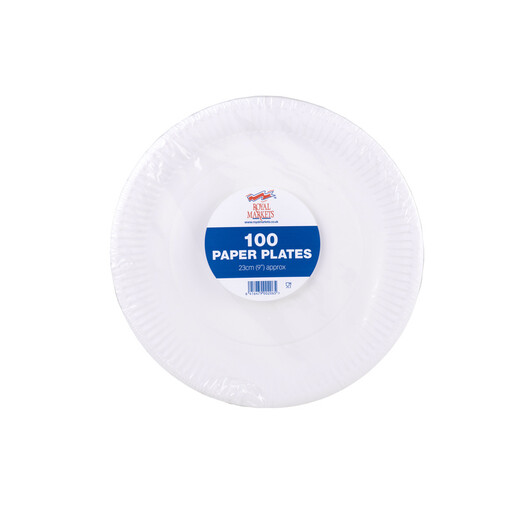
Why This Fits Their Persona: A large plain-white pack suits household celebrations, office lunches, BBQs and community events where a coordinated theme is not essential.
The listed 220gsm construction gives buyers a measurable specification rather than relying only on general strength wording. Check the coating and local recycling rules before disposal.
100 plates per pack; 9-inch diameter; stackable format; listed for mains, snacks and desserts.
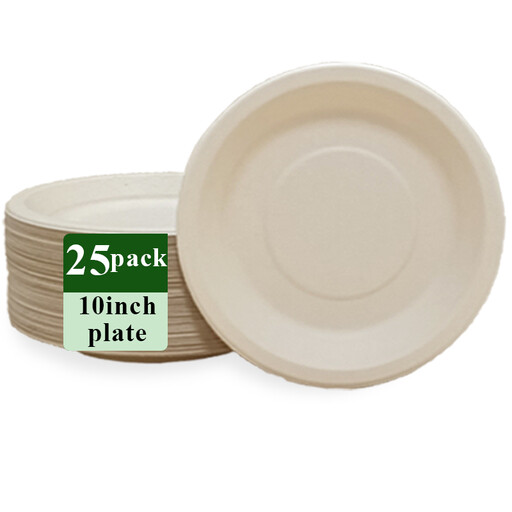
Why This Fits Their Persona: The 10-inch format and bamboo-fibre material suit hosts who want a larger serving surface and are comparing alternatives to conventional paperboard.
The listing identifies bamboo fibre as the primary material. Buyers should still verify available composting or recycling routes locally rather than treating “plant fibre” as an automatic disposal solution.
10-inch diameter; 25-pack format; bamboo-fibre construction; suitable for larger portions.
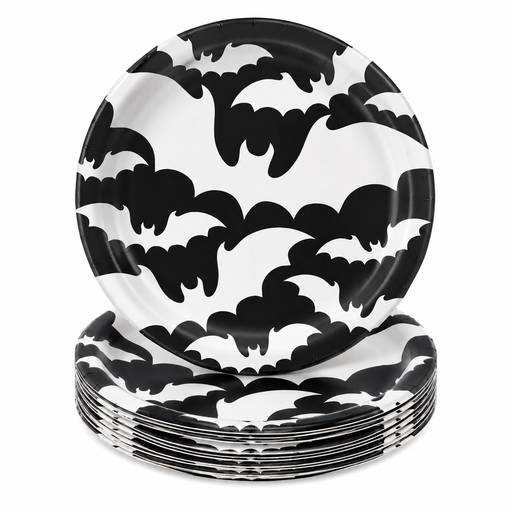
Why This Fits Their Persona: A clear Halloween motif is convenient for family parties, school celebrations and haunted-house gatherings where themed tableware is part of the decoration.
The stated 9-inch size and paperboard material make portion planning clearer than choosing solely by a picture. Keep away from open flames, ovens and prolonged contact with very oily food.
Pack of eight; black bat print on white; suitable for Halloween food, cake and buffet portions.
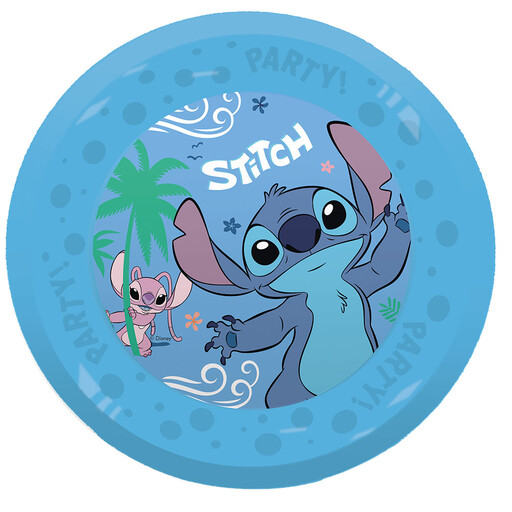
Why This Fits Their Persona: Families hosting regular children’s meals or recurring celebrations may prefer reusable party plates instead of buying single-use tableware for every event.
The product is explicitly described as reusable, so its lower-waste advantage comes from repeated use rather than an unverified disposal claim. Follow the care instructions supplied with the item.
21cm diameter; four-plate pack; food-grade plastic; character-themed design for children.
We have compiled a complete, real-time list of products that fully satisfy these strict selection criteria and UK safety regulations.
Before ordering, confirm:
For fully themed celebrations, Peppa Pig party plates, K-Pop designs and Halloween paper plates can coordinate the table quickly. For a more adaptable setting, plain white, black, lavender or lime-green plates work with multiple colour schemes and can be combined with matching napkins and cups.
Usually, a 9-inch plate provides a practical surface for a standard buffet portion, sandwiches, cake and party food. If you plan to serve a large roast-style meal with several sides, a 10-inch plate may offer more room.
Not automatically. Clean, uncoated paper may be accepted in some areas, but food residue, plastic coatings and mixed materials can change the disposal route. Check your council’s current recycling guidance and the product packaging before placing plates in a recycling bin.