
24/7 Customer Support

Free returns

Same-day & Next-day Delivery

Quality Guaranteed

Unlock Your Welcome Offers: FREE Delivery | Up to 80% OFF | Free 30-day JoyPlus trial
Download the APP
Choosing disposable party plates sounds simple until the food arrives, the plates soften or the pack runs out halfway through the buffet. UK shoppers are often comparing paper party plates, themed party plates, reusable party plates and eco-friendly disposable plates without knowing which specifications genuinely matter.
A decorative print is only one part of the decision. Before buying, check the diameter, material, pack quantity, intended food and disposal instructions. These details help prevent wasteful purchases and make serving and clearing up more manageable.
A 17cm plate may be suitable for cake, pastries or light snacks, but it can feel cramped when serving a full meal. For mains, buffet portions and generous desserts, 9-inch paper plates or 23cm party plates provide considerably more usable space.
For children’s celebrations, a smaller plate can be easier to handle. However, adults attending birthdays, barbecues or catered events may need a larger surface for sandwiches, salads, hot food and desserts.
Paperboard construction varies. A plate designed for cake may not perform in the same way with sauces, oily food or fruit salad. Look for descriptions that specify sturdiness, moisture resistance or suitability for main meals, but still follow the product warnings.
Disposable plates should be kept away from open flames and high heat. Unless the product specifically states otherwise, do not use paper plates in an oven, toaster or microwave. Very hot liquids and oily foods can also increase the risk of softening or leakage over time.
Themed designs such as Halloween plates, football party plates, Peppa Pig plates or K-Pop Demon Hunters plates can help create a coordinated table, but packs commonly contain eight plates. That may be sufficient for a small gathering but expensive or inconvenient for a larger event.
Calculate the number of guests, add a small allowance for replacements and compare the cost per plate, rather than only the pack price. For a business, caterer or community event, bulk party plates may be more practical than buying several small themed packs.
Use the following as a straightforward guide:
A plate’s depth and rim shape also affect usability. A raised edge can help contain sauces and loose foods, while a flat plate may be more suitable for cake and finger food.
Paper party plates are lightweight and convenient for one-off events. They are particularly useful when washing-up facilities are limited, such as school halls, outdoor celebrations and workplace gatherings. However, they should be stored in a cool, dry place and protected from moisture before use.
Plastic party plates may offer greater rigidity, but single-use plastic and reusable plastic are not the same category. Reusable party plates can be a sensible choice for families hosting regular celebrations, provided the care instructions are followed. Check whether the product is dishwasher-safe or microwave-resistant rather than assuming it is.
Bamboo fibre plates are another option for shoppers comparing disposable materials. Product listings may describe them as compostable, recyclable or leak-resistant, but disposal depends on local facilities and the exact product specification. Do not treat a sustainability description as proof that a plate belongs in your household food-waste caddy. Check the packaging and your council’s guidance.
For a small birthday party, an eight-pack may be convenient. For larger events, a 50- or 100-pack can reduce restocking and simplify table preparation. Keep spare packs sealed until needed and store them flat or stacked away from damp areas.
The following selections cover different hosting needs, from compact themed celebrations to larger gatherings and repeated family use.
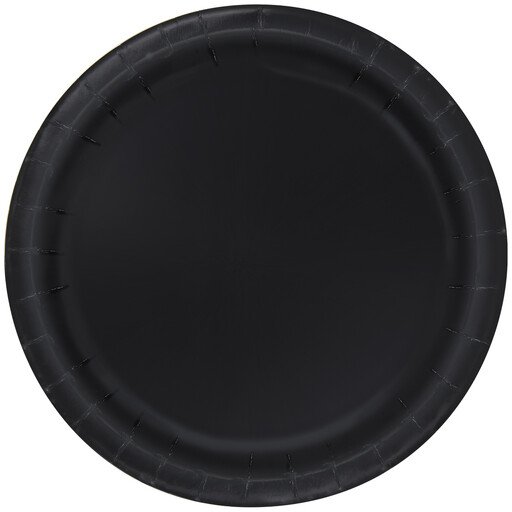
Why This Fits Their Persona: The classic black finish suits Halloween, birthdays, graduation gatherings and New Year celebrations, making one pack useful across different occasions.
Its 9-inch diameter is more suitable for meal portions than a small cake plate, while the pack quantity is clear for planning a smaller event.
Round paperboard construction; 9-inch size; stackable and suitable for indoor or protected outdoor serving.
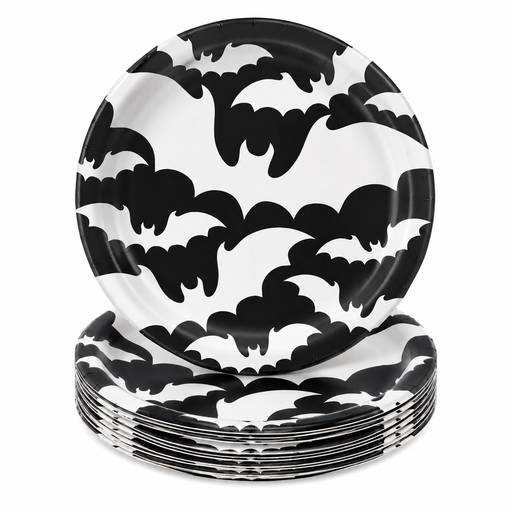
Why This Fits Their Persona: The bat pattern gives children’s parties, classroom celebrations and adult Halloween events a recognisable theme without requiring a full decorative table set.
The stated 9-inch size avoids the common mistake of buying dessert-only plates for a buffet or main meal.
Printed Halloween design; pack of eight; paper construction for straightforward post-party clearing.
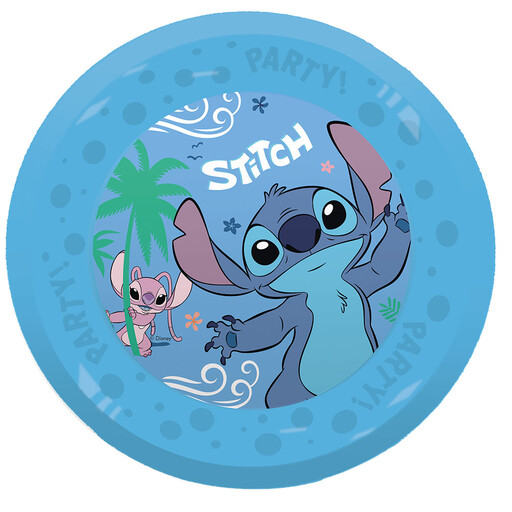
Why This Fits Their Persona: Families hosting regular children’s meals or themed celebrations may prefer a plate intended for repeated use rather than buying disposable tableware each time.
The reusable format directly addresses single-use waste, but buyers should still confirm the care instructions before using a dishwasher or microwave.
Food-grade plastic; 21cm diameter; pack of four for smaller family settings.
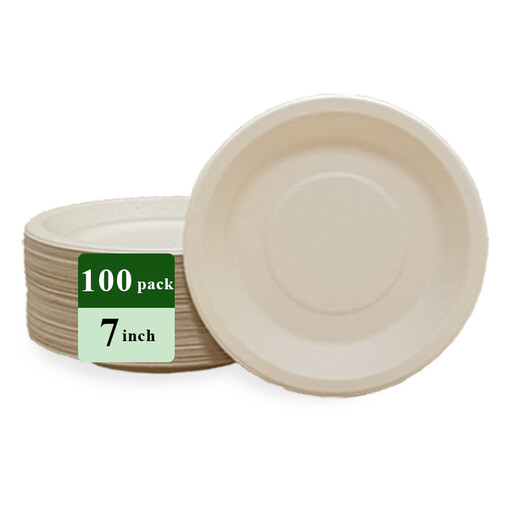
Why This Fits Their Persona: A 100-pack is suited to caterers, food trucks, picnics, large gatherings and businesses that need a consistent supply of smaller plates.
The bulk quantity reduces the risk of running short, while the 7-inch size makes its role clear: sides, appetisers, desserts or children’s meals.
Bamboo fibre material; 100 plates per pack; listed as leak-resistant and suitable for microwave reheating under stated conditions.
We have compiled a complete, real-time list of products that fully satisfy these strict selection criteria and UK safety regulations.
A 9-inch plate is approximately 23cm wide and is generally suitable for main courses, buffet portions, sandwiches and desserts. For especially generous servings, consider a 10-inch option. For cake or appetisers only, 17cm to 20cm plates may be sufficient.
Do not assume they can. Paper plates should only be microwaved when the product instructions specifically allow it. Plastic and bamboo fibre plates also vary by construction. Check the packaging, avoid prolonged heating and never use disposable plates in conventional ovens or on open flames unless explicitly designed for that purpose.
It depends on the material, coating and local waste facilities. Terms such as compostable, recyclable or plastic-free should be checked against the product packaging and your local council’s guidance. If facilities do not accept the material, place used plates in the appropriate general-waste stream rather than contaminating food-waste or recycling collections.