
24/7 Customer Support

Free returns

Same-day & Next-day Delivery

Quality Guaranteed

Unlock Your Welcome Offers: FREE Delivery | Up to 80% OFF | Free 30-day JoyPlus trial
Download the APP
For heavy periods, travelling or postpartum recovery, disposable period underwear can be more convenient than carrying and changing separate sanitary pads. It is worn like ordinary underwear, with an absorbent core and leak-resistant sides built into the garment.
However, product descriptions can make similar items appear interchangeable. The practical differences are usually found in the sizing, core construction, pack quantity and disposal instructions. This guide highlights the main buying pitfalls and compares suitable options for different UK shopping needs.
A product described as holding the equivalent of four regular pads does not necessarily provide four pad changes’ worth of protection in every situation. Flow rate, body position, fit and how often the garment is changed all affect performance.
Treat statements such as “up to 12 hours” as product guidance rather than a promise that applies to every wearer. For very heavy flow, changing more frequently may be appropriate.
Disposable period pants need a close but comfortable fit. If the waistband or leg openings are loose, fluid may escape around the sides. If the garment is too tight, it may feel restrictive and cause rubbing.
Do not assume that a standard UK clothing size will match the product. Check the seller’s waist or hip measurements, particularly when looking for plus-size period pants, maternity knickers or period underwear for postpartum recovery, when body measurements may change.
Some products are washable menstrual underwear, while others are single-use. A washable product may require rinsing, machine washing and drying, whereas disposable period pants should be placed in general waste after use.
Read the directions carefully. Do not flush disposable period underwear down the toilet, even if it feels thin or paper-like.
For heavy flow period pants, look for a clearly described absorbent core rather than relying only on phrases such as “maximum protection”. A longer core can provide more front-to-back coverage, which may be useful when lying down or during overnight use.
Several options in this range list absorbency equivalent to approximately four regular sanitary pads. This is a useful comparison point, but it is not a medical measurement and should not replace changing the product according to your flow.
Features worth checking include:
These features can be particularly relevant for overnight period pants, when movement and sleeping positions may increase the chance of side or back leakage.
Breathable non-woven fabric, a soft top sheet and an unscented finish may improve day-to-day comfort. If you have sensitive skin, review the full materials list and stop using the product if irritation occurs.
Individually wrapped pairs are practical for commuting, holidays, hospital bags and keeping an emergency pair in a handbag. After use, wrap the garment and place it in a waste bin. Follow the packaging instructions and local waste guidance.
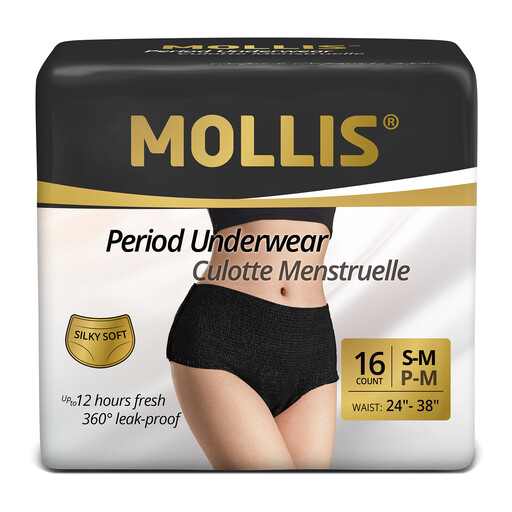
Why This Fits Their Persona: The 16-pair pack suits shoppers who want to build a supply for several heavy-flow days, commuting or keeping spare pairs at home.
The listing specifies single use, individual packaging and a five-layer absorbent core, so buyers can distinguish it from washable underwear.
Listed with absorbency equivalent to four regular pads, a triple-stretch waistband, raised side guards and individually wrapped pairs.
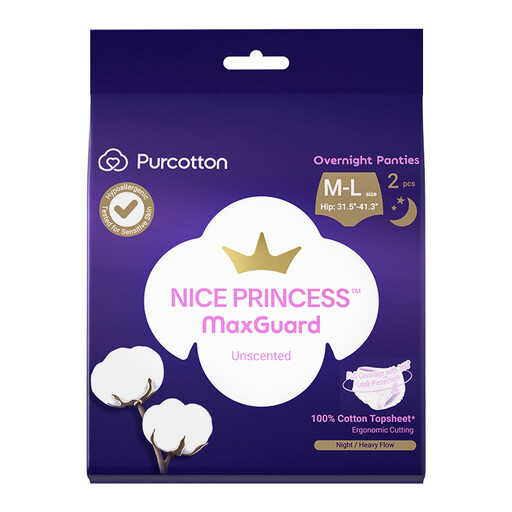
Why This Fits Their Persona: A suitable option for shoppers prioritising a cotton top sheet, an ultra-thin feel and coverage designed for night-time or heavy-flow use.
The product information gives a hip range of 31.5–41.3 inches and clearly states that the sides should be torn for removal and the item must not be flushed.
Features a 100% cotton top sheet, full elastic coverage, a 3D guard design and two pairs per pack.
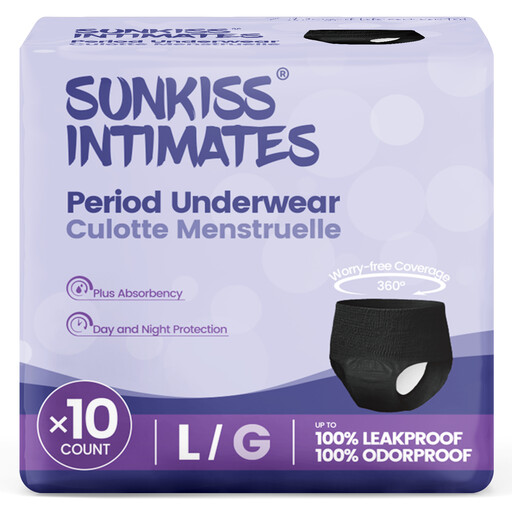
Why This Fits Their Persona: Designed for shoppers comparing heavy-flow, overnight and postpartum disposable underwear, with a low-rise shape for those who prefer less coverage at the waist.
Its listing identifies the garment as unscented and provides size-specific details, helping buyers avoid relying on generic “one size fits all” wording.
The product information lists a dual-core design, anti-leak barriers, elastic leg gathers and absorbency equivalent to approximately four regular pads.
For travel, hospital bags or occasional emergency use, individually wrapped postpartum disposable underwear can be simpler than carrying bulky pads and spare clothing. For regular heavy-flow days, compare the number of pairs per pack and the cost per wear rather than the headline absorbency alone.
If you are buying maternity knickers for postpartum recovery, choose a size that allows comfortable movement and check whether a high-rise or low-rise cut is more suitable. Product descriptions can use “postpartum” broadly, but personal comfort and changing body measurements remain important.
If bleeding is unusually heavy, prolonged or accompanied by significant pain, seek advice from a GP, midwife or other qualified healthcare professional. Period underwear is a hygiene product, not a treatment.
We have compiled a complete, real-time list of products that fully satisfy these strict selection criteria and UK safety regulations.
Wear time depends on flow, fit and the product’s instructions. Some listings describe protection for all-day or overnight use, while others state up to 12 hours. These are usage guidelines, not guarantees. Change the garment sooner if it feels saturated, uncomfortable or damp.
Some products are listed for postpartum recovery, but suitability depends on comfort, size and individual circumstances. Check the materials, waistband and coverage, and follow advice from your midwife or healthcare professional where relevant. Do not flush used pants; dispose of them in a bin.
Disposable period underwear has a lower preparation and cleaning burden, but requires repeated purchases. Washable menstrual underwear has a higher initial cost and needs water, detergent, drying space and regular care. Compare the expected number of wears, pack price and your daily routine before choosing.