
24/7 Customer Support

Free returns

Same-day & Next-day Delivery

Quality Guaranteed

Unlock Your Welcome Offers: FREE Delivery | Up to 80% OFF | Free 30-day JoyPlus trial
Download the APP
Disposable pull-up pants can make potty training, bedwetting, overnight nappy use and bladder leaks easier to manage. However, packaging often focuses on promises such as “all-night protection”, “underwear-like comfort” or “maximum absorbency” without explaining whether the product suits your child’s weight, body shape or level of wetness.
The right choice depends less on attractive graphics or a large pack size and more on fit, intended use, absorbency and skin comfort. This guide explains the details worth checking before buying disposable pull-up pants in the UK.
Age ranges are only a general guide. Children of the same age can have very different weights, waist measurements and body shapes. Adult products also vary considerably between clothing sizes and hip measurements.
A pull-up that is too loose may leak around the legs, while one that is too tight can leave red marks and feel uncomfortable overnight. Check the manufacturer’s weight or hip guidance, then look at the waistband and leg-cuff fit when the product is worn.
Potty training pants are often designed to support movement and learning rather than hold a large amount of liquid for many hours. A child who needs bedwetting pants or a night-time nappy pant may need a product with a deeper absorbent core, more secure side barriers and a closer fit.
Similarly, adult incontinence pants intended for occasional daytime leaks may not provide the level of protection required for heavier bladder leaks or overnight use. Always match the product with the expected duration and volume of wetness.
A wetness indicator can be useful during potty training, but it may have limited value for an older child who can recognise when protection needs changing. Decorative designs can encourage independence, but they should not distract from size, absorbency or disposal instructions.
Large packs may reduce the cost per pant, but only if the size and protection level are suitable. Buying a smaller pack first can help avoid waste when trying a new product.
Look for a 360-degree stretchy waistband, flexible side panels and leg cuffs that sit close to the skin without digging in. Pull-up nappies should be easy to step into, but not so loose that the absorbent area moves away from the body.
For adults, check hip measurements rather than relying only on S, M or L labels. For example, the PURCOTTON NICE PRINCESS MaxGuard Overnight Panties in M-L list a hip range of 31.5–41.3 inches. TENA Silhouette Incontinence Pants in size L are designed with a high-waist shape, while Always Discreet options include low-waist and high-rise designs.
Terms such as highly absorbent pants, “overnight” and “heavy protection” should be considered alongside the product’s stated use. Look for features including:
A product described as suitable for up to 12 hours should still be changed sooner if it becomes wet or soiled. No disposable pant can guarantee a leak-free result for every body shape or level of wetness.
For sensitive skin, check whether the product is fragrance-free, lotion-free or dermatologically tested. Pura Eco Nappy Pants, for instance, are described as fragrance-free and Allergy UK certified, while Always Discreet products are listed as dermatologically tested in the supplied product information.
Materials can include polypropylene, polyethylene, cellulose, wood pulp and sodium polyacrylate. Read the packaging if you have known sensitivities. Stop using a product if irritation develops and seek appropriate medical advice if the problem continues.
Disposable pull-up pants must never be flushed down the toilet. Wrap used pants and place them in household waste, following local council guidance. Keep unused products and plastic packaging away from babies, children and animals.
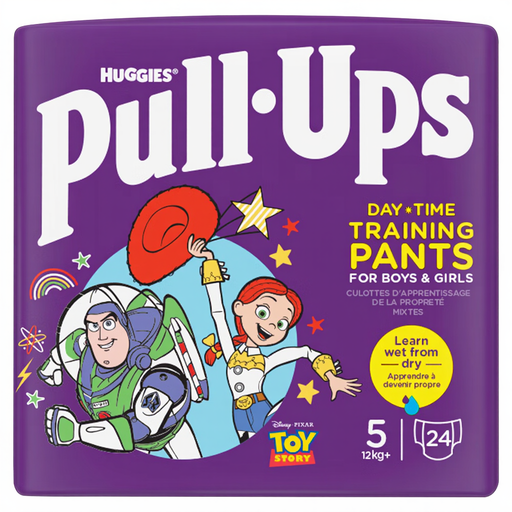
Why This Fits Their Persona: A practical option for toddlers aged 18 months and above who need daytime support while learning to use the potty.
The stated 12kg+ sizing helps buyers check weight instead of choosing by age alone. The pack is intended for daytime training rather than being treated as a universal overnight solution.
Features a learning layer, wetness-fading graphics, stretchy fit and tearable sides for quicker changes.
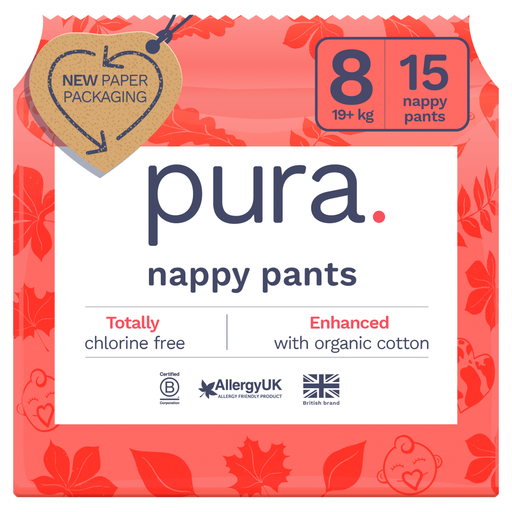
Why This Fits Their Persona: Suitable for families prioritising plant-based materials, sensitive-skin considerations and recyclable paper packaging alongside everyday protection.
The product information specifies a 19kg+ size, helping prevent an age-only purchase. Its stated fragrance-free construction also gives shoppers a clearer materials checklist.
Plant-based inner materials, tear-away sides, FlashDry technology and stated protection for up to 12 hours.
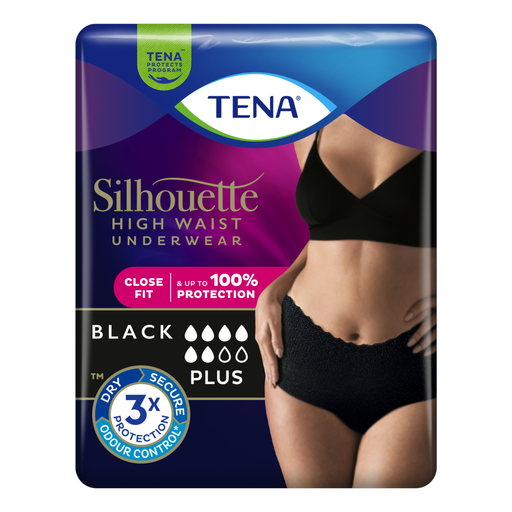
Why This Fits Their Persona: Designed for women managing moderate to heavy bladder weakness who want a high-waist, underwear-style option for day or night use.
It is positioned for moderate to heavy bladder weakness rather than general-purpose underwear, and the size and high-waist design can be checked before ordering.
Includes a high-absorbency core, stretchy micro-stretch fabric, perfume-free construction and leg protection features.
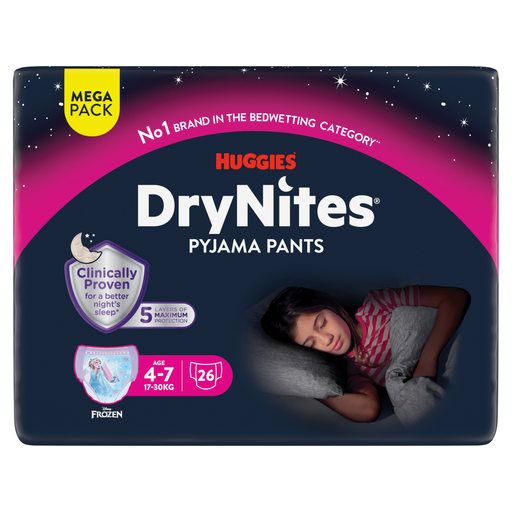
Why This Fits Their Persona: Made for children aged four and above who need discreet overnight protection with an underwear-style feel.
The product is specifically categorised for night-time bedwetting rather than daytime potty training. The listing also identifies a soft waistband and zoned absorbency design.
Five-layer construction, breathable materials, flexible sides and Frozen designs. A larger 8–13 years option is also available in the range.
We have compiled a complete, real-time list of products that fully satisfy these strict selection criteria and UK safety regulations.
The practical lifespan depends on the product, the amount of wetness and the wearer’s comfort. Some night-time nappy pants state protection for up to 12 hours, but this does not mean they should remain unchanged when wet or soiled. Check regularly and follow the product instructions.
Some are designed for night-time training, but ordinary daytime potty training pants may not have sufficient absorbency for a full night. Look for wording such as night-time, overnight or bedwetting pants, and check the size and absorbency guidance before purchase.
Women’s incontinence underwear may help manage postpartum bladder leaks, but suitability depends on the level of leakage, fit and personal comfort. For persistent, painful or worsening bladder-control problems, consult a GP or other qualified healthcare professional rather than relying solely on disposable protection.