
24/7 Customer Support

Free returns

Same-day & Next-day Delivery

Quality Guaranteed

Unlock Your Welcome Offers: FREE Delivery | Up to 80% OFF | Free 30-day JoyPlus trial
Download the APP
Buying DIY hand tools can seem straightforward until a tool jams, blunts quickly or proves unsuitable for the material. Product listings often focus on accessory counts, colour and broad phrases such as “heavy duty”, while leaving out the details that determine whether a tool is genuinely useful for your project.
For UK homeowners, DIY enthusiasts, upholsterers, carpenters and crafters, three common buying traps are worth avoiding:
The right choice starts with matching the tool to the task, material and expected frequency of use.
For holesaw kits, check the diameter range, cutting depth, arbour type and recommended operating speed. A set such as the Silverline 11-piece kit covers 21mm to 64mm and includes a pilot drill, two arbours and a hex key. Its stated maximum operating speed is 1500rpm, so users should follow the product instructions rather than assuming that a higher drill speed will produce a faster or cleaner result.
A bi-metal hole saw set can be useful when your projects include wood, plastic, PVC or light metal. The HYCHIKA 17-piece set provides blades from 19mm to 68mm, two mandrels, three drill bits and a hex key. The supplied range is broader than many compact holesaw kits, but buyers should still confirm the material and maximum cutting depth before starting work.
For timber and sheet materials, tooth count matters. A fine-toothed handsaw with 11/12 TPI is designed for smoother cuts in plywood, MDF, chipboard and similar man-made boards. An 8 TPI universal handsaw is more suited to general-purpose timber cutting where speed and versatility are priorities.
Staple guns are not universal. Before purchasing an upholstery staple gun, confirm:
The ValueMax 3-in-1 models accept Type 140/Arrow T50, Type 28/Arrow T18 and Type 8/Arrow BN18 staples in stated sizes from 6mm to 15mm. Their adjustable force knob allows the user to alter staple penetration for different materials. However, the supplied information specifically advises against using the tool on hardwood.
For lighter upholstery, fabric repair and craft projects, a Type 53 staple gun may be more appropriate. The HAUSHOF models accept 6mm, 8mm and 10mm Type 53 staples, and include 800 8mm staples. This is convenient for occasional jobs, but the lighter-duty design should not be treated as a substitute for a professional pneumatic or electric fastening system.
A leather hole punch should provide the diameter range needed for your project. The Deli leather hole punch plier has six interchangeable heads: 2mm, 2.5mm, 3mm, 3.5mm, 4mm and 4.5mm. Its double-lever design is intended to reduce hand effort, while padded grips can be useful during repetitive craft or repair work.
For blind riveting, check both the rivet sizes and whether the kit includes the riveter itself. The Deli hand riveter kit contains 100 rivets across five sizes from 2.4mm to 6.0mm, plus matching drill bits and a divided storage box. The listed product is an assortment kit, so confirm that you also have a compatible hand riveter before beginning installation.
Material quality is another practical consideration. Heat-treated or high-carbon steel components may suit repeated workshop use, while PC+ABS construction can keep a light-duty craft tool easier to handle. Neither description alone replaces checking the intended application, maintenance instructions and safe working limits.
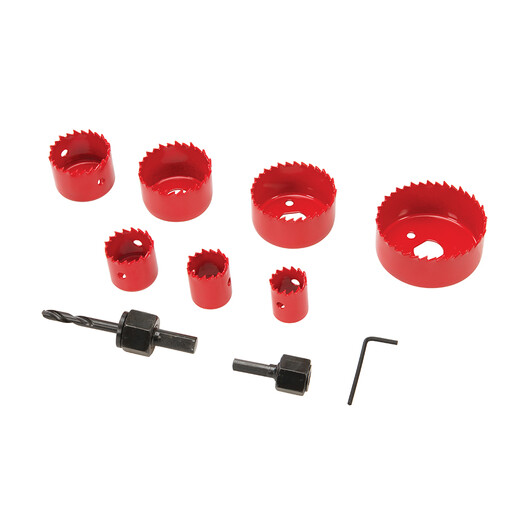
Why This Fits Their Persona: A compact option for homeowners handling occasional cable, pipe or fixture openings in wood, plastic and light metal.
The set states its seven blade sizes, two arbours and pilot drill clearly, reducing the risk of buying blades without the required attachments.
Seven sizes from 21mm to 64mm; includes a pilot drill, two arbours and a hex key.
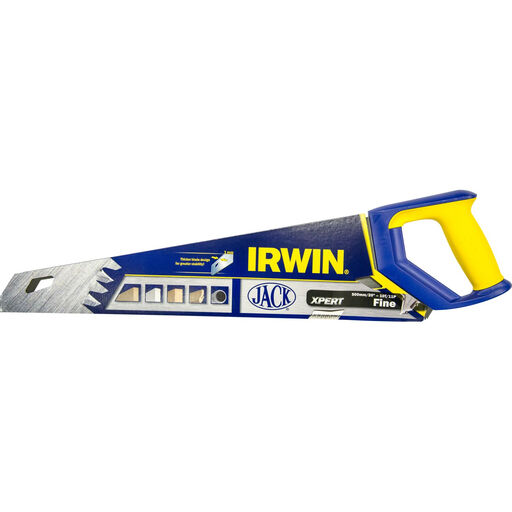
Why This Fits Their Persona: Suitable for joiners, furniture makers and DIY users who prioritise controlled cuts and a cleaner finish on sheet materials.
Its 11/12 TPI specification identifies it as a fine-cut saw rather than leaving tooth suitability to vague marketing language.
550mm blade; soft-grip handle; intended for plywood, MDF, chipboard and other man-made boards.
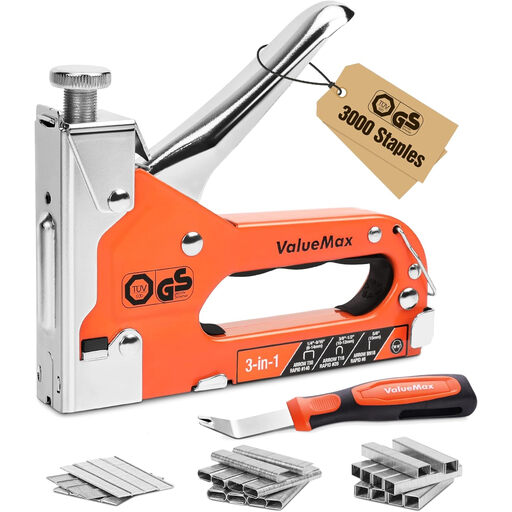
Why This Fits Their Persona: A practical match for repeated upholstery, furniture repair, decoration and light carpentry on suitable softwood.
The three staple formats and size ranges are specified, while the adjustable force knob helps users set penetration instead of relying on one fixed setting.
Compatible with Type 140/28/8 staples; includes 3,000 staples; has a hinged magazine for loading and jam clearance.
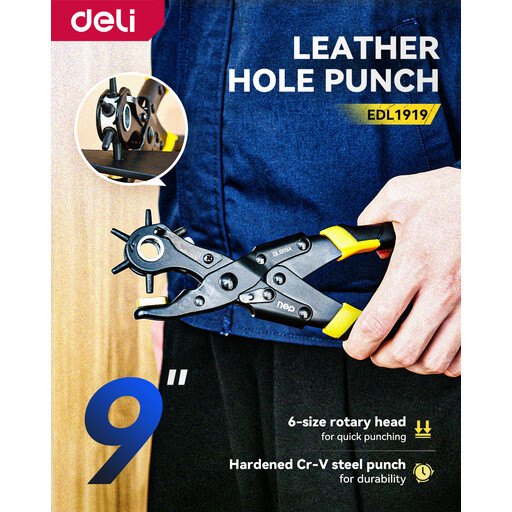
Why This Fits Their Persona: Designed for crafters and hobbyists making or repairing belts, bags, canvas items and fabric projects.
Six stated punch diameters make it easier to select a suitable hole instead of buying a single-size tool for varied projects.
Six interchangeable heads from 2mm to 4.5mm; double-lever mechanism; padded non-slip handles.
We have compiled a complete, real-time list of products that fully satisfy these strict selection criteria and UK safety regulations.
Before using any woodworking tools, carpentry tools or home improvement tools:
For products sold in the UK, also review the listing for manufacturer details, warnings, responsible-person information and any applicable conformity marking. A marking or certificate does not make an unsuitable tool appropriate for a particular job, so task compatibility remains essential.
A sensible starter selection depends on planned work. For general repairs, consider a universal handsaw, screwdriver set, pliers, tape measure and adjustable spanner. If you are making furniture or working with fabric, add a staple gun. Crafters may benefit more from a leather hole punch, cutting mat and precision craft tools.
Some holesaw kits list compatibility with light metal, but this does not mean every blade is suitable for thick or hardened metal. Check the material guidance, blade construction, drill speed and cutting depth. Use steady pressure and appropriate eye protection, and never exceed the stated operating limit.
Service life depends on frequency, material hardness, staple compatibility, storage and maintenance. Avoid hardwood if the manufacturer advises against it, do not force mismatched staples into the magazine and clear jams according to the instructions. A manual tool used within its stated limits can remain useful for many household and craft projects, but worn or damaged mechanisms should be replaced rather than improvised.