
24/7 全天候客户支持

免费退货

当日/次日达

品质保障

开启新人专享福利: 全场免邮 | 低至 2 折 | 免费试用 30 天 JoyPlus 会员
下载 Joybuy
The charm of a DIY miniature house kit is undeniable. It offers a chance to switch off, focus your hands and create a tiny, detailed world. However, the growing popularity of these kits means the market is flooded with options and not all are created equal. Many promising boxes hide frustrating flaws that can turn a relaxing hobby into a chore. Before you commit, it's crucial to know what separates a rewarding project from a disappointing one.
As the Joybuy Product Recommendation Officer, my role is to help you see past the marketing and focus on the features that genuinely matter for a satisfying crafting experience.
A beautiful box photo doesn't guarantee a quality product. Many buyers find their excitement fades when they encounter these common issues:
To avoid these pitfalls, focus on a few key technical specifications. Analysing these details before you buy will significantly improve your chances of a successful and enjoyable project.
The foundation of any good wooden model kit for adults is the quality of its main structural components. Look for kits that specify laser-cut wooden sheets. This method ensures high precision, meaning pieces fit together snugly and accurately. An even better sign is a snap-fit design, which indicates that the parts are engineered so precisely they can be assembled without needing glue for the main structure, resulting in a cleaner and more stable build.
Do not overlook the instructions. A good manual will have clear, step-by-step colour diagrams and label every single part. Check the product details for an estimated assembly time and the number of pieces. This gives you a realistic idea of the commitment required. A project with over 250 pieces is typically geared towards experienced hobbyists, while a kit with under 150 pieces is a more suitable entry point for beginners.
A great kit provides everything you need in the box, aside from basic tools or batteries. If the kit includes a feature like LED lights, check what kind of power source is needed (e.g., AAA batteries) and whether the wiring is designed for simple plug-and-play assembly. This avoids the frustration of dealing with complex, fiddly electronics.
Based on these practical criteria, we've identified a model that aligns with what discerning crafters in the UK are looking for.
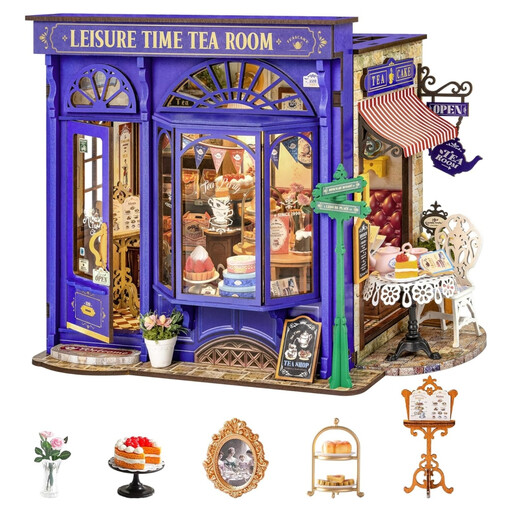
Why This Fits Their Persona: This Edwardian tearoom model is ideal for crafters who love a project with a strong, nostalgic theme. It's more than just a model; it's a piece of storytelling, perfect for someone in the UK who appreciates classic British design and wants a decorative piece with character.
The structure is built from precisely laser-cut wooden panels designed for a snap-fit assembly, which directly counters the common pitfall of ill-fitting parts. The instructions are visual and step-by-step, reducing confusion.
Features an openable exterior wall to display the detailed interior. The integrated LED lighting system is powered by standard AAA batteries, making it simple to install and use as a charming lamp or bookend.
For those just starting their journey into miniature crafts or who prefer a different aesthetic, it is often helpful to explore a wider selection. A good starting point is to look for a miniature craft kit with fewer than 150 pieces, as this provides a gentle introduction to the techniques involved.
We have compiled a complete, real-time list of products that fully satisfy these strict selection criteria and UK safety regulations.
This varies greatly depending on the kit's complexity and your experience level. A simple 3D wooden puzzle or beginner kit might take 2-4 hours. More intricate models, like the Edwardian tearoom, can take 6 hours or more. Always check the manufacturer's estimated assembly time on the product page for a realistic expectation.
It depends on the kit. Many modern kits with a snap-fit design require no glue for the main structure, but you may still need it for attaching small decorative elements like paper cutouts or fabric. Most kits will require you to have basic tools like tweezers and small scissors. The product description should clarify what is and isn't included.
When sourced from reputable brands, the LED lighting systems are generally safe. They are low-voltage and typically powered by standard AA or AAA batteries. The wiring is usually designed to be straightforward. As a precaution, ensure that battery replacement is handled by an adult and that the batteries are removed if the model will not be used for an extended period to prevent leakage.