
24/7 Customer Support

Free returns

Same-day & Next-day Delivery

Quality Guaranteed

Unlock Your Welcome Offers: FREE Delivery | Up to 80% OFF | Free 30-day JoyPlus trial
Download the APP
DIY miniature house kits for adults can become attractive bookshelf decoration, a glowing display or a thoughtful creative gift. However, product photos often make every set look equally detailed and straightforward. The practical differences usually appear after opening the box: tiny components, unclear battery requirements, limited display space and assembly instructions that may not suit a beginner.
Before choosing a DIY dollhouse kit or miniature book nook kit, check what is included, how much room it needs and whether the finished model matches the way you want to use it.
Packaging dimensions are not the same as assembled dimensions. A compact box may contain a model measuring more than 20cm in height or depth. Measure your shelf, display cabinet or desk before ordering, allowing additional clearance if the model includes an open roof, bookend structure or projecting parts.
Slot-together or precision-cut pieces can reduce the need for tools and adhesive, but they still require patience. Miniature furniture, stickers, plants and lighting components may be small and fiddly. Look for the number of parts, estimated assembly time and recommended age rather than relying only on phrases such as “easy assembly”.
An LED miniature house can look very different from an unlit static model. Check whether batteries are included, the battery type and how the light is activated. For example, some sets use two AAA batteries, while others use CR2032 button cells. Battery replacement should be handled by an adult, and batteries should be removed if the model will be stored for a long period.
For a bookshelf decoration, compare width, depth and height with the available space. A miniature book nook often sits between books, whereas a freestanding DIY miniature house may need a wider, deeper surface.
A model can also serve different purposes:
Wooden panels, paper elements, PET sections and injection-moulded accessories each have different handling needs. Precision-cut wood can provide a structured build, while transparent PET may help show interior details. Check whether the kit uses a slot-together or snap-fit design, and whether glue or extra tools are required.
A no-glue design can be convenient, but parts should still be pressed together carefully. Forcing a delicate component may cause damage or affect the final alignment.
The supplied products are generally intended for ages 14 and over and contain small parts. This makes them more suitable as adult craft kits or supervised projects for older teens than as children’s toys. Assembly estimates range from roughly five to six hours for several of the featured models, although personal pace and experience will affect the total.
For a gift, check:
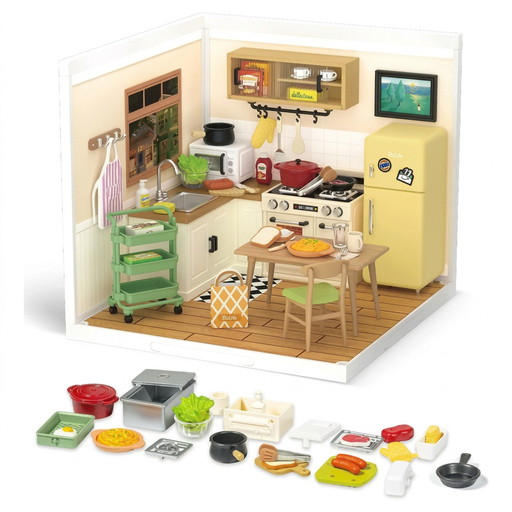
Why This Fits Their Persona: Its 16.3 x 16.3 x 15.2cm assembled size suits a smaller shelf or a compact footprint, while the 152-piece layout offers a manageable introduction to miniature building.
The product information states that the kit includes instructions, accessories, stickers and LED lights, reducing uncertainty about essential components.
152 pieces; two CR2032 batteries are included; modular designs from the same series can be connected.
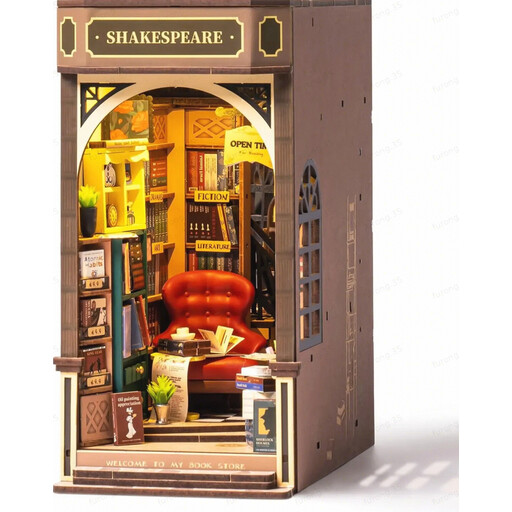
Why This Fits Their Persona: The 11.4 x 19.5 x 21.8cm format is designed for a bookshelf, with wooden inserts, book dividers, touch-sensitive lighting and customisable pieces.
The assembled dimensions and AAA battery requirement are stated clearly, helping buyers plan both shelf space and lighting costs.
No glue is required; touch-sensitive lighting; space for miniature figures and a personalised scene.
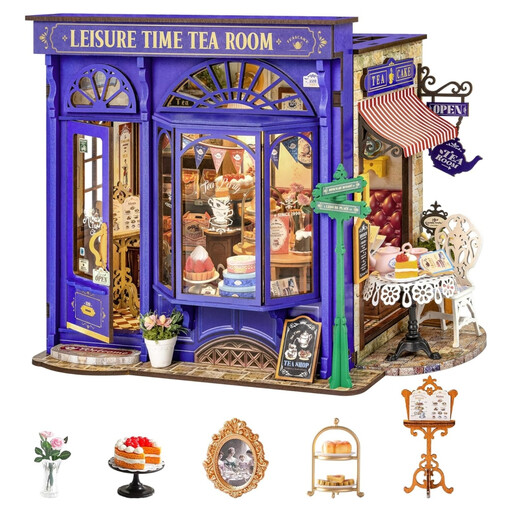
Why This Fits Their Persona: Designed for people who want a longer, detail-focused project and a display with a vintage British tearoom theme.
Its 304-piece count and approximately six-hour assembly estimate set clearer expectations than a generic “quick project” description.
Openable exterior walls; 304 parts; LED lighting; 24.9 x 15.5 x 17.8cm finished size.
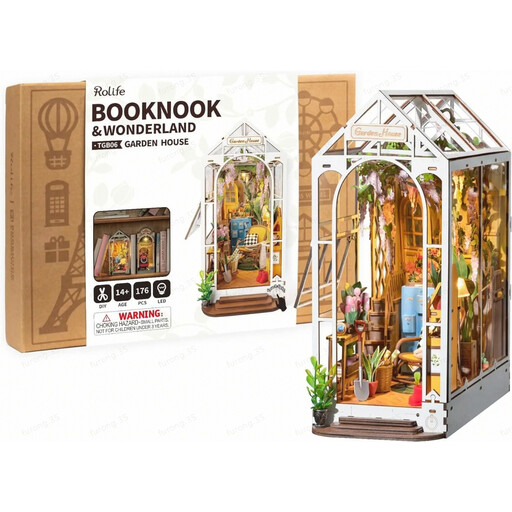
Why This Fits Their Persona: This garden-themed book nook works as a bookend, desktop display or night light for collectors who want a larger decorative scene.
The product listing identifies 176 pieces, an approximately five-hour assembly time and a no-glue construction, helping clarify the project scope.
PET material for light transmission; 14 plants and garden tools; two AAA batteries required separately.
We have compiled a complete, real-time list of products that fully satisfy these strict selection criteria and UK safety regulations.
Prepare a clear, well-lit work surface before opening the kit. Sort small components into labelled groups and avoid applying excessive pressure to wooden or plastic parts. Follow the instructions in sequence, particularly when installing LEDs or touch-sensitive components.
Once complete, keep the model away from moisture, liquid cleaners and prolonged direct sunlight. Most of these products should be cleaned with a soft, dry cloth. Remove batteries during long-term storage to reduce the risk of leakage and store the finished piece somewhere stable, where it will not be knocked from a shelf.
Some are more approachable than others. A lower parts count, no-glue construction and clearly illustrated instructions can make the process easier to manage. Even beginner-friendly kits contain small parts, so allow several uninterrupted sessions rather than expecting to finish in one sitting.
The featured models list estimated assembly times of approximately five to six hours. This is a guide rather than a guarantee. Beginners may need longer, particularly when arranging accessories, applying stickers or checking lighting connections.
The main ongoing cost is usually battery replacement for LED lighting. Costs depend on the battery type, usage frequency and whether the light is left switched on. Check whether batteries are included: the Happy Meals Kitchen kit lists two included CR2032 cells, while several AAA-powered models require batteries to be purchased separately.