
24/7 Customer Support

Free returns

Same-day & Next-day Delivery

Quality Guaranteed

Unlock Your Welcome Offers: FREE Delivery | Up to 80% OFF | Free 30-day JoyPlus trial
Download the APP
Buying DIY tools and accessories can appear straightforward until you compare battery sizes, torque figures, accessory counts and compatibility systems. A large toolbox does not always mean better coverage, and a powerful-looking tool may be inconvenient for the projects you actually complete.
For UK homeowners, DIY enthusiasts, makers and crafters, the practical choice depends on the material, working environment and frequency of use. This guide covers common purchasing traps, key specifications and suitable options for drilling, driving, soldering, engraving and general home improvement.
A kit with 100 or more pieces may include many duplicate screwdriver bits, uncommon sizes or accessories unsuitable for your materials. Check the contents rather than relying on the headline number. For general household work, useful inclusions may include wood, metal and masonry drill bits, nut drivers, extension holders and several common screwdriver profiles.
A cordless drill with a high maximum torque is useful for driving screws and drilling tougher materials, but torque alone does not determine suitability. Speed control, clutch settings and the correct bit are equally important. A standard drill may handle wood and plastic, while brick or concrete usually calls for a hammer drill with compatible masonry bits.
Battery capacity affects working time, while charging speed affects how quickly the tool can return to use. A compact 1.5Ah battery may be suitable for occasional hanging and assembly tasks, but longer projects may require a larger or spare battery. Also check whether the kit includes a charger, case or toolbox, as these can add cost later.
For a cordless drill, compare the voltage, torque and speed range together. An 18V model is commonly positioned for household drilling and screwdriving, but the actual performance also depends on gearing and clutch control. Dual-speed gearboxes typically offer a slower range for controlled driving and a faster range for drilling.
Rotary tools work differently. Their suitability is more closely linked to RPM range, motor wattage and accessory compatibility. Lower speeds help with delicate engraving or polishing, while higher speeds may be useful for cutting or grinding when the attached accessory allows it.
A 10mm keyless chuck allows quick bit changes without a chuck key and can accommodate many standard drill and driver accessories. For a rotary tool, the collet must match the shank size of the accessory. Always tighten the chuck or collet securely and check the manufacturer’s maximum RPM for each attachment.
When selecting a drill bit set, look for clearly labelled sizes and material categories. Masonry bits are designed for brick and similar surfaces, while twist bits are generally used for metal, plastic and some wood applications. Do not use the wrong bit simply because it fits the tool.
Check whether batteries are proprietary, removable and separately replaceable. Use the supplied charger or an approved replacement, keep contacts clean and store batteries in a cool, dry place. For corded equipment such as a rotary tool or soldering iron set, inspect the plug, cable and power rating before use.
Look for appropriate product labelling, instructions and safety information for the UK market, including CE or UKCA marking where applicable. This is a purchasing check, not a substitute for following the manual or using suitable protective equipment.
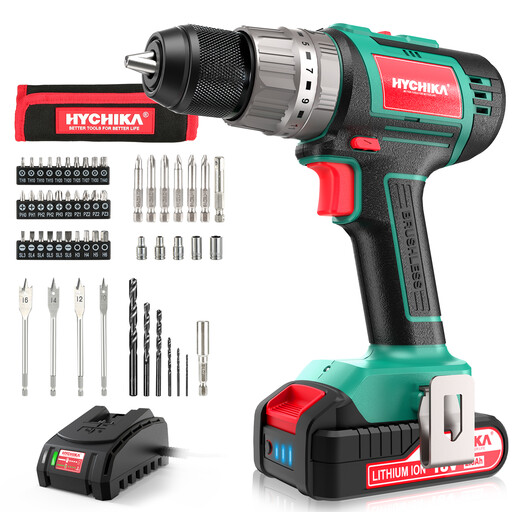
Why This Fits Their Persona: A practical starting point for flat-pack assembly, shelves, garden maintenance and everyday screwdriving around a UK home.
The 26-piece set lists its drill and screwdriver bit contents, avoiding an accessory count with unclear coverage.
18V battery, 35Nm maximum torque, 21+1 clutch settings, dual speeds and a 10mm auto-lock chuck.
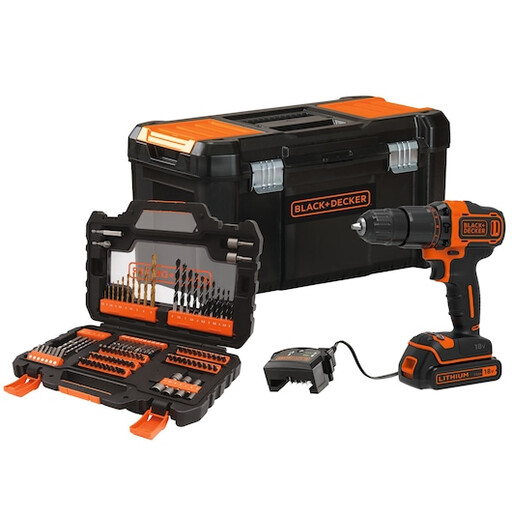
Why This Fits Their Persona: Suitable for homeowners who want one organised kit covering routine repairs, drilling and occasional masonry work.
The kit specifies separate wood, titanium-coated metal and masonry bits, plus a toolbox for organised storage.
Hammer action, 11-position clutch, two speed settings, 104 accessories and a 19-inch toolbox.
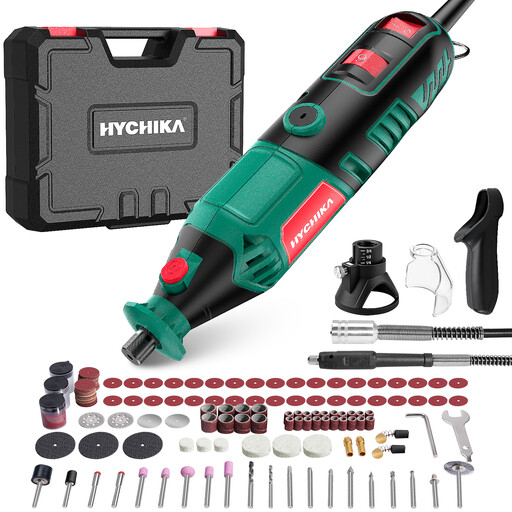
Why This Fits Their Persona: Designed for makers, crafters and users handling carving, deburring, polishing, sharpening and detailed cutting projects.
Six speed levels and a flexible shaft provide more control than a single-speed tool for varied craft materials.
170W corded motor, 8,000–35,000 RPM range, one-metre flexible shaft and 173 accessories.
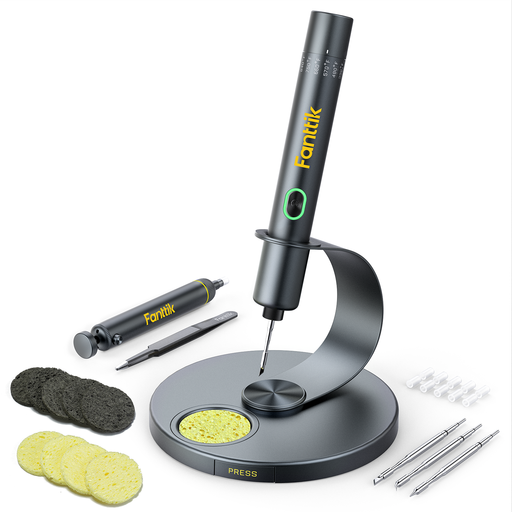
Why This Fits Their Persona: A compact option for hobby electronics, cable repairs and small precision projects where a full-size tool is inconvenient.
It specifies four C210 tips, six temperature levels and both cordless and USB Type-C powered modes.
Temperature range of 200–450°C, stated seven-second heating time, auto-sleep function and rotating stand.
We have compiled a complete, real-time list of products that fully satisfy these strict selection criteria and UK safety regulations.
Before starting a project:
They can be, provided the kit matches the intended tasks and includes clear instructions. A cordless drill with clutch settings is useful for common household jobs, while a rotary tool or soldering iron set requires more precise handling and protective precautions.
Runtime varies according to battery capacity, material, pressure, speed and workload. A 2.0Ah battery may provide more working time than a 1.5Ah battery under comparable conditions, but drilling masonry or using high torque can reduce runtime. Charging fully before a project and storing the battery correctly can support consistent use.
Not always. Drill bits generally need to match the chuck range, while rotary tool accessories must match the collet and permitted RPM. Soldering tips are usually model-specific. Check the product specification before buying replacement or additional accessories.