
24/7 Customer Support

Free returns

Same-day & Next-day Delivery

Quality Guaranteed

Unlock Your Welcome Offers: FREE Delivery | Up to 80% OFF | Free 30-day JoyPlus trial
Download the APP
Buying DIY tools and accessories can quickly become expensive when a large piece count disguises poor compatibility, limited power or accessories that do not suit your work. Whether you are furnishing a new home, maintaining a vehicle or planning woodworking projects, the right purchase should match your materials, working space and expected frequency of use.
A 100-piece DIY tool kit may look economical, but the number alone does not indicate usefulness. Some sets include many duplicate screwdriver bits or small fittings while omitting the drill sizes, sockets or cutting accessories you actually need.
Check the type, size and material rating of each accessory. For example, a kit intended for brickwork should include masonry bits, while woodworking projects may require wood bits and suitable circular saw blades.
More wattage or voltage does not automatically mean a tool will be easier to use. A drill with only one speed can be awkward for delicate screws, while a rotary tool without variable speed may mark plastic, overheat a polishing pad or damage a small cutting accessory.
Useful controls include:
Loose bits are easily lost in a shed, garage or moving box. A fitted case can reduce this problem, but also check whether the case has space for the battery, charger and frequently used accessories.
For cordless tools, confirm the battery voltage, battery type, charger and replacement battery availability. For cutting accessories, check the blade diameter, bore size, reduction rings and the saw manufacturer’s permitted specifications before ordering.
An 18V cordless hammer drill set is suitable for many household jobs, including furniture assembly, screwdriving and drilling into masonry when used with the correct bit. Hammer action is designed for materials such as brick and concrete, but it does not replace a dedicated rotary hammer for extensive construction work.
For detailed tasks, a multi-function rotary tool is more appropriate. Rotary tools commonly use high rotational speeds for engraving, sanding, polishing, grinding and small cuts. A model offering a broad range such as 8,000–33,000 RPM or 8,000–35,000 RPM gives more control across different materials. Always match the accessory’s stated maximum RPM to the tool setting.
A drill’s chuck range determines which shank sizes it can hold. The 18V drill listed below uses a 1–10mm keyless chuck, while rotary tools may use 2.4mm and 3.2mm collets. These dimensions are not interchangeable, so check them before assuming accessories from an existing set will fit.
For circular saw blades, the bore is equally important. The supplied TCT blades use a 30mm bore with reduction rings for selected smaller sizes. The blade diameter and maximum RPM must also match your saw.
Look for practical material information rather than vague durability language. Heat-treated carbon steel, chrome-vanadium steel and stainless steel are common in hand tools, while tungsten carbide-tipped teeth are used on certain cutting blades.
For a home repair tool set, useful basics may include pliers, screwdrivers, a claw hammer, tape measure, level and hex keys. For vehicle maintenance, a mechanic tool set should include suitable socket sizes, ratchets, spanners and storage that keeps pieces organised.
When using tools in the UK, follow the supplied instructions and check applicable CE or UKCA marking information, particularly for electrical equipment and machinery. Wear eye protection when drilling, cutting or grinding, and use hearing or respiratory protection where the task generates substantial noise or dust.
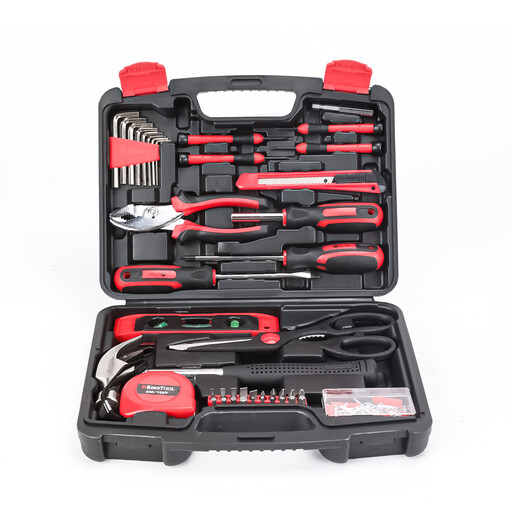
Why This Fits Their Persona: A practical starting point for new homeowners, renters, offices and student accommodation where everyday repairs are more common than heavy construction.
The 149-piece configuration includes core hand tools plus bits, fasteners and a fitted case, rather than relying on accessory quantity alone.
Includes pliers, screwdrivers, hammer, tape measure, level, hex keys and a plastic toolbox with individual slots.
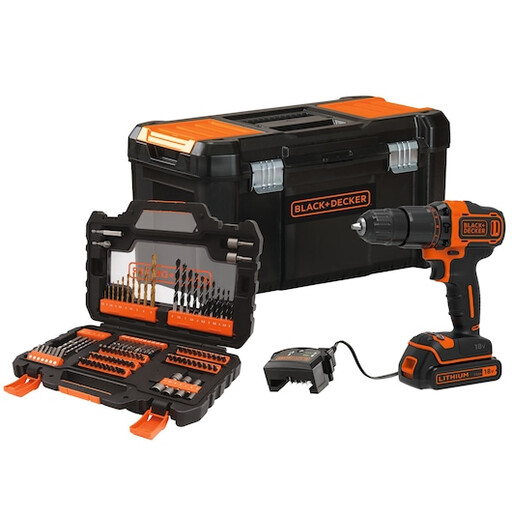
Why This Fits Their Persona: Suits homeowners wanting one cordless system for hanging shelves, assembling furniture and occasional masonry drilling.
It combines a 1–10mm keyless chuck, two-speed gearbox and 11-position clutch, so buyers are not limited to a single operating speed.
Includes a 1.5Ah battery, charger, 104 accessories and a 19-inch toolbox; listed speeds are 0–360 and 0–1,400 RPM.
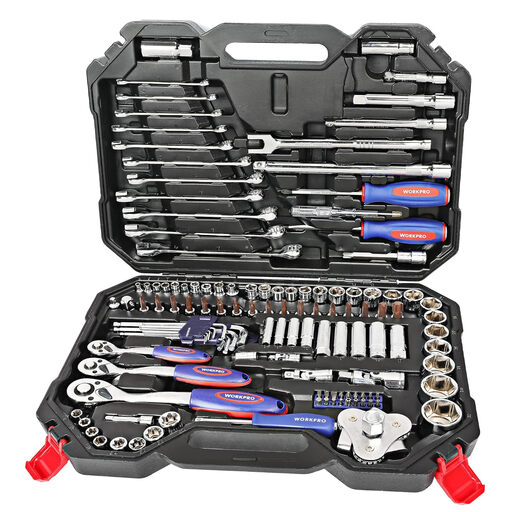
Why This Fits Their Persona: A suitable direction for car owners, garage users and anyone who regularly switches between automotive maintenance and household repairs.
The set identifies its drive sizes as 1/2, 1/4 and 3/8 inch, making the configuration clearer than an unspecified mixed accessory box.
Includes sockets, quick-release ratchet, spanners, bit set, hex keys and a blow-moulded storage case.
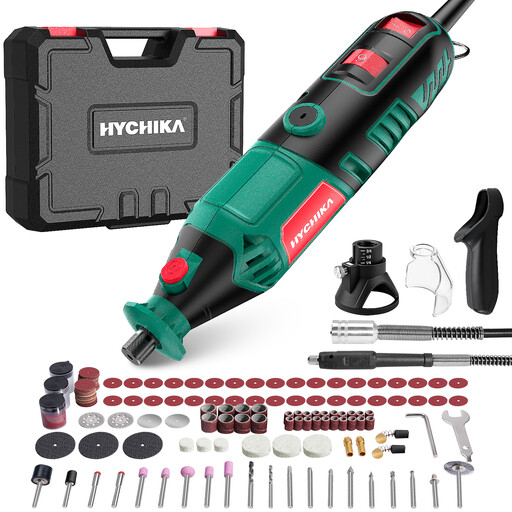
Why This Fits Their Persona: Designed for makers working on engraving, carving, polishing, deburring and small cutting jobs where access and control matter.
The six-speed control and 1m flexible shaft provide more adjustment and reach than a fixed-speed, body-held rotary tool.
A 170W motor, 8,000–35,000 RPM range, 173 accessories and replaceable motor brushes are specified.
We have compiled a complete, real-time list of products that fully satisfy these strict selection criteria and UK safety regulations.
To select between TCT saw blades, consider the tooth count and the finish required. Lower tooth counts, such as 16 or 24, are generally associated with faster, rougher cuts, while higher counts such as 40 or 60 may be more suitable where a smoother cut is required. The material, blade diameter, bore and saw speed still take priority.
The Silverline 40T and 60T two-pack includes reduction rings for 25mm, 20mm and 16mm bores. The 16T, 24T and 30T pack includes rings for 20mm, 16mm and 10mm bores. Never fit a blade solely because the bore ring appears to match; confirm the complete specification in the saw manual.
A useful household tool kit normally includes screwdrivers, pliers, a hammer, tape measure, level, utility knife, hex keys and assorted bits. Add a cordless drill if you regularly drill or drive screws. Choose a mechanic tool set instead when sockets, ratchets and spanners are central to your work.
Some rotary tool accessories are designed for small metal-cutting, grinding or deburring tasks. Use the correct disc or bit, keep within its RPM limit and secure the workpiece. A rotary tool is intended for controlled, smaller jobs rather than cutting large sections of structural metal.
Clean dust from vents and accessories, keep metal tools dry, inspect cutting edges and store components in their case. Disconnect corded tools and remove batteries before changing accessories. Replace damaged bits, blades or worn electrical components rather than continuing to use them.