
24/7 Customer Support

Free returns

Same-day & Next-day Delivery

Quality Guaranteed
Download the APP
Categories
Navigating the world of DJI drones can feel complex. With models designed for everything from casual holiday snaps to professional cinematography, it’s easy to feel overwhelmed by the technical specifications and features. Whether you're a complete beginner looking for a simple way to capture memories or a seasoned professional needing a reliable aerial tool, the key is to match the drone's capabilities to your specific goals.
This guide is designed to help you do just that. As a Joybuy Product Recommendation Officer, my role is to filter through the options and provide clear, practical advice. We'll break down the essential features to consider and highlight a few standout models from the current DJI lineup to help you make an informed choice.
Before diving into specific models, here are a few key points to consider that will help narrow down your search.
In the United Kingdom, drone weight is a critical factor. Drones weighing under 250g, often referred to as the C0 class, come with fewer operational restrictions. For many hobbyists, a mini drone for beginners in this category means you can fly in more places without needing to complete the A2 Certificate of Competency (A2 CofC). Heavier drones offer more powerful features but require you to register as an operator with the Civil Aviation Authority (CAA) and follow stricter rules.
The camera is the heart of any aerial photography drone. While most DJI drones now offer excellent 4K camera drone capabilities, the sensor size and lens quality make a significant difference. A model with a larger sensor, such as a 1-inch CMOS, will perform much better in low light and capture more detail than a standard sensor. For the highest image fidelity, flagship models featuring a Hasselblad camera drone system with a 4/3 CMOS sensor deliver professional-grade colour science and dynamic range.
Think about how you plan to use your drone. For a quick flight at a local park, standard flight time may be sufficient. However, for landscape photography, property surveys or capturing extended events, a long range drone with a longer flight time is essential. Investing in a DJI Fly More Combo is often a practical choice, as these bundles typically include extra batteries and a multi-battery charging hub, significantly extending your time in the air.
Here are our recommendations, selected to suit a range of users from first-time flyers to commercial pilots.
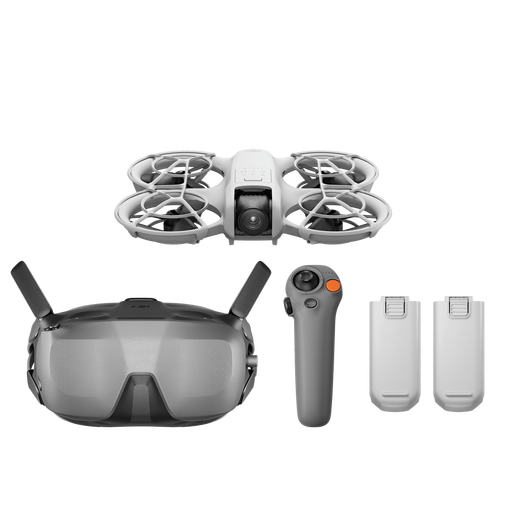
Why It Stands Out: The DJI Neo is engineered for simplicity and portability. Weighing just 135g, it's lighter than most smartphones, placing it well below the 250g regulatory threshold in the UK. This makes it an ideal drone for travel and casual use. Its standout features are the intuitive controls, including Palm Takeoff and the RC Motion 3 controller, which allow you to fly it with simple hand gestures.
Pros:
Who is it for? This is an excellent choice for absolute beginners, families and social media content creators who prioritise ease of use, safety and portability above all else.
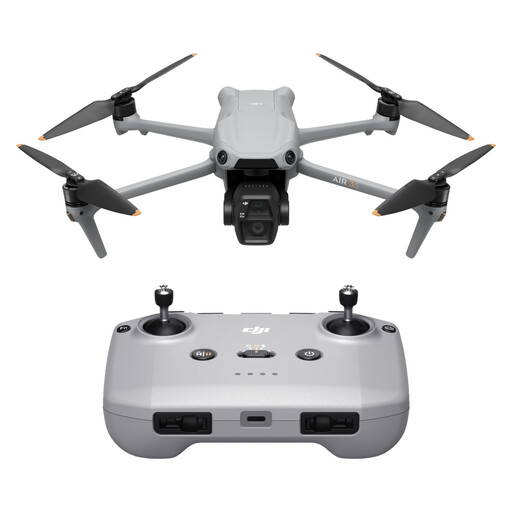
Why It Stands Out: The DJI Air 3S strikes a remarkable balance between power and portability. It's the perfect step-up for hobbyists who are getting serious about their aerial imagery. Its primary feature is the enhanced 1-inch CMOS wide-angle camera, which delivers exceptional image quality, especially in challenging light like sunrises and sunsets. It offers pro-level features in a compact frame that remains suitable for travel.
Pros:
Who is it for? This drone is aimed at prosumer content creators, avid travellers and serious photographers who need a high-performance 4K camera drone that doesn't compromise on portability.
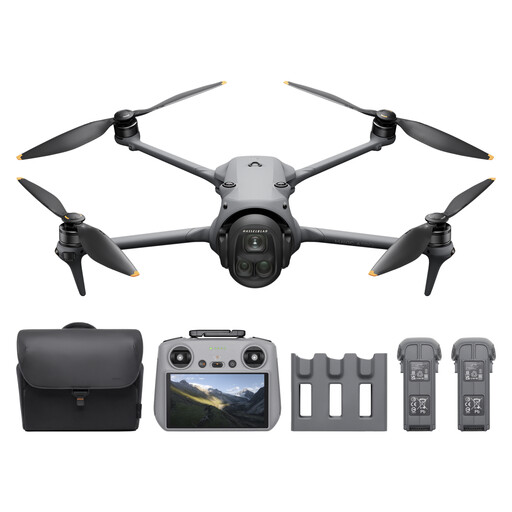
Why It Stands Out: The DJI Mavic 4 Pro is a flagship professional drone built for those who demand uncompromising image quality and performance. Its centrepiece is the tri-camera system, led by a massive 100MP 4/3 CMOS Hasselblad camera. This system provides incredible versatility, from sweeping wide-angle shots to detailed telephoto zooms, all with Hasselblad's renowned colour accuracy.
Pros:
Who is it for? This model is designed for professional cinematographers, commercial drone operators and high-end photographers who require the absolute best in aerial imaging technology and operational reliability.
The world of aerial photography is vast, and these three models represent just a fraction of the possibilities. If you're looking for a different set of features, exploring accessories or want to compare other models, there are many more options to consider.
To see our complete collection, feel free to browse our full range of Photography and Cameras.
1. Do I need a licence to fly a DJI drone in the UK? For drones weighing less than 250g, like the DJI Neo, you do not need to complete any training or tests to fly them, but you must still register with the CAA as an operator if the drone has a camera. For drones over 250g, like the Air 3S and Mavic 4 Pro, you must register with the CAA and obtain a Flyer ID by passing an online theory test. Always check the latest CAA regulations before flying.
2. What is a DJI Fly More Combo? A DJI Fly More Combo is a bundle that typically includes the drone, a remote controller, multiple Intelligent Flight Batteries (usually three in total), a battery charging hub, extra propellers and a carrying bag. It offers better value than buying these items separately and is highly recommended for anyone who plans to fly for more than 20-30 minutes at a time.
3. Which DJI drone is good for beginners? The DJI Neo is an excellent starting point. Its lightweight design, intuitive motion controls, automated flight modes and built-in propeller guards make it one of the most accessible and user-friendly drones on the market. It allows new pilots to learn the basics of flight and aerial photography with confidence.