
24/7 Customer Support

Free returns

Same-day & Next-day Delivery

Quality Guaranteed

Unlock Your Welcome Offers: FREE Delivery | Up to 80% OFF | Free 30-day JoyPlus trial
Download the APP
Buying one of the many DJI drones with camera can be confusing. Product pages often highlight 4K video, long transmission distances and intelligent tracking, but these features do not mean every drone suits every pilot. A compact DJI mini drone may be ideal for a weekend in the Lake District, while a heavier dual-camera model could be more appropriate for planned landscape shoots.
This guide explains the specifications that matter, common buying traps and our top recommendations for 2026.
A drone weighing below 250g can simplify flying in the UK, but it does not remove every responsibility. The CAA’s current rules may still require an Operator ID for a camera drone, unless an exemption applies. A Flyer ID is generally not required for drones under 250g, but pilots must still follow distance, privacy, airspace and safety rules.
Always check the latest CAA requirements before flying. You must also keep the drone within visual line of sight, avoid restricted areas and never assume that a small drone is suitable for crowded locations.
A quoted flight time is normally measured in controlled conditions. Cold weather, wind, fast movement and frequent Return-to-Home procedures can reduce usable time. UK weather is particularly relevant: strong winds and low temperatures can affect a lightweight camera drone more noticeably than a larger model.
If you plan to film regularly, compare the battery arrangement rather than focusing only on the headline figure. A DJI Fly More Combo with three batteries and a charging hub may be more practical than a standard package with one battery.
Some DJI drones can be used without a traditional controller through palm take-off, an app or gesture controls. However, a drone with remote controller offers more precise manual flight and may be preferable for aerial photography.
Check whether the package includes an RC-N3 controller, DJI RC 2 with an integrated screen or RC Motion 3 with goggles. Also check whether a charger, spare batteries, storage case and ND filters are included.
For a DJI 4K drone, check more than the resolution label. Look at:
The DJI Flip offers a 1/1.3-inch CMOS sensor, 4K/60fps HDR video and a three-axis gimbal. The DJI Air 3S uses a 1-inch primary CMOS camera and adds a medium tele camera in selected bundles. The DJI Mavic 4 Pro is designed around a higher-end multi-camera system, with a 100MP main camera listed in the supplied product details.
A lightweight camera drone is easier to pack and may fall into a simpler UK regulatory category. The DJI Neo weighs 135g, while the DJI Neo 2 weighs 151g. Both are compact and use full propeller guards, making them suitable for users who prioritise easy handling and portability.
Propeller guards can help protect the propellers during close manoeuvres, but they are not a substitute for safe flying. Thin branches, wires, reflective surfaces and poor lighting can still create hazards. A covered design may also influence wind performance, so check the manufacturer’s operating guidance before flying on exposed hills or coastlines.
A DJI follow-me drone uses subject-tracking functions to keep a person or another selected subject within the frame. This is useful for walking routes, cycling footage and solo vlogging, but tracking is not infallible. Dense trees, crowds, low light and fast changes in direction may affect performance.
Obstacle sensing adds warnings or automated responses, but it cannot detect every object. Models such as the DJI Neo 2, DJI Air 3S and DJI Mini 5 Pro include advanced sensing features listed by the manufacturer. Treat these systems as assistance rather than permission to fly close to buildings, people or trees.
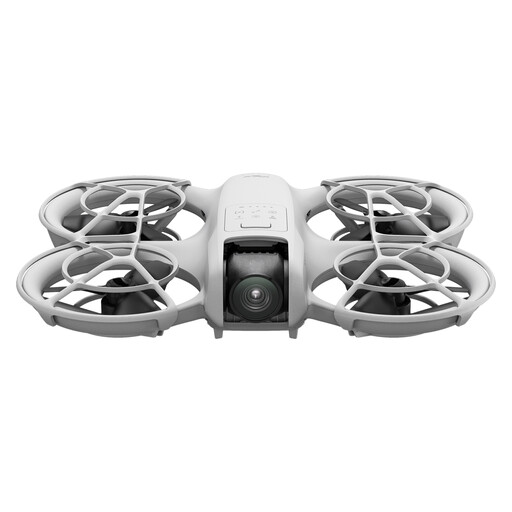
Why This Fits Their Persona: At 135g, with palm take-off, subject tracking and controller-free operation, it is suited to first-time users capturing walks, family occasions and short vlogs.
The standard package does not force you to buy a controller immediately, while full propeller guards address some close-flight concerns.
135g weight; 4K UHD video; eight QuickShots modes; controller-free and app control options.

Why This Fits Their Persona: Its under-249g design, foldable form, 4K camera and included screen controller suit travel filming where phone setup and luggage space matter.
The RC 2 has a built-in screen, reducing reliance on a compatible phone during outdoor shoots.
Up to 31 minutes listed flight time; 1/1.3-inch CMOS sensor; 4K/60fps HDR; integrated propeller protection.
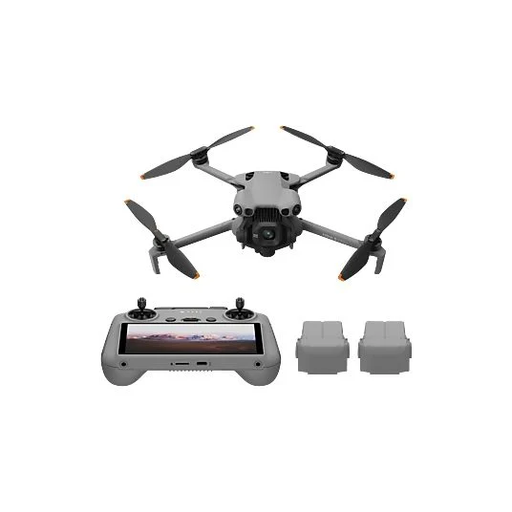
Why This Fits Their Persona: This compact model combines a 1-inch CMOS sensor, vertical shooting and advanced tracking for creators wanting strong image flexibility without moving to a larger airframe.
The Fly More package includes three batteries and a charging hub, helping address the limited-airtime problem.
C0 certification listed; 4K/60fps HDR; up to 36 minutes stated flight time; DJI RC 2 included.
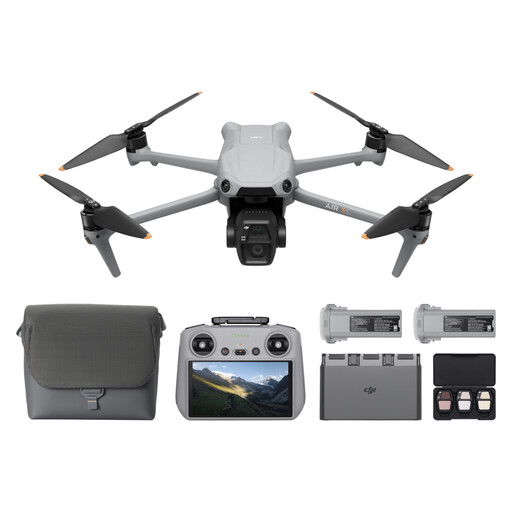
Why This Fits Their Persona: Its larger 724g airframe, dual-camera setup and longer stated flight time are suited to planned shoots, landscapes and repeat commercial content.
Three batteries and a charging hub reduce interruptions, while omnidirectional sensing and smart Return-to-Home support structured flights.
1-inch primary CMOS camera; 4K/60fps HDR; up to 45 minutes listed flight time; RC 2 screen controller.
For immersive flying, the DJI FPV drone category includes motion-controller and goggles bundles. The DJI Avata 360 Motion Fly More Combo includes DJI Goggles N3, RC Motion 3, three batteries and 8K/60fps HDR 360-degree imaging. This setup is more specialised than a conventional camera drone, so allow time to learn motion controls and review local operating requirements.
The DJI Neo 2 Motion Fly More Combo is a lighter alternative, listed at 151g with 4K video, gesture control, ActiveTrack and omnidirectional sensing. It may suit beginners interested in FPV-style viewing without carrying a larger aircraft.
We have compiled a complete, real-time list of products that fully satisfy these strict selection criteria and UK safety regulations.
Rules depend on weight, camera equipment, classification and how the drone is used. A camera drone under 250g may not need a Flyer ID, but an Operator ID can still be required. Check the latest CAA guidance before purchase and before each new type of flight.
Running costs include spare batteries, propellers, charging equipment, storage cards and possible insurance. Batteries gradually lose capacity with use and should be stored and charged according to DJI’s instructions. A Fly More Combo can cost more initially but may reduce the need for immediate accessory purchases.
Yes, provided the model’s controls match your experience and you practise in an open, legal flying area. Palm take-off, subject tracking and propeller guards can simplify initial use, while a conventional remote controller remains useful for developing accurate manual flight skills.