
24/7 Customer Support

Free returns

Same-day & Next-day Delivery

Quality Guaranteed

Unlock Your Welcome Offers: FREE Delivery | Up to 80% OFF | Free 30-day JoyPlus trial
Download the APP
Shaky, jarring video can instantly make your content look amateurish, no matter how compelling the subject. Whether you're a travel vlogger capturing scenic landscapes, a social media creator filming daily updates or a filmmaker aiming for cinematic shots, smooth footage is non-negotiable. A DJI gimbal is a popular tool for achieving this, but with various models available, choosing the right one can be confusing.
This guide is designed to help you understand the key differences between DJI's offerings. We will walk you through the essential factors to consider and highlight a few standout options to match your specific camera and creative goals.
Before diving into specific models, let's outline a few practical points to guide your decision. Matching the tool to your needs is the first step towards producing higher-quality video.
The most crucial factor is the camera you plan to use. A gimbal is designed to carry a specific weight, known as its payload. A phone gimbal is engineered for the light weight and dimensions of a smartphone, whereas a mirrorless gimbal needs stronger motors to handle the heavier body and lens combinations of a dedicated camera. Always check the gimbal's payload capacity and camera compatibility list to ensure it can support your gear safely and effectively.
Think about where and how you'll be filming. If you're a travel vlogger or someone who shoots on the move, a lightweight gimbal or an all-in-one vlogging camera with a built-in stabiliser will be far more practical than a heavy, complex rig. Models like the DJI Osmo series are designed with portability in mind, offering a compact handheld video stabiliser solution that fits easily into a backpack.
Modern gimbals offer more than just stabilisation. Features like native vertical shooting are invaluable for creating content for platforms like Instagram and TikTok without awkward cropping. Other functions to look for include intelligent subject tracking, long battery life and intuitive controls. A 3-axis stabiliser is the standard for smooth footage, as it corrects for unwanted movements across the pan, tilt and roll axes.
Here are a few recommendations from the DJI lineup, each suited to different types of content creators.
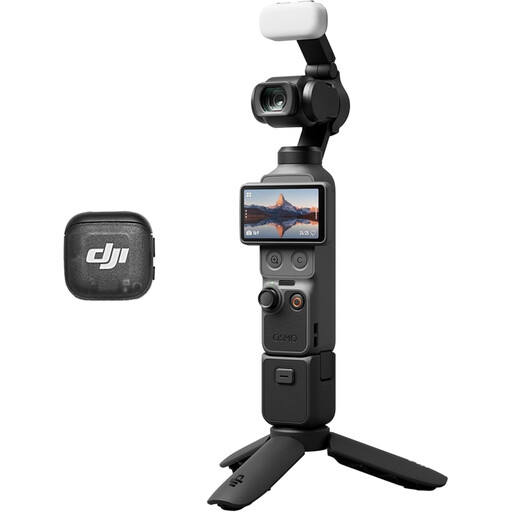
Why It Stands Out The Osmo Pocket 4 is an all-in-one solution that combines a high-quality camera and a mechanical gimbal into a single, pocket-sized device. It eliminates the need to balance a separate camera, making it incredibly fast to set up and use. The 1-inch CMOS sensor delivers impressive image quality, even in lower light, while the ability to shoot in 4K at up to 240fps provides great flexibility for slow-motion effects.
Pros
Who is it for? This is an excellent choice for travel vloggers, solo content creators and anyone who prioritises convenience and portability without wanting to compromise on video quality. It's ready to film in seconds.
View DJI Osmo Pocket 4 Creator Combo
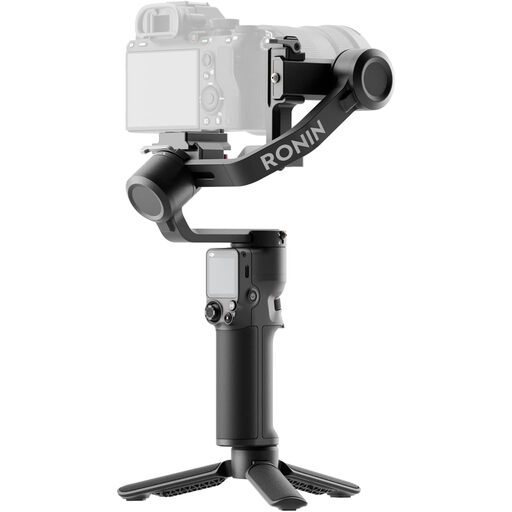
Why It Stands Out The DJI RS 3 Mini strikes a fine balance between power and portability for those using mirrorless cameras. Weighing just 795g, it's light enough for travel and extended shooting sessions, yet its high-torque motors can handle a payload of up to 2 kg. This makes it compatible with a wide range of popular camera and lens combinations from brands like Sony, Canon and Fujifilm.
Pros
Who is it for? This mirrorless gimbal is aimed at semi-professional filmmakers and serious content creators who need a reliable and portable camera stabiliser for their interchangeable-lens camera.
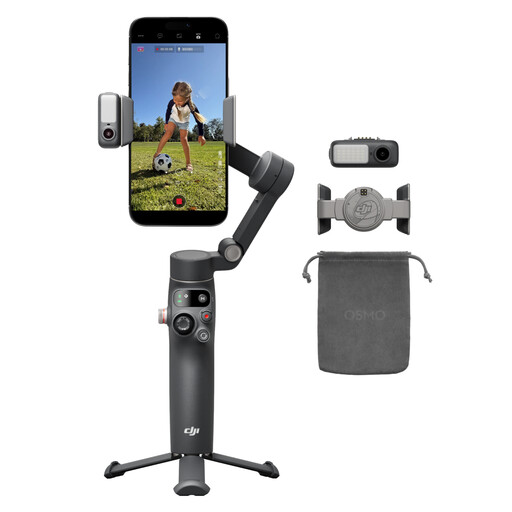
Why It Stands Out The Osmo Mobile 8 transforms your smartphone into a powerful filmmaking tool. It goes beyond basic stabilisation with integrated features like native tracking with audio and lighting support. The gimbal includes a built-in extension rod and tripod, making it a versatile all-in-one accessory for vlogging, selfies and live streaming. Its robust 3-axis stabilisation ensures your phone footage looks polished and professional.
Pros
Who is it for? This phone gimbal is ideal for smartphone videographers, social media influencers and anyone looking to significantly improve the quality of their mobile videos for vlogging, live streaming or capturing family moments.
If these models aren't quite what you're looking for, or if you'd like to compare them against other options, there is a wider selection available. Different models offer varying payloads, features and price points to suit every need.
To see more, explore our full range of gimbal stabiliser products.
For anyone who regularly records video with their phone, a gimbal is a worthwhile investment. A device like the DJI Osmo Mobile 8 elevates shaky, handheld footage to a smooth, cinematic quality that is difficult to achieve otherwise. Features like active tracking and a built-in extension rod add production value that makes your content stand out, whether for personal vlogs or professional social media posts.
The primary difference lies in the intended camera. The DJI Osmo series is generally designed for smaller, more integrated systems. This includes the Osmo Mobile gimbals for smartphones and the Osmo Pocket, which has its own built-in camera. The DJI RS (Ronin Stabiliser) series is built for larger, more professional setups, supporting a wide range of mirrorless and even cinema cameras with interchangeable lenses.
It is the core technology that makes a gimbal effective. A 3-axis stabiliser uses motors to counteract unwanted movement on three axes: pan (left-right), tilt (up-down) and roll (rotational). This mechanical compensation is what removes the shakes, jitters and bumps from handheld filming, resulting in fluid, professional-looking video.